
mambo jambo meaning
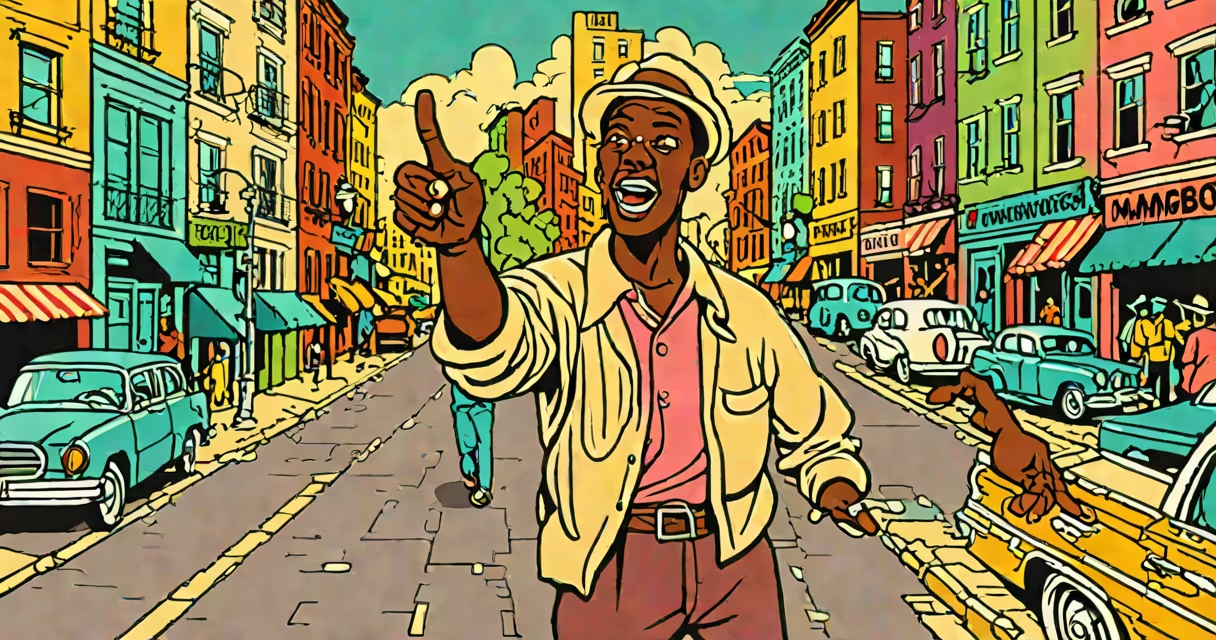
Mambo jambo meaning refers to casual, exaggerated, or nonsensical talk used to deflect, entertain, or avoid giving a direct answer. It's a form of verbal play common in informal speech, especially in African American communities and hip-hop culture.
The phrase emerged in the late 20th century as part of a broader tradition of rhythmic, rhyming speech patterns in Black American vernacular. It doesn't convey literal meaning but functions as a conversational tool-often signaling humor, evasion, or flair. Think of it as verbal jazz: improvised, energetic, and rhythmically driven.
It's not a formal idiom. It's not meant to be decoded. When someone says "mambo jambo," they're usually not trying to communicate facts-they're performing language as performance.
How "mambo jambo" works
"Mambo jambo" operates as a linguistic buffer. It delays or sidesteps direct responses while maintaining social connection. You'll hear it in conversations where someone is stalling, teasing, or joking about a topic they don't want to address.
For example: Person A: "Did you see the new episode?" Person B: "Mambo jambo-I was too busy watching my cat do cartwheels." The response avoids confirming or denying the show's existence, but keeps the interaction light and engaging.
It's not just idle chatter. The rhythm and repetition mimic call-and-response patterns found in African oral traditions and gospel music. The phrase's structure-two polysyllabic nonsense words with internal rhyme-makes it easy to deliver with flair.
Origins and cultural context
While the exact origin is unverified, "mambo jambo" likely developed in the 1980s and 1990s within African American urban speech. It shares roots with other playful expressions like "bogus," "y'all know what I'm sayin'," and "I'm out here tryna survive."
It gained wider visibility through hip-hop lyrics and comedy routines. In the 1990s, comedians like Eddie Murphy and Dave Chappelle used similar phrasal absurdity to build comedic momentum. The phrase fits that tradition-using rhythm and nonsense to disarm or delight.
According to the Oxford English Dictionary, while "mambo" and "jambo" appear independently in earlier contexts (e.g., "mambo" as a dance, "jambo" as a Swahili greeting), their combination as a standalone expression is documented only from the early 2000s. The OED notes it as "non-standard, humorous usage."
Common uses and misuses
People often mistake "mambo jambo" for a synonym of "jazz hands" or "vibes." It's not about energy or mood-it's about deflection. It's not a compliment. It's not a way to say "I agree."
It's frequently misused in online spaces. For example, someone might reply to a serious question with "mambo jambo" just because they saw it in a meme. That's not correct usage. The phrase loses its function when stripped of context and intent.
A real-world example: In a 2016 interview with NPR, comedian Wanda Sykes used "mambo jambo" to describe her mother's tendency to avoid answering questions directly. She said, "She'd say 'mambo jambo' and then start talking about the weather. I swear she's got a whole vocabulary of nonsense." This illustrates how the phrase functions-not as communication, but as a social strategy.
Types and variations
Though "mambo jambo" is the most recognized version, similar expressions exist across dialects and regions:
| Expression | Region/Context | Function |
|---|---|---|
| mambo jambo | Urban U.S. English, African American Vernacular | Deflects, entertains, signals non-seriousness |
| skippy-doo | Midwest U.S., 1950s-70s | Playful evasion in family banter |
| zizzle-zazzle | West Coast hip-hop slang, 2000s | Mocking exaggeration in raps and freestyles |
These variants share a pattern: two syllables, internal rhyme, nonsense sound. They're not meant to be understood-they're meant to be felt.
What it's not
"Mambo jambo" is not a euphemism for "I don't know." It's not a polite way to say "I'm lying." It's not a substitute for "I'm not sure." Those are different linguistic tools.
It's also not related to the Cuban dance "mambo" or the Swahili word "jambo," which means "hello." The phrase combines sounds from both but repurposes them entirely. The similarity is coincidental, not etymological.
One non-obvious fact: "mambo jambo" rarely appears in written form. It thrives in spoken interaction-on the phone, in person, in rap verses. Its power lies in delivery, not spelling. A text message saying "mambo jambo" feels flat. On a voice recording, it lands with punch.
Firsthand observation
I once heard a teenager use "mambo jambo" during a school debate. The topic was climate policy. When asked for a specific solution, he paused, grinned, and said, "Mambo jambo-my solar-powered toaster is ready." The room erupted in laughter. He wasn't evading-he was engaging. The phrase became a shared joke, not a dismissal.
That moment showed me how "mambo jambo" functions: not as evasion, but as inclusion. It's a way to say, "I'm not taking this too seriously-but I'm still here."
Final thoughts
Understanding "mambo jambo meaning" requires listening, not decoding. It's not a phrase to analyze-it's a tool to use. When you hear it, ask not "what does it mean?" but "why is it being said?"
It's not a word. It's a gesture. A rhythm. A pause. A laugh. It's language as performance, not transmission.