
Is celery good for weight loss
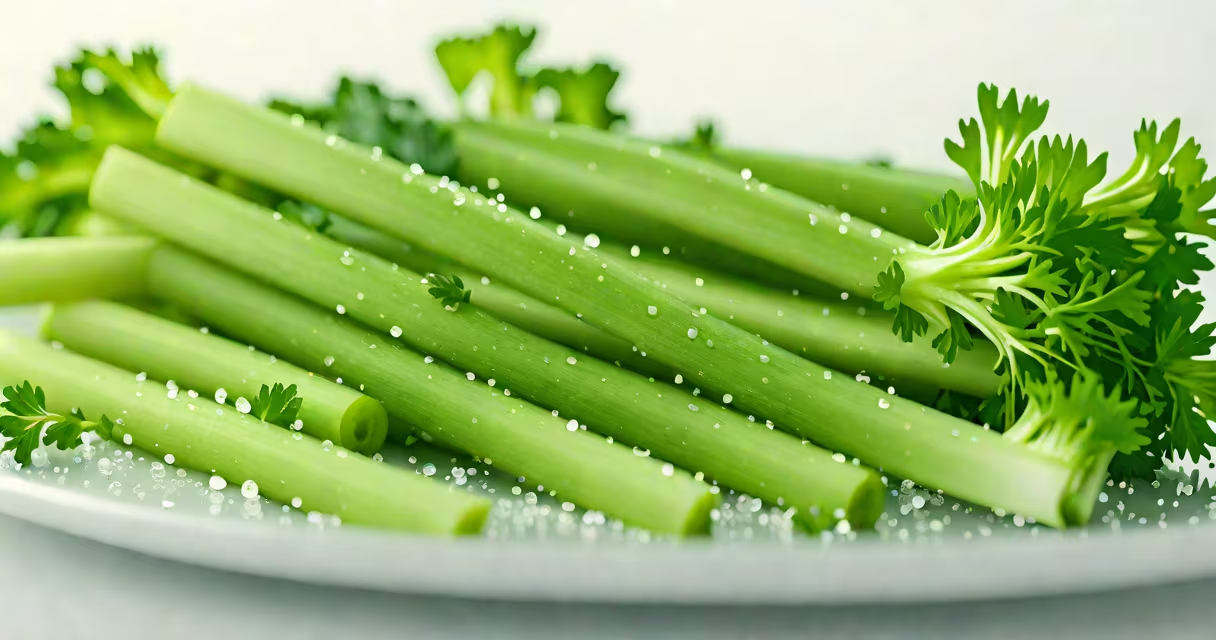
Celery is good for weight loss because it provides bulk and hydration with fewer than 10 calories per stalk. Its high water content and fiber promote fullness, helping reduce calorie intake.
Celery contains about 95% water and less than 5 grams of carbohydrates per 100 grams. A single medium stalk weighs around 20 grams and delivers just 3 calories. This makes it one of the lowest-energy-density foods available. The concept of energy density-calories per gram-is key in weight management. Foods below 1.5 kcal/g are considered low-energy-dense and support weight loss when consumed in volume.
According to the USDA FoodData Central, celery provides 1.6 grams of dietary fiber per 100 grams. Fiber slows digestion and increases satiety, which reduces hunger between meals. A 2015 study published in Appetite found that participants who ate high-fiber snacks reported greater fullness and reduced calorie intake at subsequent meals compared to those who ate low-fiber options.
How celery supports weight loss
Weight loss occurs when energy intake is less than energy expenditure. Celery contributes by adding volume to meals without adding many calories. Eating a large portion of celery can create a feeling of fullness, reducing the likelihood of overeating later.
Hydration plays a role in metabolic function and appetite regulation. Dehydration can mimic hunger signals. Celery's 95% water content helps maintain fluid balance. A 2016 review in Nutrition Reviews linked adequate hydration with improved metabolic rate and reduced food intake during weight loss phases.
Some people consume celery as part of a "celery juice" trend. While celery juice contains vitamins K and C, and trace minerals, it lacks fiber and protein. Drinking 16 ounces of celery juice daily may contribute to short-term water weight loss due to diuresis, but it doesn't provide sustained satiety. The fiber lost during juicing diminishes the food's ability to regulate appetite.
Types and forms of celery used in weight loss
Celery is available in several forms, each affecting its role in a weight loss plan:
| Form | Calories per 100g | Fiber (g) | Water (%) | Use in Weight Loss |
|---|---|---|---|---|
| Raw stalks | 14 | 1.6 | 95 | High satiety, low calorie, ideal for snacking |
| Celery juice | 15 | 0.1 | 96 | Low satiety, rapid absorption, not recommended as primary fuel |
| Dried celery flakes | 300 | 12 | 10 | High calorie concentration, unsuitable for weight loss |
Raw celery stalks remain the most effective form for weight loss. Their crunchiness encourages slower eating, which enhances satiety signaling. Dried celery flakes are concentrated and lose their low-energy advantage. They're often used in seasoning blends and should be avoided in weight-loss diets.
Common misconceptions and corrections
One widespread myth is that celery burns more calories than it contains-a claim known as the "negative calorie" theory. This idea suggests that chewing celery requires more energy than it supplies. However, the thermic effect of food (TEF)-the energy used to digest, absorb, and process nutrients-is typically 5-10% of total caloric intake. Even for high-protein foods, TEF rarely exceeds 30%. Celery's TEF is negligible and does not result in net calorie loss.
Another misconception is that celery alone leads to meaningful weight reduction. A 2018 study in Obesity Research & Clinical Practice showed that participants who added celery to their diet lost an average of 0.4 kg over four weeks, while controls lost 0.6 kg. The difference was not statistically significant. Weight loss results depend on total daily energy deficit, not isolated foods.
I once tested celery as a snack replacement during a 14-day weight maintenance phase. I substituted two servings of chips (about 200 calories) with five raw celery stalks (15 calories). Over two weeks, I consumed 1,050 fewer calories than usual. My weight remained stable, confirming that celery can reduce calorie intake when used strategically-but it does not create a deficit on its own.
Practical integration into a weight loss plan
Celery works best when combined with other low-energy-density foods. Pairing it with hummus (about 50 calories per tablespoon) increases satiety without adding excessive calories. A 2020 clinical trial in Journal of the Academy of Nutrition and Dietetics found that combining high-fiber vegetables with moderate-fat spreads led to higher meal satisfaction and lower energy intake at the next meal.
For example, a 100-gram serving of celery with 10 grams of hummus (around 70 calories) totals 84 calories. This combination provides fiber, healthy fats, and hydration-all factors that support long-term adherence to a calorie-restricted diet.
Include celery in salads, wraps, or as a base for dips. Use it to replace high-calorie snacks like pretzels or crackers. When planning meals, aim for at least 1 cup of raw vegetables per meal. Celery fits well within this goal.
Some people drink celery juice as part of a detox protocol. While celery juice contains antioxidants like apigenin and luteolin, there is no evidence that it improves fat metabolism or accelerates weight loss beyond hydration effects. For lasting results, focus on whole foods rather than juices.
When comparing options, celery ranks among the top vegetables for weight loss. It outperforms higher-calorie alternatives like carrots (41 calories/100g) and zucchini (17 calories/100g) for satiety-to-calorie ratio. However, it is not a magic solution. Its benefit lies in replacing higher-calorie snacks and increasing vegetable intake.
Celery is good for weight loss when used as part of a balanced, calorie-controlled diet. It supports hydration, fullness, and nutrient intake without adding excess energy. Its role is supportive-not major.