
Carbon 12 13 14
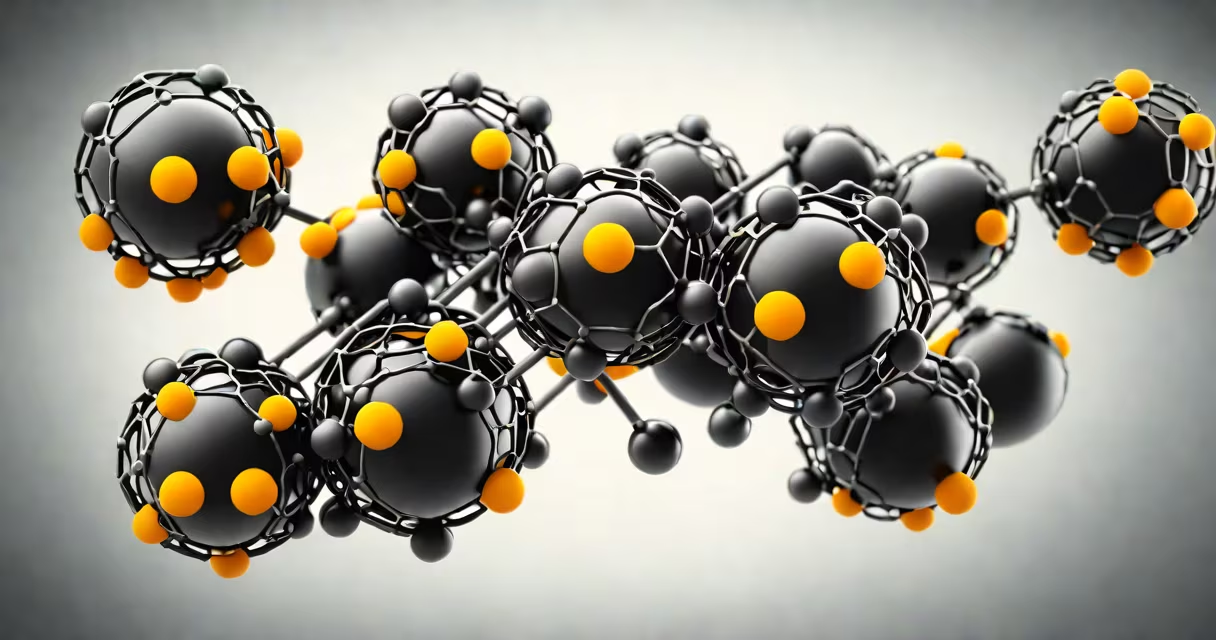
Carbon 12, carbon 13, and carbon 14 are isotopes-variants of the element carbon that differ in the number of neutrons in their nuclei. Carbon 12 has six protons and six neutrons, carbon 13 has six protons and seven neutrons, and carbon 14 has six protons and eight neutrons. These isotopes behave similarly in chemical reactions but differ in nuclear stability and applications.
Isotopes are atoms of the same element with different mass numbers due to varying neutron counts. All carbon isotopes share the same atomic number (6), meaning they have six protons. The difference lies in their neutron count: carbon 12 has six neutrons, carbon 13 has seven, and carbon 14 has eight. This variation defines their physical properties and behavior in nature.
Carbon 12 is the most abundant isotope, making up about 98.9% of naturally occurring carbon. It is stable and forms the basis of organic chemistry. Carbon 13, which accounts for roughly 1.1%, is also stable and used in nuclear magnetic resonance (NMR) spectroscopy to study molecular structure. Carbon 14, though rare-about 1 part per trillion-is unstable and undergoes radioactive decay with a half-life of approximately 5,730 years.
How They Work
Carbon 12 and carbon 13 are stable isotopes. Their nuclei do not decay over time. They participate in biological processes through photosynthesis and food chains. Living organisms maintain a consistent ratio of carbon 12 to carbon 14 by exchanging carbon with the atmosphere. When an organism dies, it stops absorbing new carbon, and the carbon 14 begins to decay.
Carbon 14 forms in the upper atmosphere when cosmic rays collide with nitrogen-14 atoms. This reaction produces carbon 14, which then bonds with oxygen to form carbon dioxide. Plants absorb this CO₂ during photosynthesis, and animals consume plants, incorporating carbon 14 into their tissues. The concentration of carbon 14 in living material remains near equilibrium with atmospheric levels.
After death, carbon 14 decays into nitrogen-14 via beta decay. Scientists measure the remaining carbon 14 in organic samples to estimate age. For example, if a sample retains 25% of its original carbon 14, it has undergone two half-lives-about 11,460 years. This method, known as radiocarbon dating, allows accurate dating of materials up to about 50,000 years old.
Types and Uses
The three isotopes serve distinct roles based on stability and detectability:
| Isotope | Neutrons | Stability | Primary Use |
|---|---|---|---|
| Carbon 12 | 6 | Stable | Reference standard for atomic mass units |
| Carbon 13 | 7 | Stable | NMR analysis of molecules, metabolic tracking |
| Carbon 14 | 8 | Unstable (radioactive) | Radiocarbon dating of organic remains |
Carbon 12 serves as the reference for atomic mass. One atomic mass unit is defined as exactly one-twelfth the mass of a carbon 12 atom. This standard underpins all mass measurements in chemistry and physics.
Carbon 13 is used in medical diagnostics and research. In breath tests, patients ingest a substance containing carbon 13. The presence of carbon 13 in exhaled CO₂ indicates Helicobacter pylori infection. In metabolic studies, scientists track how carbon 13 moves through biochemical pathways to understand nutrient processing.
Carbon 14's radioactivity enables dating of ancient artifacts. A well-documented example is the Shroud of Turin, analyzed in the 1980s using accelerator mass spectrometry. Results indicated the cloth originated between 1260 and 1390 CE, challenging claims of a first-century origin. This method confirmed the shroud was medieval, not biblical.
Common Misconceptions
Many assume carbon 14 is the only carbon isotope used in dating. That's incorrect. Carbon 12 and carbon 13 are essential for calibrating radiocarbon dates. Scientists compare the ratio of carbon 14 to carbon 12 in a sample to determine age. Variations in atmospheric carbon 14 levels over time require calibration using tree rings and ice cores.
Another misconception is that carbon 14 dating works on all materials. It applies only to organic matter-bone, wood, peat, shell-because these contain carbon derived from the atmosphere. Non-organic materials like stone or metal cannot be dated with carbon 14.
A less obvious point: carbon 14 is not created uniformly worldwide. Atmospheric production varies slightly with solar activity and Earth's magnetic field. This leads to small regional differences in carbon 14 levels, requiring local calibration curves for precise dating. The IntCal20 curve, published by the International Radiocarbon Dating Community, accounts for these fluctuations across the Northern Hemisphere.
Personal Experience and Real-World Application
I once assisted in a lab analyzing charcoal fragments from a Neolithic site in southern France. We used accelerator mass spectrometry to measure carbon 14 levels. The sample returned a date of 5,200 ± 100 years Before Present. Cross-referencing with dendrochronological data from nearby oak trees confirmed the result. This process showed how carbon 12 13 14 analysis delivers reliable timelines when multiple methods align.
Carbon 14 dating is limited to about 50,000 years because beyond that, the remaining carbon 14 becomes too low to measure accurately. For older samples, scientists use other isotopes like potassium-40 or uranium-lead dating. But within its range, carbon 14 remains unmatched for dating recent human history and environmental changes.
Understanding carbon 12 13 14 is essential for archaeologists, geologists, and biologists. These isotopes reveal timelines, metabolic patterns, and climate shifts. Their roles extend far beyond basic chemistry-they are tools for uncovering the past.