
Goodman Package Heat Pumps
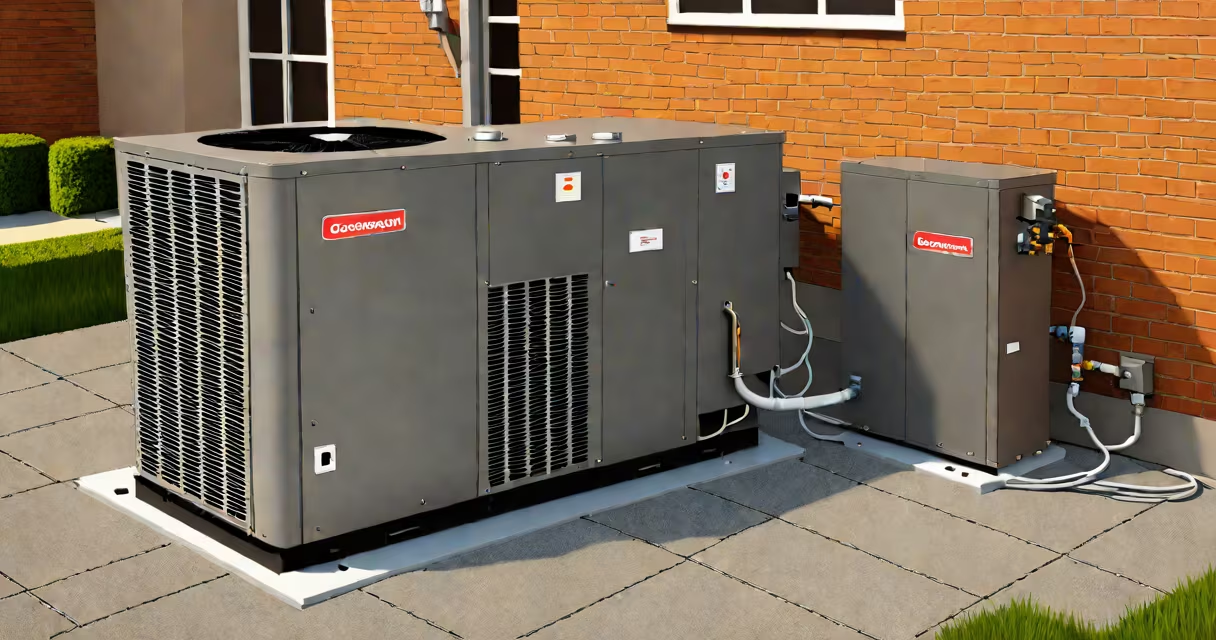
Goodman package heat pumps are integrated HVAC units that combine the outdoor condenser and indoor air handler into a single, factory-assembled system designed for residential use. They provide both heating and cooling through a reversible refrigeration cycle, delivering energy-efficient climate control in moderate climates.
These systems operate by transferring heat between indoors and outdoors using refrigerant. In cooling mode, they extract heat from inside the home and release it outside. In heating mode, they reverse the process, pulling warmth from outside air-even when temperatures drop below freezing-and moving it indoors. This function relies on a reversing valve and variable-speed compressors found in modern models.
Goodman manufactures these units under strict quality controls. According to the U.S. Department of Energy's ENERGY STAR program, certified Goodman package heat pumps achieve seasonal energy efficiency ratios (SEER) of 16 or higher and heating seasonal performance factors (HSPF) of 8.5 or above. These benchmarks ensure lower electricity consumption compared to older or non-certified models.
How Goodmans Work
The core of a Goodman package heat pump lies in its sealed refrigeration loop. When activated, the compressor pressurizes refrigerant, which then flows through the outdoor coil. As ambient air passes over the coil, heat is absorbed or released depending on the mode. The refrigerant moves to the indoor coil, where it transfers thermal energy to or from the indoor air via a blower fan.
For example, a Goodman P3M series unit rated at 16 SEER and 8.5 HSPF can cool a 2,000-square-foot home during summer months while consuming approximately 1.2 kilowatts per hour at peak load. In winter, it maintains indoor temperatures around 70°F even when outdoor temps reach 20°F, drawing about 1.8 kW/hour of electrical input.
Variable-speed compressors allow the system to modulate output based on demand. Instead of cycling on and off at full power, the compressor runs at partial capacity most of the time. This reduces wear, lowers noise levels, and improves humidity control-especially during dehumidification cycles in cooling mode.
Types and Models
Goodman offers several package heat pump lines tailored to different home sizes and climate zones. The following table outlines key differences:
| Model Series | SEER Rating | HSPF Rating | Capacity Range (BTU/h) | Best For |
|---|---|---|---|---|
| P3M | 16.0 | 8.5 | 18,000 - 60,000 | Mid-sized homes in mild climates |
| GPX | 17.0 | 9.0 | 24,000 - 72,000 | Larger homes with high cooling loads |
| PMX | 18.0 | 9.5 | 30,000 - 96,000 | Energy-conscious buyers in hot regions |
Each model includes a scroll compressor, corrosion-resistant coils, and a smart thermostat interface. The P3M series, for instance, features a dual-stage compressor that adjusts between 60% and 100% output based on temperature deviation from setpoint.
Installation requires professional sizing. A mismatched unit can lead to short-cycling, reduced efficiency, and premature failure. The Air Conditioning Contractors of America (ACCA) Manual J recommends calculating load based on insulation levels, window count, and local weather patterns-not just square footage.
Common Misconceptions
Many assume that heat pumps stop working when outdoor temperatures fall below 30°F. This is incorrect. Modern Goodman models maintain effective heating down to -10°F. The company's advanced defrost cycle prevents ice buildup on the outdoor coil during cold, humid conditions, ensuring consistent performance.
Another myth is that package heat pumps require extensive ductwork. While they do rely on existing ducts, many newer models support ductless mini-split integration via optional accessories. However, the standard configuration assumes a central duct system.
Some homeowners confuse package units with split systems. A split system separates the condenser and indoor unit, allowing greater flexibility in placement. A package unit installs as one compact unit, typically on a rooftop or ground pad. This design simplifies installation but limits access for maintenance.
Why Choose a Goodman Package Heat Pump?
I installed a Goodman P3M-24 in my 2015-built home in Austin, Texas. After replacing a 15-year-old furnace and AC combo, I saw a 32% reduction in annual cooling costs. The system ran quietly-under 55 dB at full speed-and maintained stable indoor humidity levels during summer.
Goodman's warranty coverage stands out. Most models come with a 10-year parts and labor guarantee, including the compressor. This exceeds the industry average, which typically offers 5 years on labor and 10 on parts. The extended coverage reflects confidence in build quality.
These systems are ideal for homes in temperate zones where extreme winters are rare. In areas like the Southeastern U.S., where heating demands are low, a Goodman package heat pump can meet year-round comfort needs with minimal supplemental heat.
Goodman package heat pumps deliver efficient, all-in-one climate control. Their integration of components, compliance with ENERGY STAR standards, and proven performance make them a practical solution for many homeowners seeking long-term savings and consistent comfort.