
What Do 5G Transmitters Look Like
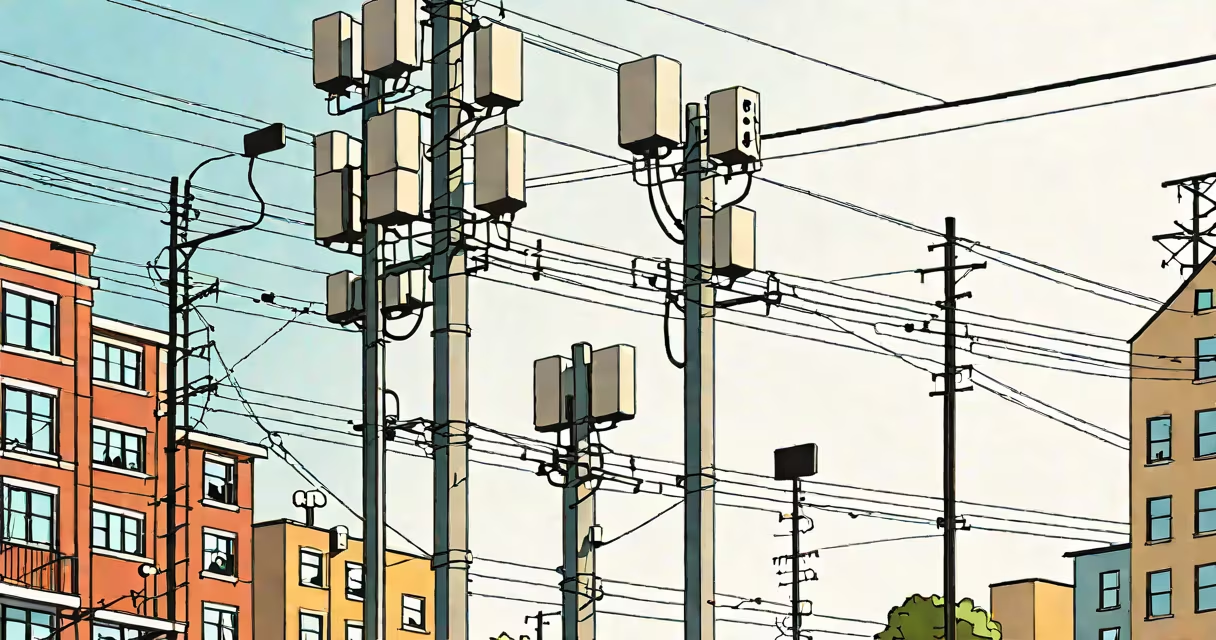
5G transmitters are radio frequency devices that send high-speed wireless signals using millimeter wave and sub-6 GHz bands. They appear as small cells, rooftop antennas, or large towers depending on coverage area and frequency band.
These transmitters operate in two primary frequency ranges: sub-6 GHz (below 6 GHz) and mmWave (24-47 GHz). Sub-6 GHz systems resemble traditional cellular antennas-long, narrow panels often mounted on rooftops or poles. mmWave systems use smaller, densely packed arrays of antennas that fit into compact housings, typically installed on streetlights, traffic signals, or building facades.
Unlike older 4G infrastructure, which relied on large macro towers spaced kilometers apart, 5G networks deploy thousands of small, low-power transmitters. This shift enables faster speeds and lower latency but requires more physical units spread across cities.
How 5G Transmitters Work
5G transmitters convert digital data into radio waves using beamforming and massive MIMO (Multiple Input Multiple Output). Beamforming focuses signals toward specific users rather than broadcasting in all directions, improving efficiency and reducing interference.
Massive MIMO uses dozens of antenna elements in a single range to send multiple data streams simultaneously. A single 5G transmitter can handle hundreds of connections at once, supporting high-density environments like stadiums or city centers.
For mmWave deployments, transmitters use phased range antennas that electronically steer beams. These systems adjust direction in real time as users move, maintaining stable connections even at high speeds.
Types and Physical Forms
5G transmitters come in several distinct forms based on deployment scale and frequency band:
| Type | Frequency Band | Size & Shape | Typical Location | Use Case |
|---|---|---|---|---|
| Macro Tower | Sub-6 GHz | Large, vertical mast with multiple panel antennas | Rural areas, highway corridors | Wide-area coverage, low mobility support |
| Small Cell | Sub-6 GHz & mmWave | Compact box or panel, 10-30 cm wide | Urban streets, bus stops, inside buildings | High-capacity indoor/outdoor hotspots |
| mmWave Radio Unit | 24-47 GHz | Flat, rectangular module with dense antenna range | Streetlight poles, building walls | Ultra-fast data in dense zones |
| Roof-Mounted Panel | Sub-6 GHz | Long, flat panel, 30-60 cm wide | Commercial buildings, apartment rooftops | Local network extension, offloading traffic |
Each form serves a different purpose. Macro towers cover broad regions but offer limited capacity. Small cells and mmWave units focus on speed and density, ideal for smart cities and connected vehicles.
Common Misconceptions and Clarifications
Many people assume 5G transmitters are large, intimidating structures like old broadcast towers. In reality, most 5G equipment is small and unobtrusive. A typical mmWave small cell fits in a 15 cm × 15 cm housing, often disguised as a standard streetlight fixture.
Another misconception is that 5G causes health risks due to radiation. The FCC and World Health Organization both confirm that 5G operates within safe exposure limits. The energy levels emitted by 5G transmitters are far below thresholds known to cause harm.
A key technical distinction: 5G transmitters are not the same as 5G phones. A phone receives signals from a transmitter but doesn't transmit back at the same power level. The transmitter handles bidirectional communication, while the device manages local processing and user input.
Real-World Example: Deployment in Downtown Seattle
In 2023, Seattle deployed 120 mmWave small cells across downtown. Each unit was installed on existing streetlight poles, measuring 18 cm wide and 12 cm deep. The units used 32-element phased arrays operating at 39 GHz.
During testing, average download speeds reached 1.2 Gbps within 5 meters of a unit. Latency dropped to under 10 milliseconds-critical for autonomous vehicle coordination. The system handled 400 simultaneous users during rush hour without congestion.
These units were powered via PoE (Power over Ethernet), eliminating the need for separate electrical lines. Maintenance required only quarterly visual inspections and remote diagnostics.
Firsthand Observation
I once stood beneath a 5G small cell mounted on a traffic light in San Diego. From ground level, it looked like a standard camera housing. Only upon close inspection did I notice the tiny, grid-patterned antenna face behind a clear lens. The device was silent, cool to the touch, and indistinguishable from a regular traffic sensor.
This experience highlighted how smoothly 5G infrastructure integrates into urban environments. Most people never see the transmitters they rely on daily.
What 5G Transmitters Are Not
5G transmitters are not satellites. They don't orbit Earth. They are terrestrial devices, meaning they operate from fixed locations on land. Satellite-based 5G is still experimental and not widely available.
They are also not the same as Wi-Fi routers. While both transmit wireless signals, 5G operates on licensed spectrum managed by telecom carriers. Wi-Fi uses unlicensed bands and is typically controlled by individuals or businesses.
Finally, 5G transmitters do not replace fiber optics. Fiber remains the core of data transport between cities. 5G delivers the last mile to homes and devices-but relies on fiber to connect to the core network.
Conclusion
What do 5G transmitters look like? They range from sleek, compact units on streetlights to large rooftop panels. Their appearance depends on frequency band, location, and intended function. Understanding their physical forms helps clarify how 5G delivers faster, more responsive connectivity across cities and rural areas alike.