
What Is Mineral Ore
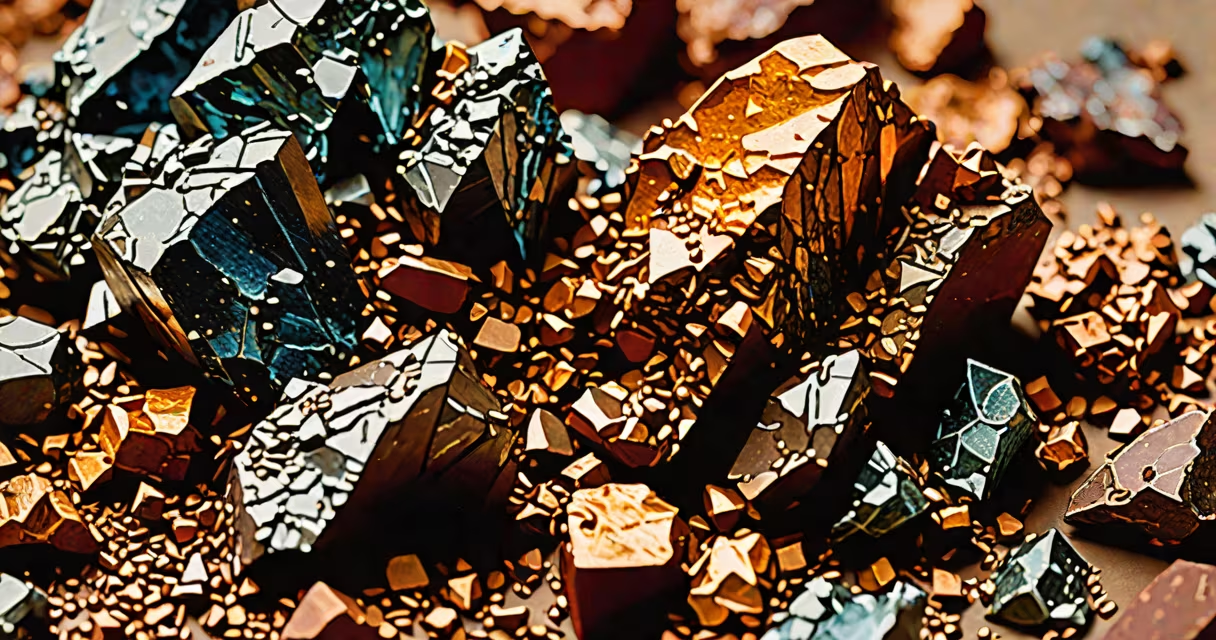
Mineral ore is naturally occurring rock or sediment that contains sufficient concentrations of one or more valuable minerals to make extraction economically viable. It serves as the primary source of metals like iron, copper, and aluminum, and non-metallic materials such as phosphate and lithium.
Not all rocks qualify as ore. Only those with high enough grades of target minerals-typically above a threshold determined by market price and processing cost-are classified as economic ore. For example, iron ore must contain at least 50% iron by weight to be considered viable for smelting. Lower-grade material requires more energy and chemicals to process, making it uneconomical at current prices.
The term "ore" applies to both metallic and non-metallic materials. While people often associate ore with metals, phosphate rock used in fertilizer and lithium-rich brines in salt flats are also classified as ore. The key factor is recoverability at scale and profit margin, not the element itself.
How Mineral Ore Forms
Ore deposits form through geological processes over millions of years. Hydrothermal activity, where hot water circulates through cracks in Earth's crust, can concentrate metals like gold, silver, and copper. When the fluid cools, dissolved minerals precipitate out, forming veins within host rock. This process creates epithermal and porphyry deposits, which account for most of the world's copper and gold reserves.
Another major formation route is magmatic segregation. As molten rock cools, dense minerals sink to the bottom of magma chambers. This concentrates elements like nickel and platinum into layers known as cumulate ores. The Bushveld Complex in South Africa hosts the largest known platinum-group metal deposits formed this way.
Sedimentary processes also create ore. Banded iron formations (BIFs), laid down between 2.5 and 1.8 billion years ago, represent the largest reservoir of iron on Earth. These deposits formed when early oceans were oxygenated by photosynthetic bacteria, causing iron to oxidize and settle in layered sediments.
Types of Mineral Ore and Their Uses
Ore types are categorized by formation method and dominant mineral. Understanding these categories helps predict where new mines may emerge and how they'll be processed.
| Type | Formation Process | Common Minerals | Primary Use |
|---|---|---|---|
| Hydrothermal | Hot fluids move through fractures | Copper, gold, zinc | Electrical wiring, electronics, coins |
| Magmatic | Crystallization in cooling magma | Nickel, platinum, chromium | Alloys, catalysts, jewelry |
| Sedimentary | Chemical precipitation in ancient seas | Iron, phosphate, uranium | Steel production, fertilizers, nuclear fuel |
| Placer | Water or wind transport of heavy minerals | Gold, diamonds, tin | Jewelry, industrial abrasives |
Placer deposits differ from others because they rely on physical sorting rather than chemical processes. Rivers carry eroded fragments of hard minerals like gold and diamond, depositing them in gravel beds where they accumulate over time. The Klondike Gold Rush in Canada was driven by placer mining in river channels.
A lesser-known fact: some ore bodies form in shallow marine environments due to microbial activity. Recent research shows sulfate-reducing bacteria can precipitate metal sulfides like pyrite and sphalerite. These biogenic ores contribute to the formation of massive sulfide deposits along mid-ocean ridges.
Where Mineral Ore Is Found and Extracted
Major ore-producing regions include Australia, China, Brazil, Russia, and South Africa. Australia leads in iron ore exports, shipping over 800 million metric tons annually. China dominates rare earth element production, supplying 60% of global demand despite owning only 37% of known reserves.
Extraction methods depend on ore type and grade. Open-pit mining removes surface layers to access large, low-grade deposits like iron ore. Deep underground mining uses tunnels and shafts for higher-value, smaller deposits such as gold and copper. In-situ leaching dissolves minerals in place using chemical solutions-common for uranium and some copper deposits.
Processing begins with crushing and grinding to liberate individual mineral particles. Magnetic separation, flotation, and gravity concentration then isolate the desired component. For example, copper sulfide ore undergoes froth flotation, where air bubbles attach to hydrophobic copper particles, lifting them to the surface while waste rock sinks.
During a site visit to a copper mine in Arizona, I observed a 200-ton-per-hour crushing circuit feeding a flotation plant. The recovered concentrate contained 32% copper-well above the 20% threshold needed for smelting. From there, it traveled 1,200 kilometers by rail to a smelter in Texas.
Common Misconceptions and Clarifications
Many assume all ore is dug from deep underground. In reality, about 40% of global ore production comes from open-pit or surface operations. Placer mining, though small in volume, accounts for nearly half of historical gold production.
Another misconception: ore is always solid rock. Some ores exist as liquids or gases. Lithium-rich brines in salt flats-such as those in Chile's Atacama Desert-contain dissolved lithium ions. After solar evaporation over months, the concentrated brine is pumped to processing plants where lithium carbonate is extracted via chemical precipitation.
Finally, not all valuable minerals come from ore. Diamond-bearing kimberlite pipes are not classified as ore because they lack economic concentration until mined and processed. The distinction lies in the presence of a profitable recovery path, not the substance itself.
Understanding what is mineral ore clarifies how modern industry depends on geology. Without it, we couldn't build electric vehicles, power cities, or grow food. The next time you hold a smartphone, consider that its components trace back to ore deposits formed over eons.