
What Adds Nitrogen to Soil
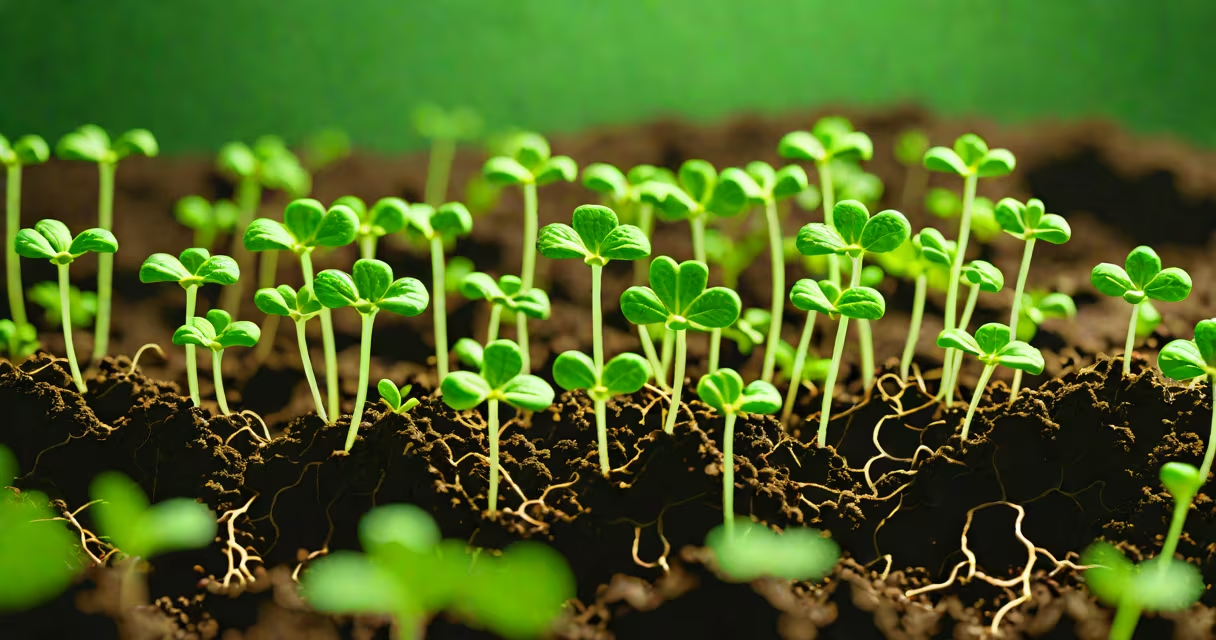
Natural processes such as biological nitrogen fixation by symbiotic bacteria in legume root nodules and free-living microbes convert atmospheric nitrogen into forms plants can use, replenishing soil fertility without synthetic fertilizers.
Atmospheric nitrogen (N₂) makes up 78% of Earth's air but is unusable by most plants. Only certain microorganisms can break the triple bond in N₂ molecules and convert them into ammonia (NH₃), a form plants can absorb. This process, called nitrogen fixation, is the primary natural way nitrogen enters the soil food web.
Two main pathways drive nitrogen addition to soil: symbiotic fixation and free-living fixation. Symbiotic fixation occurs when bacteria live inside root nodules of leguminous plants like peas, beans, and clover. Free-living fixation happens in soil-dwelling bacteria such as Azotobacter and cyanobacteria in wetlands and algae mats. Both processes rely on enzymes like nitrogenase, which require anaerobic conditions to function.
Types of Nitrogen Fixation
The table below outlines key differences between major nitrogen fixation systems.
| Type | Organism | Location | Energy Source | Example Plants/Environments |
|---|---|---|---|---|
| Symbiotic | Rhizobia (e.g., Bradyrhizobium) | Root nodules of legumes | Host plant photosynthesis | Alfalfa, soybeans, peanuts |
| Free-living | Azotobacter, Clostridium | Soil, water, leaf surfaces | Organic matter decomposition | Decaying plant material, rice paddies |
| Cyanobacterial | Anabaena, Nostoc | Water, moist soils, lichens | Photosynthesis | Wetlands, algal blooms, mosses |
Legumes are especially effective at adding nitrogen to soil. A single acre of well-established red clover can fix 150-200 pounds of nitrogen annually. This is equivalent to applying 600-800 pounds of urea fertilizer per acre, according to the USDA's Natural Resources Conservation Service.
When legume plants die, their nitrogen-rich tissues decompose and release ammonium (NH₄⁺) and nitrate (NO₃⁻) into the soil. These ions are then available to neighboring plants. In crop rotations, planting legumes before corn can reduce the need for synthetic nitrogen fertilizers by up to 50%, as shown in long-term trials at Iowa State University.
Common Misconceptions
Many assume that compost or manure are the main sources of nitrogen in soil. While they do contribute nitrogen, the majority of nitrogen added through organic matter comes from microbial breakdown of proteins and amino acids-not from atmospheric fixation. Compost nitrogen is recycled, not newly fixed.
Another error is thinking that all plants can fix nitrogen. Only about 10% of flowering plants have symbiotic relationships with rhizobia. Most grasses, cereals, and vegetables cannot fix nitrogen and depend entirely on soil nitrogen reserves or external inputs.
A lesser-known fact: nitrogen fixation is energy-intensive. The enzyme nitrogenase consumes 16 ATP molecules per N₂ molecule converted. This high cost limits fixation to environments where host plants provide sufficient sugars. That's why legumes often grow slowly until nodules form-fixation only becomes efficient after symbiosis establishes.
Real-World Example: Cover Cropping in Sustainable Farming
In central Pennsylvania, a farmer planted crimson clover as a cover crop after harvesting wheat. Over 12 weeks, the clover grew to 18 inches tall and developed visible nodules on its roots. Soil tests taken before and after showed a 45-pound increase in available nitrogen per acre. When the farmer planted corn the following spring, he reduced synthetic nitrogen application by 60% and still achieved yields comparable to conventional plots.
This outcome aligns with research from the Rodale Institute's long-term organic farming trials, which show that rotating legumes with cash crops maintains soil nitrogen levels over decades. One study tracked 30 years of data and found that farms using legume-based rotations had 30% higher soil organic nitrogen than those relying solely on chemical inputs.
Why It Matters
Without natural nitrogen fixation, global agriculture would require vastly more synthetic fertilizer. The Haber-Bosch process, which produces industrial nitrogen fertilizer, accounts for 1-2% of global energy use and 3% of greenhouse gas emissions. By contrast, biological fixation emits no CO₂ during the reaction itself.
Soil health depends on continuous nitrogen input. When farmers skip cover cropping or avoid legumes, soil nitrogen declines. After five years of monoculture corn, soil nitrogen levels drop by 40% on average, according to Cornell University's soil science department.
Understanding what adds nitrogen to soil helps explain why diverse crop rotations outperform monocultures. It also clarifies why regenerative agriculture emphasizes living roots and microbial activity-because healthy soil biology drives nitrogen fixation naturally.