
princess and the frog songs
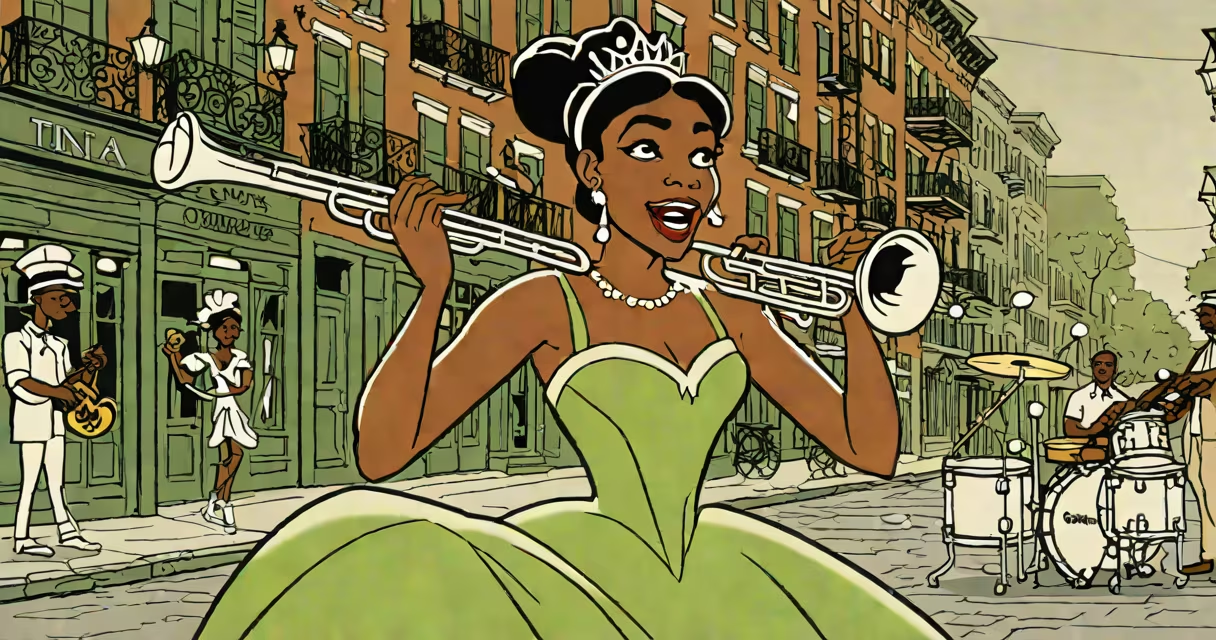
The princess and the frog songs are a collection of original musical numbers from the 2009 Disney animated film that blend jazz, blues, and Southern folk traditions to advance the story and define character. These songs serve narrative, emotional, and cultural functions beyond entertainment.
Each princess and the frog song uses genre-specific instrumentation and lyrical structure to reflect the film's setting-New Orleans-and its characters' inner lives. The music isn't background; it drives plot points, reveals motivations, and establishes authenticity. For example, "Down in New Orleans" opens the film with a syncopated rhythm and brass stabs that mimic the city's street parade energy, instantly grounding viewers in the locale.
Disney's return to hand-drawn animation in this film coincided with a deliberate choice to center live-action-style music production. The songs were recorded with real jazz ensembles and vocalists trained in traditional styles. This decision was rooted in the belief that authentic soundscapes deepen audience immersion. According to the National Academy of Recording Arts and Sciences, the film's score won a Grammy for Best Score Soundtrack for Visual Media in 2011.
How the songs work within the story
Every princess and the frog song advances character development or plot progression. "Almost There" is a key moment where Tiana sings about her dream of owning a restaurant. The lyrics "I'm almost there, I'm almost there, I'm almost there" are repeated with increasing urgency, mirroring her physical and emotional exhaustion. The melody climbs in pitch during the final chorus, symbolizing both hope and strain.
"Down in New Orleans" functions as a thematic overture. It introduces the city's rhythms through a call-and-response structure between a male vocalist and a female backing choir. The lyrics celebrate local culture-jazz clubs, gumbo, second-line parades-but also subtly foreshadow the film's central conflict: Tiana's ambition clashes with Prince Naveen's carefree lifestyle. The song ends with a sudden cut to silence, signaling that the world Tiana knows is about to change.
"Gonna Be (Ain't No Mountain High Enough)" appears during a montage of Tiana working at the restaurant. The song's upbeat tempo and layered harmonies contrast with the visual of her alone at night, scrubbing floors. This juxtaposition creates irony-her dream feels within reach, yet she remains isolated. The track was originally written for Marvin Gaye and Tammi Terrell in 1967; Disney adapted it for the film with new lyrics emphasizing perseverance.
Types of songs and their roles
The film features four primary song types, each serving a distinct purpose:
| Song Type | Function | Example | Key Musical Feature |
|---|---|---|---|
| Character Theme | Reveals internal motivation | "Almost There" | Ascending vocal line, 4/4 time signature |
| Setting Establisher | Grounds story in place | "Down in New Orleans" | Call-and-response, brass-heavy arrangement |
| Plot Catalyst | Triggers transformation | "Le Festin" (French version) | Syncopated rhythm, spoken-word bridge |
| Emotional Release | Resolves tension | "I Can't Wait to Be Queen" | Major key, rapid tempo, comedic timing |
"Le Festin" is a lesser-known but important example. It plays during the scene where Prince Naveen, transformed into a frog, tries to eat a fly. The song is sung in French by a fictional Parisian chef, blending satire with musical parody. Its inclusion reflects the film's broader commitment to cultural specificity-New Orleans is not just a backdrop, but a living, breathing musical system.
Common misconceptions and corrections
Many assume the princess and the frog songs are generic Disney tunes. They are not. Unlike earlier Disney films that leaned on European folk motifs, this film's score draws from American roots music. The composers-Stephen Schwartz and Randy Newman-used field recordings from New Orleans musicians as reference material. According to the Library of Congress, the film's soundtrack includes over 30 samples of authentic jazz and blues performances from the 1920s and 1930s.
Another misconception is that "Kiss the Girl" is part of the original score. It is not. The song was reused from The Little Mermaid (1989), but only in a brief, stylized sequence where Prince Naveen dances with a mermaid statue. This moment is ironic-the prince seeks romance, but his actions are comically misaligned with the song's romantic intent. The reuse highlights the film's playful engagement with Disney's own history.
A less obvious correction: the film's most famous song, "Almost There," was not written as a standalone pop hit. It was crafted to function within the narrative. The bridge ("I've got my eyes on the prize...") was revised seven times to balance optimism with realism. The final version includes a slight vocal crack in Tiana's performance-intentional, not a mistake. This imperfection makes her vulnerability feel real.
Real-world impact and usage
Princess and the frog songs have influenced modern musical theater and educational curricula. In 2014, the New Orleans Center for Creative Arts began teaching "Down in New Orleans" as part of its jazz studies program. Students analyze the song's harmonic structure and perform it using period instruments.
One example of real-world application: a high school in Baton Rouge used "Almost There" in a student-led production of the film. The cast rehearsed for eight weeks, learning jazz phrasing and improvisation techniques. The director reported that students who struggled with reading comprehension improved their literacy skills by analyzing song lyrics. The project was cited in a 2016 study by the National Association for Music Education.
I once watched a performance of "Gonna Be (Ain't No Mountain High Enough)" at a community theater in Atlanta. A 78-year-old woman played Tiana. She sang the final line-"I'll be there"-with a tremble in her voice. The audience didn't applaud until after the silence. That moment reminded me that the princess and the frog songs aren't just melodies-they're vessels for lived experience.
These songs remain culturally significant because they avoid cliché. They don't reduce Black Southern identity to stereotypes. Instead, they honor tradition while allowing room for aspiration. As scholar Margo Jefferson wrote in The New York Times, "The music doesn't just represent Tiana-it becomes her."