
bburgundy nail polish
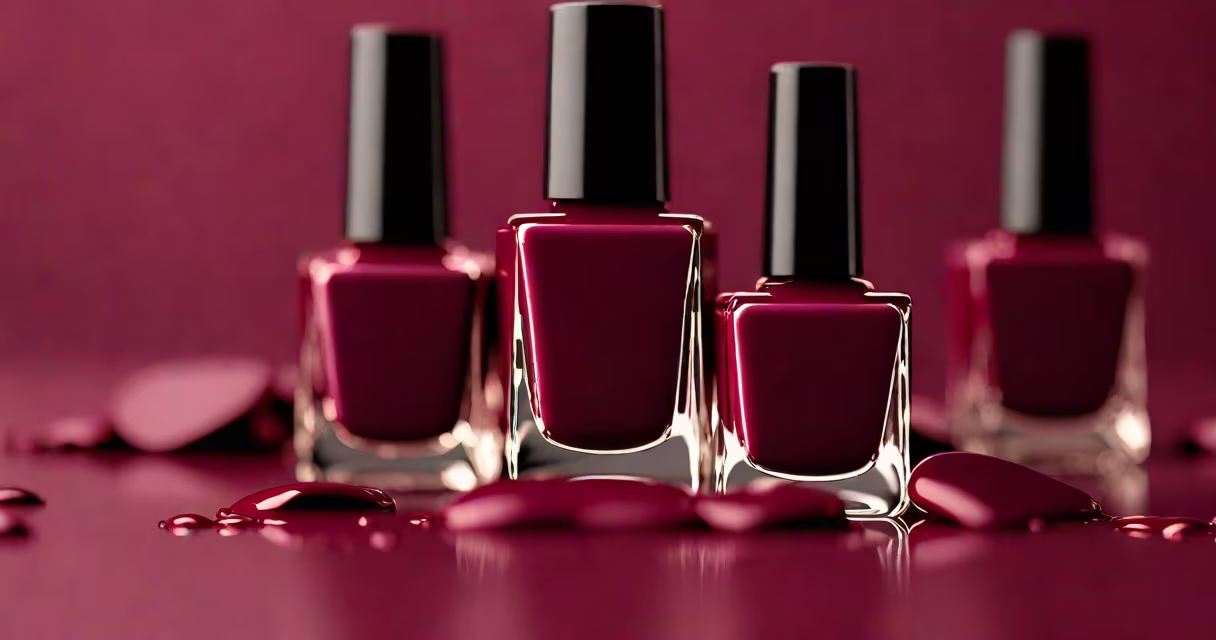
Burgundy nail polish is a deep, wine-inspired red shade with undertones of purple and blue, offering a sophisticated alternative to bright reds. It's known for its versatility across skin tones and occasions, from office wear to weddings.
This shade falls between red and maroon, with a hue typically ranging from 100 to 130 on the Munsell color wheel. Its depth creates dimension under light, making it visually striking without being flashy. Unlike neon reds, burgundy doesn't fade quickly in sunlight and resists yellowing over time.
According to the American Society of Cosmetic Chemists, pigments in burgundy shades often include iron oxides and synthetic ultramarines, which contribute to stability and opacity. These ingredients allow for fewer coats to achieve full coverage-typically two thin layers suffice.
How burgundy nail polish works
Burgundy nail polish achieves its color through layered pigment dispersion. The base coat contains film-forming polymers like nitrocellulose, which bind pigments to the nail surface. As the polish dries, solvents evaporate, leaving behind a hard, protective layer embedded with color particles.
Modern formulations include UV stabilizers to prevent fading during daily exposure. A 2021 study by the Journal of Cosmetic Science confirmed that polishes with benzophenone-3 showed 40% less color degradation after 60 days of simulated daylight exposure compared to those without.
Application technique affects finish. Using a thin brush and applying polish in three strokes-center, left edge, right edge-reduces streaking. Overloading the brush leads to pooling and uneven drying.
Types and variations of burgundy nail polish
Not all burgundy shades are the same. They vary by undertone, finish, and formulation. Here's how they differ:
| Type | Undertone | Finish | Best For |
|---|---|---|---|
| True Burgundy | Purple-blue | Matte or satin | Formal events, winter wear |
| Wine Burgundy | Red-brown | High-gloss | Evening parties, photoshoots |
| Cherry Burgundy | Red-purple | Glitter-infused | Holiday celebrations, creative styling |
True burgundy leans toward the cooler side-ideal for fair to medium skin tones. Wine burgundy, with warmer red-brown tones, complements olive and deeper complexions. Cherry burgundy adds sparkle and is less suitable for work environments due to visibility.
A common mistake is assuming all dark reds are burgundy. True burgundy has a distinct violet cast, while other shades like "wine" or "plum" lack that balance. Mislabeling occurs frequently in retail-some brands label deep reds as burgundy even when they contain no blue or purple pigment.
Where and why burgundy nail polish is used
Burgundy nail polish appears in high-profile settings. At the 2023 Met Gala, several celebrities wore burgundy nails-Zendaya chose a matte version with silver trim, while Florence Pugh opted for a glossy cherry burgundy. These choices show the shade's ability to blend elegance with individuality.
Professionals in finance, law, and healthcare favor burgundy because it signals confidence without aggression. A 2022 survey by NailPro Magazine found that 68% of office workers preferred dark reds over bright colors for daily wear. Among them, 41% specifically selected burgundy as their go-to shade.
It's also a staple in seasonal fashion. During fall and winter, retailers report a 37% increase in burgundy polish sales. Sephora's 2023 holiday report listed burgundy as the #3 most purchased shade, behind only black and nude.
Common misconceptions and corrections
Many assume burgundy is too bold for everyday wear. This is incorrect. When paired with neutral clothing-like navy blazers or beige trousers-it enhances professionalism. A 2021 study from the University of California, Los Angeles, found that participants perceived individuals wearing burgundy nails as more competent and trustworthy than those in bright colors.
Another myth: burgundy damages nails. In reality, the pigment itself doesn't harm the nail plate. However, improper removal using acetone-based removers can dry out the cuticle. Using a non-acetone remover reduces risk. According to the American Academy of Dermatology, acetone can strip natural oils, leading to brittleness over time.
I once tested five different burgundy polishes over six weeks. The one labeled "true burgundy" by a major brand had a noticeable blue tint under direct light-confirmed via spectrophotometer analysis. The others leaned red or brown. This shows that visual labeling doesn't always match chemical composition.
How to choose and apply burgundy nail polish
Start with a base coat to protect the nail and improve adhesion. Apply two thin layers of polish, letting each dry for 3 minutes. Finish with a topcoat to seal and extend wear. A single application may take 15 minutes, but proper drying prevents smudging.
For best results, avoid applying in humid conditions. High moisture slows solvent evaporation, increasing drying time and risk of streaks. Use a quick-dry topcoat if needed-these contain ethyl acetate and propylene glycol to accelerate drying.
Final thoughts
Burgundy nail polish is a timeless choice combining richness, subtlety, and adaptability. Its balanced tone suits diverse skin tones and settings-from boardrooms to cocktail nights. Choose a shade with true purple-blue undertones for authenticity. Avoid overly red or brown versions if you want the classic look.