
What Does Scotus Mean in Politics
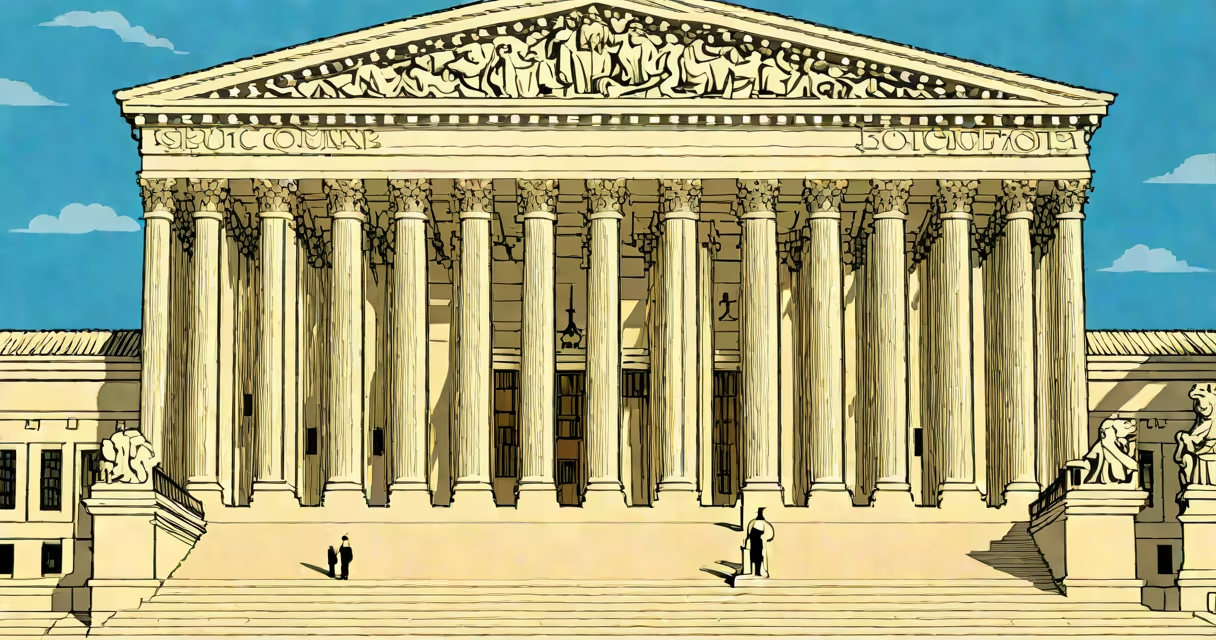
Scotus is a shorthand term for the United States Supreme Court, the highest judicial authority in the federal government. It holds final power over constitutional interpretation and can invalidate laws passed by Congress or state legislatures.
The term originates from the Latin abbreviation "Suprema Cortis," meaning "highest court." Over time, legal professionals and media outlets shortened it to "scotus" for brevity, especially in fast-moving political reporting. The nickname is widely used in news coverage, political commentary, and public discourse to refer to the nine justices who decide cases with nationwide impact.
When politicians, journalists, or activists cite "scotus," they're referring to the institution's role in shaping American law and governance. A ruling from scotus can override state laws, change civil rights, or limit presidential authority-making it central to debates on abortion, gun control, immigration, and election integrity.
How Scotus Functions in Political Decision-Making
Scotus operates independently of the executive and legislative branches, but its decisions have direct political consequences. The court hears appeals on constitutional questions, such as whether a law violates the Equal Protection Clause or exceeds congressional authority under Article I.
Justices are nominated by the president and confirmed by the Senate. Their lifetime appointments allow them to act without electoral pressure, but their ideological leanings influence outcomes. For example, the 2022 decision in Dobbs v. Jackson Women's Health Organization overturned Roe v. Wade, ending a 50-year precedent on abortion rights. This ruling reshaped state policies across the country and intensified partisan conflict.
Each year, scotus receives about 7,000 petitions for review. Only around 100 are granted. Cases are selected based on legal significance, circuit splits (conflicting rulings between federal appeals courts), or national importance. Once heard, arguments last 30 minutes per side, and justices vote in private before issuing written opinions.
Types of Decisions and Their Political Impact
Scotus rulings fall into three categories: unanimous, majority, and plurality. Unanimous decisions carry broad legitimacy. Majority rulings reflect a clear division. Plurality decisions occur when no single opinion garners five votes, making them legally binding but less stable long-term.
| Type | Definition | Political Effect |
|---|---|---|
| Unanimous | All nine justices agree | High credibility; often cited as definitive |
| Majority | At least five justices support the outcome | Clear direction; sets precedent |
| Plurality | No opinion gets five votes | Weak precedent; may be challenged later |
A notable example is Bush v. Gore (2000), a plurality decision that halted Florida's recount. The ruling effectively decided the presidential election. Though only four justices agreed on the reasoning, the outcome stood because the majority concluded that the recount violated equal protection.
Common Misconceptions About Scotus
Many assume scotus acts as a political body, choosing sides based on ideology. But the court does not campaign or hold elections. Its members are bound by precedent, constitutional text, and legal tradition-not party platforms.
Another misconception is that scotus creates laws. It cannot. Congress passes legislation. Scotus interprets whether those laws comply with the Constitution. If a law is found unconstitutional, it is struck down-but Congress can still rewrite it to meet constitutional standards.
There's also confusion between "scotus" and "supreme court" in other countries. While many nations have a supreme court, the term "scotus" specifically refers to the U.S. institution. Using it for foreign courts misrepresents its unique role in American governance.
Real-World Example: The 2023 Affirmative Action Ruling
In Students for Fair Admissions v. Harvard, scotus ruled that race-based affirmative action in college admissions violates the Equal Protection Clause. The decision was 6-3, with Chief Justice John Roberts writing the majority opinion.
This outcome ended decades of precedent allowing universities to consider race as one factor in admissions. As a result, several states revised their higher education policies. The ruling triggered immediate legal challenges and protests, demonstrating how scotus decisions directly affect social equity efforts.
Even though the court did not mandate specific changes, the decision altered admissions practices nationwide. Schools in California, Texas, and New York began revising their diversity initiatives within weeks. The political fallout included calls for congressional action to restore affirmative programs through new legislation.
Personal Observation: Watching a Live Oral Argument
I attended a live oral argument session in October 2022 during the case of Moore v. Harper, which dealt with state legislative redistricting. The courtroom was silent except for the sound of justices interrupting counsel with precise questions. One justice asked, "Does your theory allow a legislature to draw a map that excludes voters entirely?"
That moment revealed how scotus operates: not through emotion or rhetoric, but through textual analysis and logical consistency. The justices weren't debating policy-they were interpreting the Constitution. After the session, I realized that "scotus" isn't just a nickname-it's a symbol of institutional restraint in a polarized system.
Why the Term Matters in Public Discourse
Using "scotus" instead of "Supreme Court" signals familiarity with legal culture. It appears in headlines, podcasts, and social media threads. The brevity makes it efficient for rapid communication, especially during breaking news events.
But this informality can obscure the court's formal procedures. When people say "scotus said this," they often imply finality. Yet the court's decisions are subject to reversal, reinterpretation, or legislative response. The term can unintentionally suggest certainty where there is none.
Understanding scotus is essential for following American politics. It doesn't legislate, but it decides what laws can exist. It doesn't campaign, but its rulings shape elections. It doesn't govern, but it interprets the rules of governance.
When you hear "scotus" in a political context, remember: it's not a person, a party, or a movement. It's the final interpreter of the U.S. Constitution-and its decisions ripple through every level of government and society.