
liquid restriction for carry on baggage
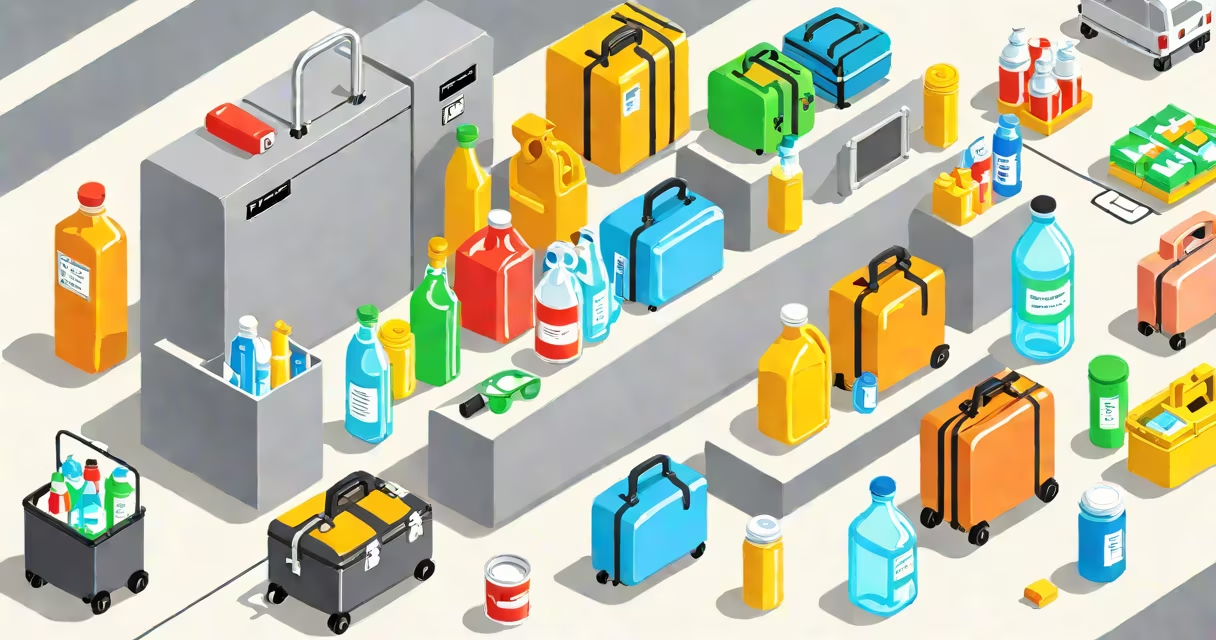
The liquid restriction for carry on baggage requires all liquids, gels, and pastes to be in containers no larger than 3.4 ounces (100 milliliters) and stored in a single, transparent, resealable quart-sized bag. This rule applies at U.S. airports under Transportation Security Administration (TSA) guidelines and is mirrored internationally.
Travelers must place all liquid items-such as shampoo, lotion, toothpaste, and beverages-into individual containers that hold 3.4 ounces or less. These containers must fit inside one clear, plastic bag measuring approximately 21 cm x 21 cm (8 inches x 8 inches). The bag must be able to close securely and be visible during screening. All bags are inspected at security checkpoints, and failure to comply results in removal or refusal of entry.
TSA enforces this rule to reduce the risk of explosive materials being concealed in liquids. A 2017 study by the National Institute of Standards and Technology (NIST) confirmed that liquid explosives can be synthesized from common household chemicals, reinforcing the need for containment limits. The standard was adopted after the 2006 transatlantic aircraft plot, which involved plans to detonate bombs hidden in liquid form.
How the rule works
At airport security checkpoints, passengers must remove their clear quart-sized bag from their carry-on and place it on the conveyor belt. All liquid containers must remain in the bag and be visible. Liquids not meeting size or container requirements are subject to removal or additional screening.
Items such as baby formula, breast milk, and medically necessary liquids are exempt from the 3.4-ounce limit but must be declared at the checkpoint. Passengers may bring more than 3.4 ounces of these items, provided they are presented separately for inspection. TSA allows up to 3.4 ounces of each medically required liquid per passenger, though larger quantities are permitted upon declaration.
Alcohol-based hand sanitizer is limited to 3.4 ounces per container. Larger bottles must be packed in checked luggage. Travelers carrying multiple small bottles of hand sanitizer must ensure each is under the limit and fits within the one clear bag.
Types of liquids covered
The restriction applies to all substances that flow freely at room temperature. This includes:
- Shampoo, conditioner, and body wash
- Toothpaste and mouthwash
- Lotion, sunscreen, and makeup remover
- Beverages, including coffee and juice
- Medications in liquid form
- Condiments like ketchup, mustard, and mayonnaise
Non-liquids such as solid deodorants, dry shampoos, and solid cosmetics are not subject to the rule. However, aerosols like hair spray and deodorant sprays count as liquids and must follow the same container limits.
| Type | Allowed Size | Special Rules |
|---|---|---|
| Shampoo | ≤3.4 oz (100 ml) | Must fit in clear bag |
| Hand sanitizer | ≤3.4 oz (100 ml) | Permitted in carry-on if sealed |
| Baby formula | No size limit | Must be declared at checkpoint |
| Medications | Unlimited if needed | Must be declared and separated |
| Aerosol sprays | ≤3.4 oz (100 ml) | Count as liquids; must be in bag |
Common mistakes and misconceptions
Many travelers assume that "3.4 ounces" means 3.4 fluid ounces. But the regulation uses metric units: 100 milliliters. A 3.4-ounce container holds about 100 ml, but not all 3.4-oz bottles are exactly 100 ml. Some exceed the limit slightly, leading to confusion at screening.
Another misconception is that the clear bag must be zip-top. The rule specifies a "clear, resealable" bag-not necessarily a zipper. A simple sealable plastic bag with a twist tie or fold-over closure is acceptable, as long as contents are visible.
Some believe the rule applies only to international flights. It applies to domestic flights in the U.S. and is enforced at all major U.S. airports. International travelers from countries with different rules may face additional scrutiny when entering the U.S., even if their liquids meet local standards.
Real-world example
In 2022, a traveler flying from Chicago to Miami carried a 4-ounce bottle of facial moisturizer in her carry-on. She placed it in a clear bag with other toiletries. At security, the officer flagged the bottle because it exceeded 3.4 ounces. The traveler was asked to remove it and either discard it or pack it in checked luggage. She chose to check it, losing the product but avoiding a delay.
This incident illustrates why travelers should verify container sizes before arriving at the terminal. Using a measuring cup or checking bottle labels against the 100 ml standard prevents last-minute issues. TSA recommends labeling containers with volume markings or using travel-sized bottles designed for air travel.
What's often misunderstood
Many assume that the 3.4-ounce rule applies to all liquids, regardless of form. But thick pastes like toothpaste and ointments are treated as liquids under TSA rules. A 1.5-ounce tube of toothpaste counts toward the limit, even if it doesn't pour.
Travelers often forget that the clear bag must be no larger than 1 quart (about 1 liter). Bags exceeding this size are rejected. A 2-quart bag, even if clear, violates the rule. The bag must be large enough to hold all containers comfortably but not so large that it fails visual inspection.
I once traveled with a set of five 3.4-ounce bottles of perfume. I packed them in a clear bag, but the bag was slightly stretched and didn't close fully. The screener asked me to repack them. I realized then that the bag must close completely and allow visibility of contents. Since then, I've always double-checked the seal before approaching the checkpoint.
International variations
While the U.S. enforces the 3.4-ounce (100 ml) rule, other countries have similar but not identical standards. The European Union follows the same 100 ml limit, but some Schengen Area airports require passengers to place the clear bag in a separate bin. Canada allows 100 ml containers but permits multiple bags if they contain only essential items.
Japan's airport security uses a 100 ml limit but allows larger quantities of alcohol if purchased in duty-free shops. These exceptions apply only to items bought after security screening. Pre-security purchases are still subject to the standard rule.
Passengers traveling between regions should verify local rules. The International Air Transport Association (IATA) maintains updated guidelines for global travel, including liquid restrictions. For example, IATA's 2023 Passenger Security Handbook notes that some Middle Eastern airports allow up to 150 ml for certain medical products, provided documentation is available.
Final checklist before travel
Before boarding, confirm:
- All liquid containers are ≤3.4 oz (100 ml)
- All containers fit in one clear, resealable quart-sized bag
- The bag closes fully and allows visibility of contents
- Any medical or infant liquids are declared at the checkpoint
- Alcohol-based sanitizers are ≤3.4 oz per container
Failure to comply can result in delays, confiscation, or denial of boarding. The rule exists to protect travelers and prevent threats. Understanding it avoids stress and ensures a smoother process.