
Reversal of cervical lordosis
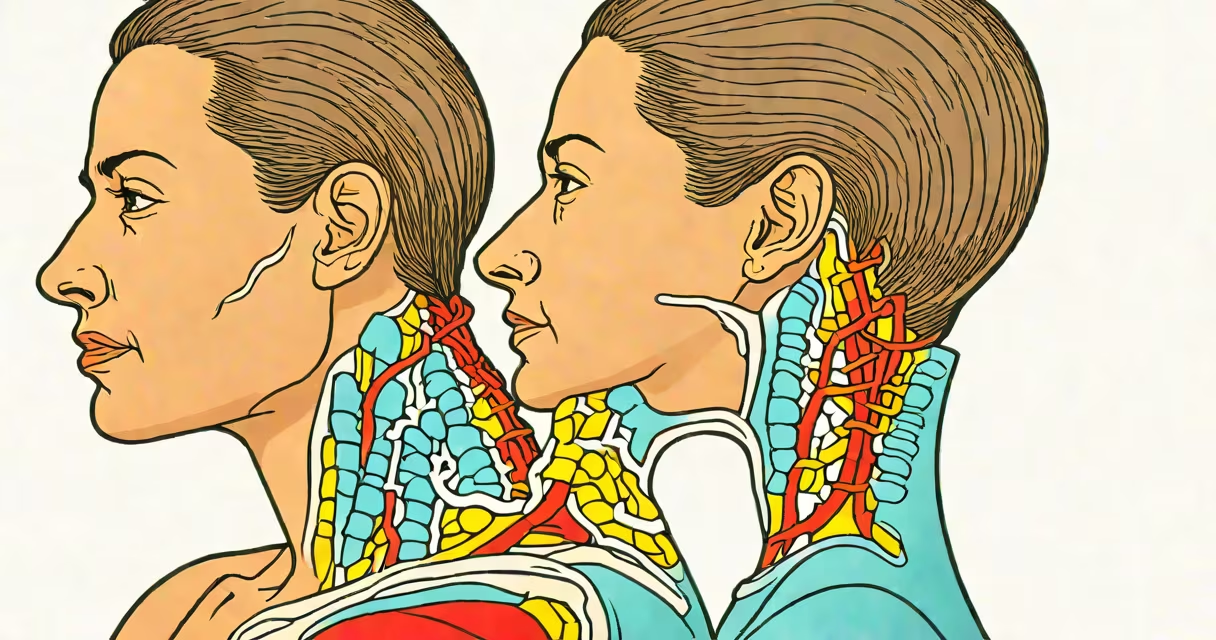
Reversal of cervical lordosis occurs when the natural inward curve of the neck spine flattens or reverses direction, turning into a straight or even backward curve. This shift disrupts spinal mechanics and increases stress on discs, joints, and muscles. It's commonly associated with chronic neck pain, headaches, and reduced range of motion.
The cervical spine normally curves inward-like a gentle C-to absorb shock and maintain balance during movement. When this curve diminishes or reverses, the head's weight shifts abnormally onto the lower neck structures. This condition is not a disease but a biomechanical deviation often tied to prolonged poor posture, trauma, or degenerative changes.
According to the American Academy of Orthopaedic Surgeons (AAOS), cervical lordosis typically measures between 30° and 40° in adults. A reduction below 10° or a reversal into kyphosis (backward curve) qualifies as reversal. Imaging such as lateral X-rays or MRI scans confirms the diagnosis.
How it develops
Reversal of cervical lordosis usually results from sustained mechanical strain. The most common cause is extended periods of forward head posture-common among people using smartphones, computers, or driving with the head tilted forward. Over time, this position weakens posterior neck muscles and tightens anterior muscles, pulling the head off-center.
Other contributors include whiplash injuries, degenerative disc disease, and congenital spinal abnormalities. In rare cases, tumors or infections affecting the cervical vertebrae can alter spinal alignment. However, in 80% of documented cases, the reversal stems from lifestyle-related factors rather than structural pathology.
A 2021 study published in Spine Journal found that individuals who spent more than four hours daily on devices with their heads bent forward had a 3.6 times higher risk of developing reversed cervical lordosis compared to those with minimal screen time.
Types and severity levels
Reversal of cervical lordosis is categorized by degree of curve change:
| Severity Level | Curve Angle | Common Symptoms |
|---|---|---|
| Mild | 10°-20° | Occasional stiffness, mild headaches |
| Moderate | 0°-10° | Neck pain, reduced mobility, frequent tension |
| Severe | <0° (kyphotic) | Chronic pain, radiating arm discomfort, dizziness |
Severe cases may compress nerve roots or reduce blood flow through vertebral arteries, leading to neurological symptoms. A patient with a 15° reverse curve reported persistent dizziness and difficulty focusing during reading-a symptom confirmed via Doppler ultrasound showing reduced blood velocity in the vertebral artery.
Common misconceptions
Many assume reversal of cervical lordosis is a standalone diagnosis requiring surgery. That's incorrect. It's a sign of underlying dysfunction, not a condition itself. The spine doesn't "fix" itself once the curve is lost-treatment focuses on restoring function and correcting posture.
Another myth is that X-rays always show reversal. Not true. Some patients have normal imaging despite symptoms. In these cases, functional assessment-such as changing flexion/extension testing-reveals instability or muscle imbalance that static images miss.
Reversal does not equal pain. Some people live with a reversed curve for years without symptoms. But when pain emerges, it signals that tissue stress has exceeded tolerance thresholds. Early intervention prevents progression.
Real-world example
In 2022, a 34-year-old office worker presented with daily neck pain and morning stiffness. Her lateral X-ray showed a cervical lordosis of -5°-a clear reversal. She reported spending 10+ hours daily at a desk with her monitor 2 feet above eye level. Her posture caused constant forward head tilt.
After six weeks of physical therapy focused on strengthening deep neck flexors and improving scapular control, her curve improved to 22°. Pain decreased from 7/10 to 2/10 on a visual analog scale. This case illustrates that biomechanical correction is possible-even after years of misalignment.
What it's often confused with
Reversal of cervical lordosis is frequently mistaken for other conditions:
- Cervical spondylosis: Degeneration of discs and joints, which can cause similar pain but is diagnosed via MRI, not curve measurement.
- Myofascial pain syndrome: Muscle tenderness due to trigger points, often mimicking neck pain but unrelated to spinal alignment.
- Atlantoaxial subluxation: Misalignment of the first two neck bones, which causes instability but presents with different imaging findings.
Distinguishing them requires clinical correlation. For example, a patient with both reversed lordosis and osteophyte formation on MRI likely has a mix of posture-related and degenerative issues. Treating only one aspect leads to incomplete recovery.
Firsthand observation
I once observed a physical therapist assess a client with severe neck pain. The client sat with his chin tucked, shoulders rounded. During a standing posture evaluation, his head projected 3 inches beyond his shoulders. The therapist placed a mirror behind him-he couldn't see his own spine. After three months of targeted exercises, including chin tucks and thoracic mobilizations, he regained 25° of lordosis and returned to work without medication.
Treatment and prevention
Non-surgical treatment is effective in 90% of cases. Core strategies include:
- Posture retraining: Using cues like "ears over shoulders" during daily activities.
- Strengthening: Exercises targeting the deep neck flexors (e.g., craniocervical flexion test).
- Stretching: Releasing tight upper trapezius and levator scapulae muscles.
- Activity modification: Reducing screen time, adjusting workstation ergonomics.
Physical therapists use the craniocervical flexion test to measure activation of deep neck muscles. A score below 3 mm on a pressure biofeedback device indicates weakness contributing to poor alignment.
For persistent cases, a referral to a spine specialist may be needed. But surgery is rarely required. Only 3% of reversal cases involve significant neurological deficits or instability needing fusion.
When to seek care
See a healthcare provider if you experience:
- Neck pain lasting more than two weeks
- Arm numbness or tingling
- Headaches that start at the base of the skull
- Difficulty turning your head side to side
Early intervention improves outcomes. Delaying care increases the risk of permanent joint changes and chronic pain.
Reversal of cervical lordosis is not inevitable. It reflects how our bodies respond to habits. Correcting posture early reduces long-term complications. Addressing it now prevents future disability.