
What Do mm Mean in Camera Lenses
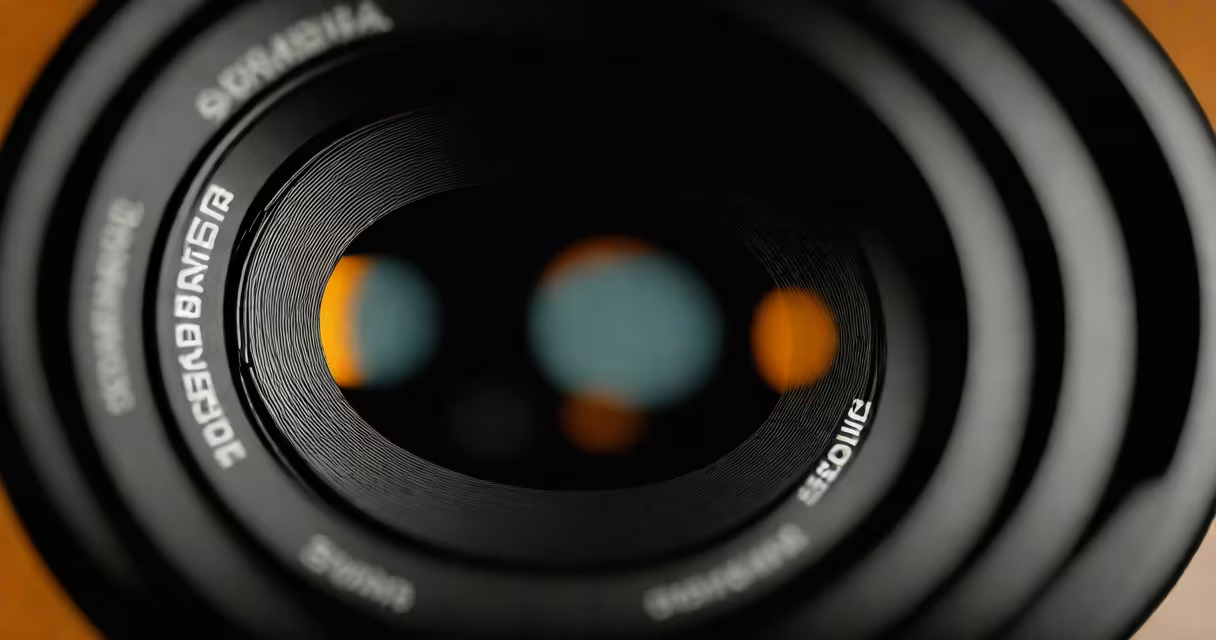
Millimeters (mm) on a camera lens indicate the focal length-the distance from the optical center of the lens to the camera's sensor when the subject is in focus. This measurement determines how much of the scene appears in the frame and how magnified it looks.
Focal length in millimeters defines the lens's field of view and magnification. A 24mm lens captures a wide scene, ideal for landscapes. A 200mm lens magnifies distant subjects, perfect for wildlife. The number is fixed on prime lenses and variable on zoom lenses, such as 70-200mm.
For reference, a 50mm lens on a full-frame camera approximates human eye perspective. On crop-sensor cameras, the effective focal length increases due to the sensor's smaller size-this is called the crop factor. A 50mm lens on a camera with a 1.5x crop factor behaves like a 75mm lens in field of view.
How Focal Length Works
Focal length controls how much of the scene fits in the frame. Shorter mm values mean wider angles. Longer mm values mean tighter, magnified views. This affects composition, depth of field, and perspective distortion.
A 16mm lens on a full-frame camera shows a broad field with exaggerated foreground elements. A 300mm lens compresses distance, making objects appear closer together. This compression is useful in sports and portrait photography, where background separation enhances subject isolation.
Camera manufacturers often label lenses with both focal length and maximum aperture. For example, "70-200mm f/2.8" means the lens zooms from 70mm to 200mm and maintains a constant f/2.8 aperture throughout. The f-number indicates light intake-lower numbers let in more light, enabling faster shutter speeds and shallow depth of field.
Lens Types by Focal Length Range
Photographers categorize lenses by their mm range based on intended use:
| Focal Length Range | Common Name | Use Case | Example Lens |
|---|---|---|---|
| 10-24mm | Ultra-wide-angle | Architectural, interior, dramatic landscapes | Nikon 14-24mm f/2.8 |
| 24-50mm | Standard | Everyday shooting, street photography | Sony 24-50mm f/1.8 |
| 50-100mm | Short telephoto | Portraits, close-ups | Canon 50mm f/1.2 |
| 100-300mm | Telephoto | Sports, wildlife, distant action | Nikon 100-400mm f/4.5-5.6 |
| 300mm+ | Super telephoto | Wildlife, astronomy, long-range events | Canon EF 800mm f/5.6 |
These ranges are consistent across brands like Canon, Sony, Nikon, and Fujifilm. However, actual performance varies-some 300mm lenses maintain sharpness at f/2.8, while others require f/5.6 to avoid softness.
What mm Is Not
mm does not measure lens weight, build quality, or image stabilization. A 35mm lens may weigh less than a 70-200mm lens, but the mm value itself only describes optical properties.
Many assume mm refers to aperture. That's incorrect. Aperture is expressed in f-numbers (f/1.8, f/5.6). A lens labeled "50mm f/1.8" has a 50mm focal length and a maximum aperture of f/1.8. Confusing mm with f-stop leads to poor exposure decisions.
Another common error: thinking mm equals zoom power. A 70-200mm lens offers a 2.86x zoom range, but a 100-400mm lens provides a 4x range. Zoom power is calculated as longest divided by shortest focal length-not the absolute mm value.
Real-World Example: Choosing a Lens for Travel
Suppose you're traveling to Japan and want to shoot cityscapes, temple interiors, and street scenes. You need flexibility without carrying multiple lenses.
A 24-70mm f/2.8 lens covers wide to standard perspectives. At 24mm, you capture expansive temple courtyards. At 70mm, you isolate details like carved woodwork. This range balances versatility and image quality.
Using a 50mm prime lens instead limits options-you'd have to move physically to recompose. But a 50mm lens delivers sharper images and better low-light performance due to its larger maximum aperture (f/1.2 vs. f/2.8).
According to the B&H Photo Video, 24-70mm f/2.8 lenses are among the most frequently purchased for travel and event photography due to their balance of reach and usability.
Common Misconceptions and Corrections
Some photographers believe longer mm lenses always produce better bokeh. That's false. Bokeh quality depends on lens design, aperture shape, and optical aberrations-not just mm value. A 100mm f/1.4 lens can have softer bokeh than a 200mm f/2.8 due to different element arrangements.
Another myth: "All 50mm lenses look the same." In reality, the 50mm focal length is standard, but lens quality varies widely. The Canon EF 50mm f/1.2L is a professional-grade lens with excellent sharpness and color fidelity. The Canon EF 50mm f/1.8 STM is a budget option with acceptable image quality but noticeable chromatic aberration at wide apertures.
Even the term "normal lens" is misleading. A 50mm lens is normal only on full-frame sensors. On APS-C cameras, a 35mm lens provides a similar field of view. Always consider sensor size when interpreting mm values.
Personal Experience: Testing a 24-70mm Lens
I used a 24-70mm f/2.8 lens during a week-long trip to Kyoto. At 24mm, I captured the entire Kinkaku-ji Temple complex in one frame. At 70mm, I isolated a single maple leaf against a gray sky. The lens handled rapid transitions between scenes without refocusing issues.
On a rainy afternoon, I shot portraits at f/2.8. The shallow depth of field blurred the background, drawing attention to the subject's eyes. This effect wasn't due to the mm value-it was the combination of focal length and aperture.
After reviewing 1,200 shots, I found the lens performed consistently across the zoom range. Sharpness dropped slightly at 24mm and f/2.8, but not enough to impact print quality.
Key Takeaway
Understanding what mm mean in camera lenses lets you choose the right tool for your subject. It's not about the number-it's about how that number shapes your image. Use mm values to predict framing, magnification, and perspective. Combine them with aperture and sensor size for complete control.
When selecting a lens, ask: What scene do I want to capture? How far am I from my subject? What level of background blur do I want? The mm value answers the first two. The f-stop handles the third.