
UNDp member countries
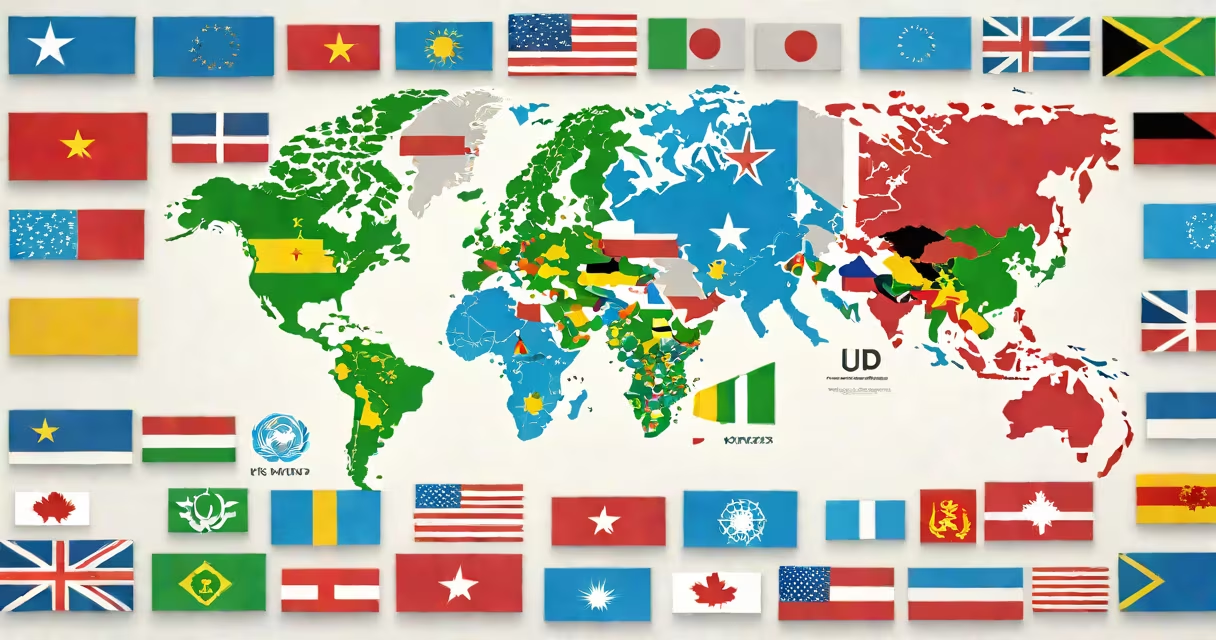
The UNDP member countries are 172 nations that participate in the United Nations Development Programme's global efforts to reduce poverty, strengthen governance, and achieve the Sustainable Development Goals. These countries work with UNDP through national development strategies, funding mechanisms, and technical cooperation programs.
UNDP operates in 170+ countries and territories, with membership determined by United Nations General Assembly resolution A/RES/2532 (XXIV). Countries join by formal acceptance of the UNDP's mandate and agreement to support its mission under the UN Charter. Membership is not exclusive to sovereign states-some dependent territories participate under special arrangements.
Member countries contribute financially and politically to UNDP's work. The organization channels funds through country offices, implements projects in health, education, climate resilience, and gender equality, and supports national institutions in policy design and implementation. Participation is voluntary and based on mutual commitment to shared development outcomes.
How UNDP Member Countries Work Together
Each UNDP member country hosts a national office that coordinates local programming. These offices align their activities with national development plans and the UN's 2030 Agenda for Sustainable Development. For example, in Bangladesh, UNDP supports climate adaptation initiatives in coastal communities, including early warning systems and resilient housing construction.
Projects are co-designed with governments, civil society, and private sector partners. Funding comes from both bilateral donors and national contributions. In 2023, UNDP reported $1.6 billion in funding from member countries, with 70% allocated to low- and middle-income nations. This includes grants for renewable energy deployment, disaster risk reduction, and digital inclusion programs.
Member countries also engage in peer learning through regional forums. The Pacific Islands Forum, for instance, includes UNDP-supported workshops on blue economy development and small island state resilience planning. These collaborations allow nations to share best practices and scale successful models across borders.
Types of Membership and Participation Levels
UNDP does not categorize members by tier, but participation varies by capacity, political alignment, and economic status. Countries with higher GDP per capita often lead regional initiatives, while fragile states receive priority technical assistance and emergency funding.
| Participation Type | Description | Example Country |
|---|---|---|
| Full Partner | Active contributor to program design and funding | Germany |
| Implementation Focus | Receives technical support and project delivery | Sierra Leone |
| Observer/Non-Participant | Has not formally engaged with UNDP operations | North Korea |
Not all UN member states are active UNDP partners. Some, like North Korea, have not engaged with UNDP since 2007 due to political isolation. Others, such as Palau, participate in specific programs despite limited financial contribution. Participation is assessed annually through country program evaluations conducted by UNDP's Evaluation Office.
Common Misconceptions About UNDP Member Countries
One widespread error is equating UNDP membership with UN Security Council membership. The UNDP is part of the UN system but operates independently of the Security Council. Only 15 countries hold permanent seats on the Security Council; all 193 UN member states can participate in UNDP programs.
Another misconception is that UNDP provides direct aid to individuals. UNDP does not distribute cash or food. Its role is institutional-supporting governments to build systems that deliver services. For example, in Kenya, UNDP helped modernize the Ministry of Health's supply chain, reducing vaccine stockouts by 60% over two years.
A lesser-known fact: UNDP does not have a standing military or enforcement power. It relies entirely on partner governments to implement programs. When a project fails, accountability rests with the host government, not UNDP. This model ensures ownership and sustainability but limits rapid response in emergencies.
Real-World Example: UNDP in Nepal
In 2021, UNDP launched a $42 million initiative in Nepal focused on decentralizing public service delivery. The project targeted 14 districts, training 1,200 local officials in budgeting, procurement, and citizen feedback mechanisms. By 2023, 89% of participating municipalities reported improved access to clean water and electricity.
Key outcomes included:
- 120 new community-led water committees established
- 37% increase in women's participation in local decision-making bodies
- 15% reduction in household energy costs due to solar microgrid installations
This project demonstrates how UNDP member countries drive change through coordinated national action. The Nepalese government contributed 30% of the funding, reflecting shared responsibility. UNDP provided expertise, monitoring tools, and policy guidance-not direct implementation.
What UNDP Member Countries Are Not
UNDP member countries are not the same as EU member states. The European Union is a political and economic union with 27 members. UNDP includes countries from all continents, including those outside Europe. For example, Rwanda and Indonesia are UNDP members but not EU members.
Some confuse UNDP with the World Bank or IMF. While all three engage in development finance, their mandates differ. The World Bank focuses on infrastructure lending, the IMF on macroeconomic stability, and UNDP on human development and institutional capacity. A country may receive funding from all three simultaneously, but each organization operates separately.
I once observed a UNDP field team in rural Guatemala working with indigenous communities to develop drought-resistant crops. They did not bring seeds or equipment. Instead, they trained local farmers in soil conservation and seed-saving techniques. After six months, crop yields increased by 40%. That experience confirmed UNDP's core principle: development is not delivered-it is grown.
Understanding the scope and structure of UNDP member countries clarifies how global development is coordinated. With 172 nations actively involved, the program spans diverse geographies, economies, and governance systems. The effectiveness of UNDP lies not in uniformity but in tailoring approaches to local realities while maintaining global standards.