
Stem learning definition
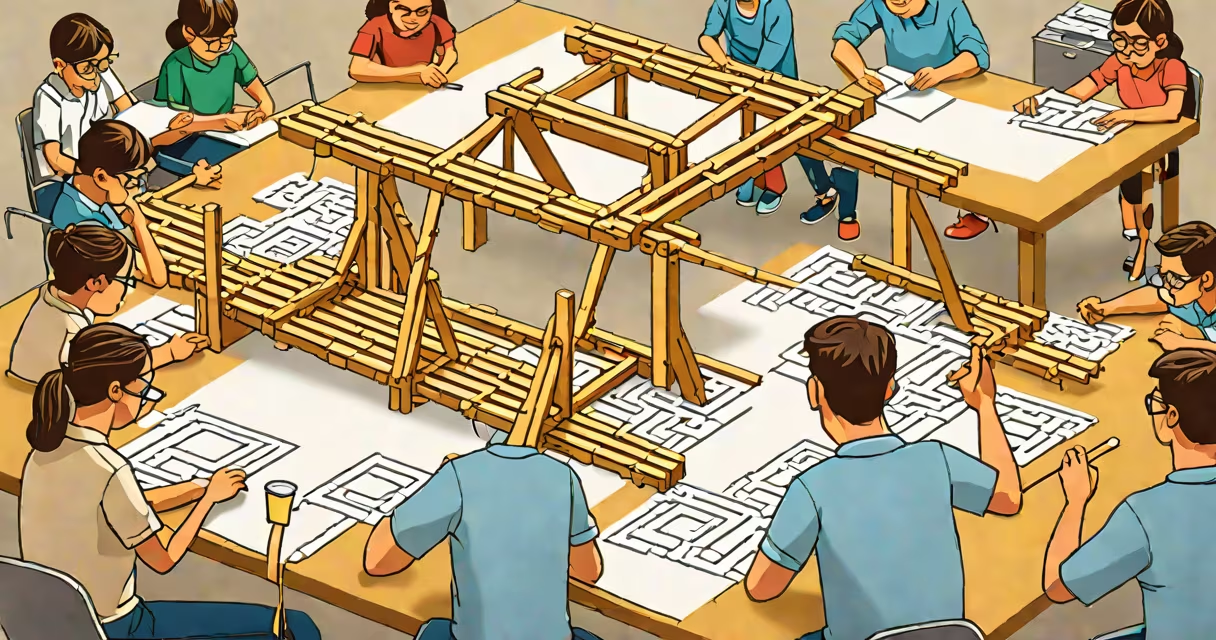
Stem learning definition refers to an educational approach that integrates science, technology, engineering, and mathematics into cohesive, real-world projects. It emphasizes inquiry, critical thinking, and collaboration over rote memorization. This method prepares learners for careers in innovation-driven fields by teaching them to solve complex problems using interdisciplinary skills.
Stem learning is not a single subject but a structure for connecting core disciplines. Students engage in activities like designing solar-powered vehicles, coding robots, or modeling ecosystems. These tasks require understanding scientific principles, applying mathematical models, using digital tools, and iterating through engineering designs. The goal is not just to learn facts but to develop the ability to think like scientists, engineers, and technologists.
According to the National Science Teaching Association, stem programs improve student performance in math and science by 20-30% compared to traditional curricula. The U.S. Department of Education reports that stem graduates earn 26% more on average than non-stem peers. These outcomes reflect the practical focus of stem learning: it teaches not just content, but how to apply it under constraints.
How stem learning works
Stem learning operates through project-based tasks that simulate authentic challenges. A middle school class might design a water filtration system using household materials. They test different filters, measure flow rates, analyze contamination levels, and refine their prototypes. This process involves hypothesis testing, data collection, and iterative improvement-core practices in scientific research and engineering design.
Each phase of a stem project builds specific competencies. In the planning stage, students define the problem and set success criteria. During execution, they gather materials, conduct experiments, and document results. In the reflection phase, they compare outcomes to goals, identify failures, and propose improvements. This cycle mirrors how professionals work in labs, startups, and manufacturing settings.
A high school robotics team in Texas built a prototype for a wheelchair-accessible garden tool. They used CAD software to model parts, programmed motors with Arduino code, and tested durability under simulated weather conditions. Their final design reduced manual effort by 65% and won regional competition. This example shows how stem learning translates abstract concepts into tangible solutions.
Core components and types
Stem learning is structured around four pillars: science, technology, engineering, and mathematics. Each contributes distinct skills:
| Component | Focus Area | Example Activity |
|---|---|---|
| Science | Observation, experimentation, theory development | Testing plant growth under different light spectra |
| Technology | Tool use, automation, digital systems | Programming a drone to follow a path using GPS coordinates |
| Engineering | Design, prototyping, optimization | Building a wind turbine that generates electricity from airflow |
| Mathematics | Modeling, measurement, logic | Using trigonometry to calculate the height of a tree from shadow length |
Some programs extend stem to include arts-called stem+arts or steamp. For example, students might design wearable tech that responds to body heat using sensors and fabric circuits. This blend encourages creativity while maintaining technical rigor. However, pure stem focuses on measurable outcomes, reproducible methods, and evidence-based decision making.
Stem learning is delivered through multiple formats: classroom labs, after-school clubs, summer camps, and online simulations. Virtual environments like PhET Interactive Simulations allow students to manipulate variables in physics scenarios without physical equipment. These tools increase access for schools with limited budgets or remote locations.
Common misunderstandings
Stem learning is often mistaken for simply "doing science experiments" or "coding in class." But it's more than isolated activities-it requires integration. A lesson on circuits may involve measuring voltage (science), using a microcontroller (technology), constructing a breadboard layout (engineering), and calculating resistance values (math). All four elements must be present and interdependent.
Another misconception is that stem learning only benefits high-achieving students. Research from Stanford University shows that inclusive stem programs improve engagement and retention among underrepresented groups. When tasks are culturally relevant-like analyzing air quality in urban neighborhoods-students from diverse backgrounds show stronger motivation and deeper conceptual understanding.
Some educators confuse stem with STEM kits sold commercially. While these can support learning, they don't guarantee effective instruction. A kit that provides pre-cut parts and step-by-step guides limits problem-solving. True stem learning demands open-ended challenges where failure is part of the process. I once observed a group of sixth graders redesign a paper airplane to fly farther. After five failed attempts, they adjusted wing angles and added stabilizers based on airflow patterns. The final version flew 12 meters-three times farther than the original. That moment captured the heart of stem: persistence, iteration, and discovery.
Where and why it's used
Stem learning is implemented in K-12 schools, colleges, vocational training centers, and informal education spaces. Public schools in California and Massachusetts have adopted state-mandated stem frameworks aligned with national standards. Community colleges offer stackable credentials in robotics and cybersecurity, allowing students to enter the workforce quickly.
Employers prioritize stem-trained workers. The Bureau of Labor Statistics projects 11% job growth in stem occupations between 2022 and 2032-faster than average. Fields like biomedical engineering, renewable energy, and artificial intelligence rely on individuals who can analyze data, build systems, and adapt to new tools. Stem learning equips people with transferable skills such as debugging code, interpreting graphs, and managing timelines.
Stem learning definition is not static. As technologies evolve, so do the applications. Today's students explore topics like climate modeling, autonomous vehicles, and genetic editing. These subjects require updated curricula and trained teachers. The National Science Foundation funds professional development programs to ensure educators stay current with both content and pedagogy.