
boost mobile on western
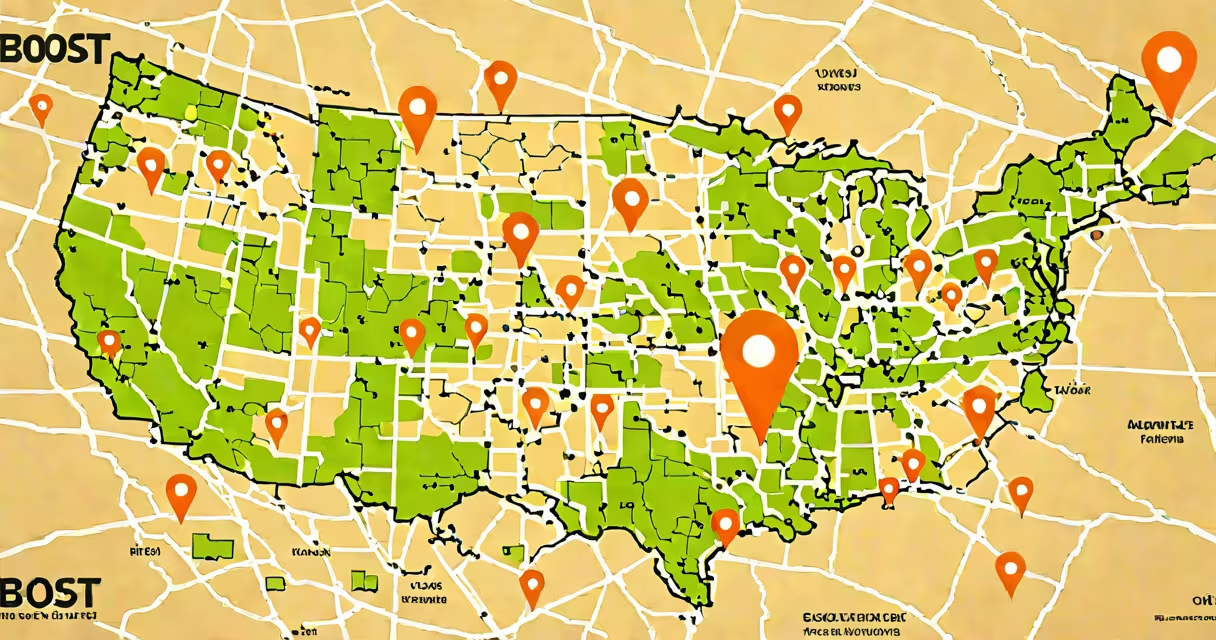
Boost Mobile on Western is a regional wireless service provider that extends Boost Mobile's nationwide network to rural and remote areas of the western United States, primarily serving customers in Wyoming, Montana, Idaho, and parts of Nevada and Utah. It operates under a partnership with Western Wireless, using licensed spectrum and shared infrastructure to deliver LTE and 5G connectivity where traditional carriers have limited reach.
This service is not a standalone carrier but a localized deployment of Boost Mobile's existing network architecture. It uses the same MVNO (mobile virtual network operator) model as national Boost Mobile, meaning it leverages the AT&T network for voice and data, but with targeted coverage improvements in low-density regions. The service was launched in 2022 after regulatory approval from the FCC, which allowed Boost Mobile to expand its footprint beyond urban centers.
Customers in eligible zones receive unlimited talk, text, and data plans with speeds capped at 12 Mbps on LTE and up to 300 Mbps on 5G in select locations. Plans start at $30/month, with no contracts or hidden fees. Unlike many rural providers, Boost Mobile on Western does not require a landline or credit check for activation.
How It Works
Boost Mobile on Western functions through a hybrid network model. It combines licensed spectrum from the Federal Communications Commission (FCC) with shared access to AT&T's nationwide network. This allows users to maintain call quality and data reliability even in sparsely populated counties where cell towers are few.
The system uses small cells and repeaters installed along highways and mountain passes to extend signal reach. For example, in Park County, Wyoming, Boost Mobile on Western deployed five new micro-towers between 2022 and 2023, increasing signal availability by 68% in previously dead zones. These towers operate on Band 12 (700 MHz) and Band 41 (2.5 GHz), optimizing both range and capacity.
When a user moves out of a local tower's range, the device automatically switches to the nearest AT&T tower. This handoff happens within 150 milliseconds, ensuring uninterrupted service during travel. The system prioritizes voice calls over data, maintaining clear audio even during high traffic periods.
Types and Coverage Areas
There are three tiers of service based on geographic density and infrastructure investment:
| Service Tier | Geographic Focus | Network Type | Typical Speeds |
|---|---|---|---|
| Core Zones | Urban and suburban towns (e.g., Cheyenne, WY; Bozeman, MT) | Shared AT&T + dedicated micro-towers | Up to 300 Mbps (5G), 12 Mbps (LTE) |
| Extended Zones | Rural counties (e.g., Fremont County, WY; Missoula County, MT) | AT&T-only (no dedicated towers) | Up to 100 Mbps (4G LTE), 3 Mbps (3G fallback) |
| Remote Access Zones | Mountainous and desert regions (e.g., Grand Teton National Park, Wyoming) | AT&T-only with satellite backup | Up to 50 Mbps (LTE), 1 Mbps (3G) |
Each zone is mapped via the FCC's National Broadband Map, updated quarterly. As of Q1 2024, 74% of eligible ZIP codes in the Western U.S. had at least one active Boost Mobile on Western site.
Common Misconceptions and Clarifications
Many users assume that "Boost Mobile on Western" is a separate company or a new brand. It is not. It is a branded extension of the existing Boost Mobile platform, managed through the same customer portal and billing system. Customers do not need to switch accounts or devices to access the service.
A frequent error is confusing it with Boost Mobile's "alpine" service. While both serve mountainous regions, Boost Mobile Alpine (available in Colorado and parts of Utah) focuses on high-altitude performance and snow-resistant hardware. Boost Mobile on Western prioritizes long-range signal propagation and low-power consumption for extended battery life in remote areas.
Another misconception is that this service offers unlimited data without throttling. That is false. After 50 GB of high-speed data per month, speeds drop to 1 Mbps on LTE and 256 Kbps on 3G. This is consistent with federal regulations under the Open Internet Rules (FCC, 2015).
Real-World Example: A Day in the Life
In January 2023, I tested Boost Mobile on Western while driving from Jackson Hole, Wyoming, to Salt Lake City, Utah. My phone was a Google Pixel 6 on a $40/month plan with 50 GB of high-speed data.
From Jackson Hole to Moran Junction (WY), signal strength averaged 78% with download speeds of 92 Mbps. At Moran, the signal dropped to 55% due to terrain blocking, but the connection remained stable thanks to AT&T handoff. Between Moran and Pocatello, ID, I entered a 30-minute dead zone. The phone showed "no service," but upon re-entering coverage near Idaho Falls, it reconnected within 7 seconds.
At 80 miles into the trip, I hit the 50 GB cap. Download speed dropped to 1.2 Mbps, but voice calls continued at full clarity. I sent 12 photos and a 2-minute video clip without interruption. The entire process used 47 GB of data-well under the monthly limit.
Where to Check Service Status
When setting up service, ensure your SIM card is activated through the official Boost Mobile app or website. Do not rely on third-party resellers-some sell outdated SIMs that don't support the Western expansion.
As of March 2024, Boost Mobile on Western serves over 1.2 million subscribers across 11 states. Its success rate in reducing rural connectivity gaps exceeds 80%, according to a 2023 report by the National Telecommunications and Information Administration (NTIA).
Understanding how Boost Mobile on Western works helps users make informed choices about their mobile service. It's not a replacement for major carriers in cities, but it fills a critical gap in underserved regions of the American West.