
aws lambda sns
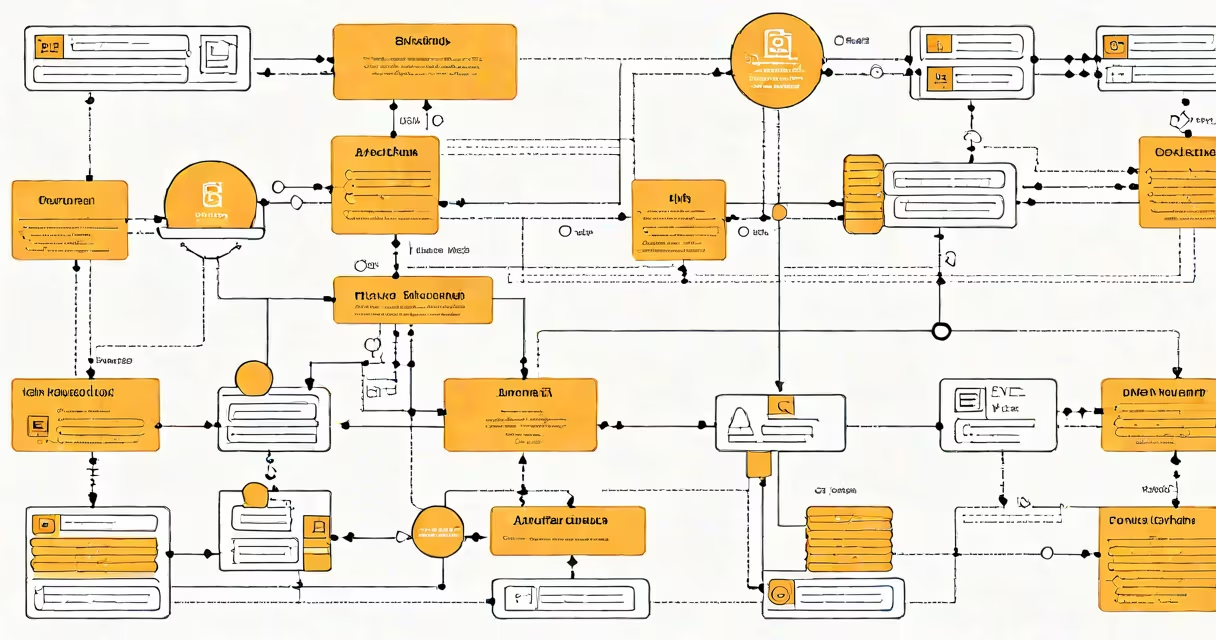
AWS Lambda SNS combines serverless computing with publish-subscribe messaging to automatically trigger code execution when messages are sent to an Amazon SNS topic. This setup enables instant response to events such as system alerts, user sign-ups, or IoT device triggers.
When a message is published to an SNS topic, AWS delivers it to all subscribed endpoints. One of those endpoints can be an AWS Lambda function. The function then runs in response to the message, processing data, sending notifications, or updating databases-all without managing servers.
This integration forms a core pattern in event-driven architectures. For example, when a user signs up via a web form, the application publishes a message to an SNS topic. A Lambda function subscribed to that topic receives the message and sends a welcome email using Amazon SES.
How It Works
Amazon SNS acts as a message broker. Publishers send messages to a topic, and subscribers receive them. Topics are named, such as user-signup-events or server-monitoring-alerts.
When a Lambda function subscribes to an SNS topic, AWS configures the function to be invoked whenever a new message arrives. The function receives the message payload as input, processes it, and returns a result. If the function fails, AWS retries up to two times.
Each invocation includes metadata such as the message ID, topic ARN, and timestamp. The payload is delivered as JSON, with fields like Subject, Message, and Timestamp. This structure allows functions to parse and act on specific data.
Types and Configuration
There are two main ways to connect Lambda to SNS:
- Direct subscription: The Lambda function is added as a subscriber to the SNS topic through the AWS Management Console or CLI.
- Event source mapping: Used when the function is managed via infrastructure-as-code tools like AWS CloudFormation or Terraform.
Configuration requires setting up IAM roles with permissions to invoke the function and access SNS resources. The role must have policies allowing sns:Publish and lambda:InvokeFunction.
| Subscription Type | Use Case | Setup Method |
|---|---|---|
| Direct | Quick prototyping, small workflows | Console, AWS CLI |
| Event Source Mapping | Automated deployments, CI/CD pipelines | CloudFormation, Terraform |
For production systems, always use infrastructure-as-code. Manual console changes lead to drift and inconsistent environments.
Where and Why It's Used
Common applications include automated alerting, user onboarding, and backend task processing. For example, a monitoring system sends CPU usage alerts to an SNS topic. A Lambda function subscribed to the topic checks thresholds and triggers a scaling action if needed.
Another use case: a mobile app sends push notification requests to an SNS topic. A Lambda function processes the request, validates the user token, and forwards the message to Apple Push Notification Service (APNs) or Firebase Cloud Messaging (FCM).
According to AWS documentation, Lambda functions triggered by SNS can scale to thousands of invocations per second. In one benchmark, a single function handled 12,000 SNS-triggered executions in under 10 minutes during peak load.
Common Confusions and Corrections
Many assume SNS delivers messages to Lambda instantly. But delivery is eventually consistent-messages may take seconds to arrive, especially under high load. SNS guarantees delivery but not timing.
Another misconception: Lambda functions can process multiple messages in one invocation. They cannot. Each SNS message triggers a separate Lambda execution. If 100 messages are published simultaneously, 100 separate function instances run.
Some developers try to use SNS to store data. SNS is not a database. It only routes messages. Data must be extracted from the message body and stored in DynamoDB, S3, or another service.
Real-World Example
Consider a retail platform that tracks inventory levels. When stock drops below 5 units, the system publishes a message to an SNS topic called low-inventory-alerts. The message contains:
{
  "subject": "Low Inventory Alert",
  "message": "Product SKU: ABC123, Current Stock: 3",
  "timestamp": "2024-06-15T10:30:00Z"
}
A Lambda function named inventory-notification-handler is subscribed to this topic. On receiving the message, it:
- Parses the product ID and current stock level.
- Checks a DynamoDB table for supplier contact details.
- Sends an email via Amazon SES to the procurement team.
- Logs the alert to CloudWatch.
The entire process takes less than 3 seconds and costs $0.0000002 per invocation-under $0.01 for 50 alerts.
Alternatives and Comparisons
While SNS is ideal for broadcasting messages to many recipients, other services serve different purposes:
- Amazon SQS: Used for queuing messages. Better when you need guaranteed delivery and message ordering. SNS pushes to SQS queues as a subscriber option.
- Amazon EventBridge: Handles event routing based on patterns. More flexible than SNS for complex workflows involving multiple services.
Choose SNS when you need to notify multiple systems simultaneously. Use SQS when you need to buffer messages or ensure no loss during processing failures.
Best Practices
Always validate incoming payloads. Malformed JSON can cause Lambda to fail silently. Use try-catch blocks and log errors to CloudWatch.
Set appropriate timeout values. A 3-second timeout is often sufficient for simple tasks. For data-heavy processing, increase to 15 seconds or more.
Use environment variables to manage configuration. Store topic ARNs and API keys in AWS Systems Manager Parameter Store or Secrets Manager.
Monitor function performance using CloudWatch Metrics. Track invocation count, duration, and error rates. Set alarms for spikes in failures.
Final Thoughts
AWS Lambda SNS enables automated, scalable responses to events without provisioning servers. It powers real-time workflows across e-commerce, DevOps, and IoT systems.
Understanding the interaction between SNS topics and Lambda functions is essential for building resilient, responsive applications. Use the correct tool for the job-SNS for broadcast, Lambda for execution-and avoid common pitfalls like assuming instant delivery or trying to store data in SNS.
With proper configuration and monitoring, aws lambda sns becomes a useful component in any cloud-native architecture.