
What Is the Definition of Red Blood Cells
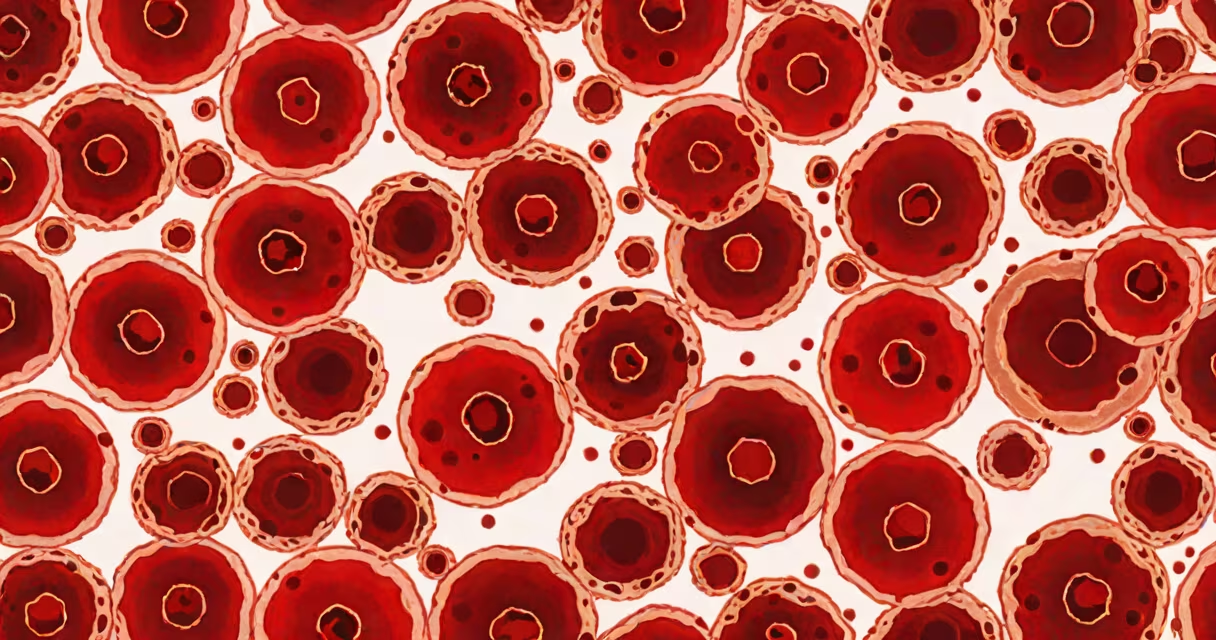
Red blood cells, also called erythrocytes, are specialized blood cells that transport oxygen from the lungs to tissues throughout the body using hemoglobin, a protein that binds oxygen molecules. They make up about 40-45% of total blood volume and lack a nucleus, allowing maximum space for oxygen-carrying hemoglobin.
These cells originate in the bone marrow through a process called erythropoiesis. Immature red blood cells, known as reticulocytes, enter circulation and mature within 1-2 days. Once fully developed, they circulate for approximately 120 days before being broken down in the spleen and liver. The iron from degraded hemoglobin is recycled to produce new hemoglobin.
Each red blood cell contains roughly 250 million hemoglobin molecules. A single gram of hemoglobin can bind up to 1.34 milliliters of oxygen. This efficiency enables the bloodstream to deliver about 1,000 liters of oxygen daily to tissues under normal conditions. Without red blood cells, cellular respiration would fail, leading to tissue hypoxia and organ dysfunction.
How Red Blood Cells Work
Red blood cells rely on passive diffusion to release oxygen in low-oxygen environments. As blood flows through capillaries in organs and muscles, hemoglobin releases oxygen when carbon dioxide levels rise and pH drops-this is known as the Bohr effect. The released oxygen diffuses into cells to support aerobic metabolism.
The shape of a red blood cell-a biconcave disc-maximizes surface area relative to volume, enabling rapid gas exchange. This shape also allows flexibility; cells can deform to pass through narrow capillaries as small as 3 micrometers in diameter, smaller than the cell's own width.
A key feature is the absence of mitochondria. Red blood cells generate energy anaerobically via glycolysis, producing ATP without consuming oxygen. This helps oxygen is not wasted on internal metabolic processes and remains available for delivery to tissues.
Types and Structure
Red blood cells are uniform in appearance and function across healthy individuals. However, abnormalities in shape or composition indicate disease:
| Type | Description | Associated Condition |
|---|---|---|
| Sickle cells | Crescent-shaped due to abnormal hemoglobin S | Sickle cell anemia |
| Poikilocytes | Irregular shapes (e.g., teardrop, oval) | Thalassemia, vitamin B12 deficiency |
| Target cells | Central dark spot surrounded by pale ring | Liver disease, thalassemia |
Normal red blood cells measure about 6-8 micrometers in diameter and have a thickness of 2 micrometers at the edges, thinning to 1 micrometer at the center. Their membrane is reinforced by a cytoskeletal network of spectrin and actin, which maintains structural integrity during high shear stress in arteries and veins.
Why Red Blood Cells Matter
Red blood cells are essential for sustaining life. A person with a hematocrit below 30% may develop fatigue, shortness of breath, and impaired cognitive function due to reduced oxygen delivery. Severe anemia requires transfusion of packed red blood cells, typically administered in units of 250-300 mL.
One non-obvious fact: red blood cells do not divide. They cannot reproduce or repair damage. Their lifespan is finite, and their replacement depends entirely on stem cells in the bone marrow. This makes them vulnerable to disruptions in hematopoiesis, such as those caused by chemotherapy, radiation, or chronic kidney disease.
For example, a patient with chronic kidney failure often develops anemia because the kidneys produce less erythropoietin, the hormone that signals bone marrow to increase red blood cell production. Without treatment, hemoglobin levels can drop below 8 g/dL, requiring erythropoiesis-stimulating agents or blood transfusions.
Common Misconceptions
Many assume red blood cells are simply containers for oxygen. In reality, they actively regulate blood flow and pH. When oxygen levels fall, red blood cells release 2,3-bisphosphoglycerate (2,3-BPG), which reduces hemoglobin's affinity for oxygen, promoting oxygen unloading in tissues.
Another misconception is that all blood cells are similar. Red blood cells differ fundamentally from white blood cells and platelets. While white blood cells defend against infection and platelets aid clotting, red blood cells focus exclusively on gas transport. Their unique structure-lacking organelles and nuclei-reflects this singular purpose.
I once observed a blood smear under a microscope during a medical rotation. A patient with severe iron deficiency anemia showed markedly hypochromic (pale) red blood cells with central pallor extending over more than half the cell diameter. This visual cue confirmed the diagnosis before lab results returned.
Related Concepts and Resources
While red blood cells are important to survival, they are not related to red giants-massive stars that burn red in late life stages. That term belongs to astrophysics, not biology. Confusing the two highlights the importance of precise terminology in science.
Red blood cells are defined by their function: oxygen delivery via hemoglobin. Their structure supports this mission-flexible, dense with oxygen-binding proteins, and designed for longevity in circulation. Without them, multicellular life as we know it would not exist.