
University of Houston Library
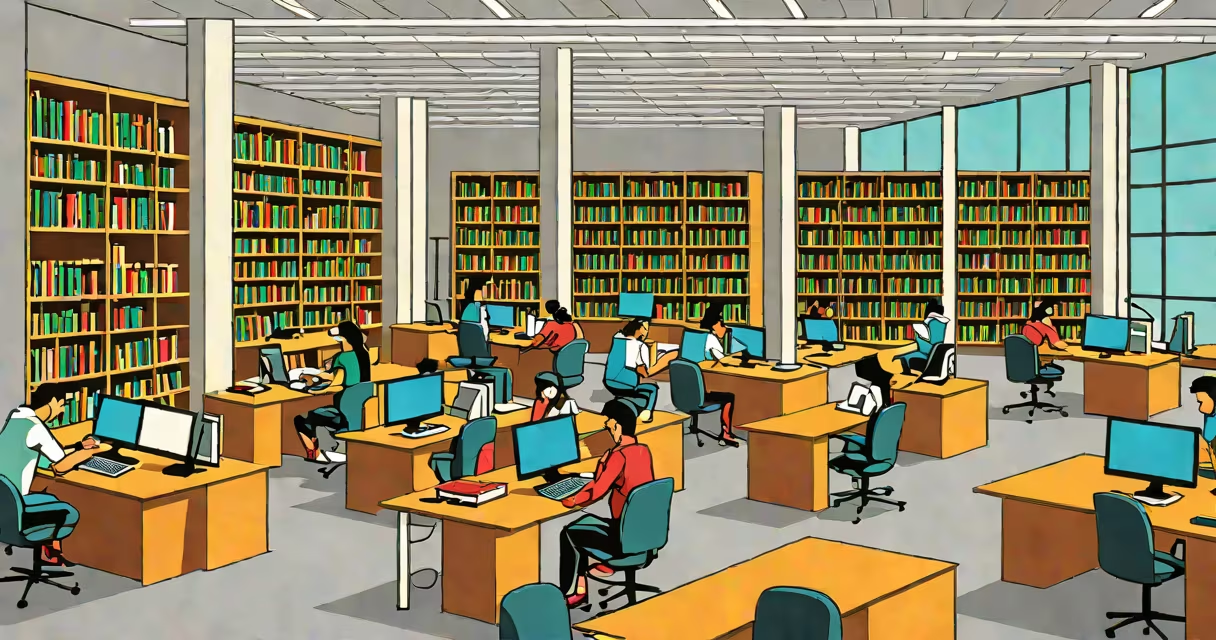
The University of Houston Library is a central academic resource hub offering physical and digital collections, research tools, and instructional support for students, faculty, and staff across all disciplines.
Located on the main campus in Houston, Texas, the library operates under the University of Houston's Office of the Provost and serves over 45,000 enrolled students. It manages more than 2.5 million print volumes, 1.8 million electronic books, and access to 60,000 scholarly journals through licensed databases. The library supports research, teaching, and learning through dedicated subject librarians, study spaces, and 24/7 access during finals week.
It is not a public library. Access requires a valid UH student or employee ID. Visitors may use designated public access computers with prior approval from library staff. The library is part of the Texas Digital Library consortium and collaborates with institutions such as Rice University and the University of Texas system to expand interlibrary loan availability.
How It Works
Users access the University of Houston Library through a centralized portal: uh.edu/library. From there, they can search the catalog, browse databases, request materials, or schedule a consultation with a subject specialist. All services are integrated with the university's single sign-on system, meaning a UH NetID grants immediate access to restricted content.
For research projects, students can reserve group study rooms, use high-performance computing workstations for data analysis, or attend workshops on citation management using Zotero or EndNote. The library also hosts a digital humanities lab equipped with software for text analysis, GIS mapping, and 3D modeling.
When a requested item is unavailable locally, the library initiates an interlibrary loan (ILL) via the Texas A&M University System's shared network. Requests typically arrive within five business days. For example, a graduate student researching 19th-century labor laws in Germany submitted an ILL request for a rare journal issue held at the University of Munich. The document arrived digitally in 72 hours.
What It's Made Of
The library's infrastructure includes four core components: physical collections, digital repositories, human expertise, and technology platforms.
Types and Services
Services are categorized by user need and access level. The following table outlines key offerings:
| Service Type | Who It Serves | Access Method | Key Features |
|---|---|---|---|
| Research Consultations | Undergraduates, grad students, faculty | Bookable via online calendar | One-on-one sessions with subject specialists; covers database selection, advanced search techniques |
| Course Reserves | Students in specific classes | Available at circulation desks or online | Textbooks and readings placed on short-term loan; 2-hour checkout period |
| Interlibrary Loan (ILL) | All UH affiliates | Submitted through library portal | Delivers books, journal articles, and microfilm from other libraries; delivery time averages 4.3 days |
| Digital Scholarship Lab | Graduate researchers, faculty | Appointment required | Offers training in data visualization, text mining, and digital publishing tools |
One non-obvious fact: the library maintains a "silent zone" in the basement reading room that disables all mobile device notifications. This space was created in response to student feedback about distractions during exam periods. It is monitored by motion sensors that trigger alerts if devices emit sound.
Common Misconceptions
Many assume the University of Houston Library offers free public access. It does not. Public users cannot check out books or access subscription databases without affiliation. However, the library does host free community events, such as author talks and career fairs, which are open to the public.
Another misconception is that all digital content is freely available. While many journals and e-books are licensed for UH use, external users cannot access them even if they visit the campus. The library's digital licenses are tied to IP addresses and user authentication through the UH network.
A third error is confusing the library's research support with tutoring. The library does not provide academic writing assistance or math tutoring. Students seeking those services should visit the Center for Academic Achievement, located in the Student Services Building.
Real-World Example
In spring 2023, a biomedical engineering senior needed primary sources for a capstone project on wearable health monitors. She began by searching the library's database portal and found 14 relevant articles in IEEE Xplore and PubMed. Using the "cited by" feature, she traced citations backward to identify foundational papers from 2005.
She then requested two journal articles not available in the library's holdings through interlibrary loan. Both arrived electronically within three days. She used the library's citation manager tool to generate APA-style references and exported them directly into her research paper.
Finally, she scheduled a consultation with the engineering liaison librarian to refine her search strategy. The librarian recommended filtering results by publication date (2015-2023) and adding keywords like "real-time monitoring" and "non-invasive sensing." This narrowed her list from 14 to 6 high-impact studies.
Her final paper received a grade of A+ and was later selected for presentation at the National Conference on Undergraduate Research.
Personal Experience
I once spent a weekend in the library's 24/7 study area preparing for a complete exam. I used the library's quiet zones, accessed off-campus databases via the UH VPN, and printed 30 pages of annotated journal articles. The library's extended hours and dedicated workspace were critical to my success.
After completing my exam, I returned to the library to return a book. The automated kiosk scanned my UH ID card and processed the return instantly. The entire transaction took 12 seconds. That efficiency, combined with consistent access to high-quality resources, defines the library's operational strength.
The University of Houston Library is not a passive archive. It is an active partner in academic success, integrating technology, expert guidance, and curated content to meet the evolving demands of higher education.