
What Is Meant by Biomass
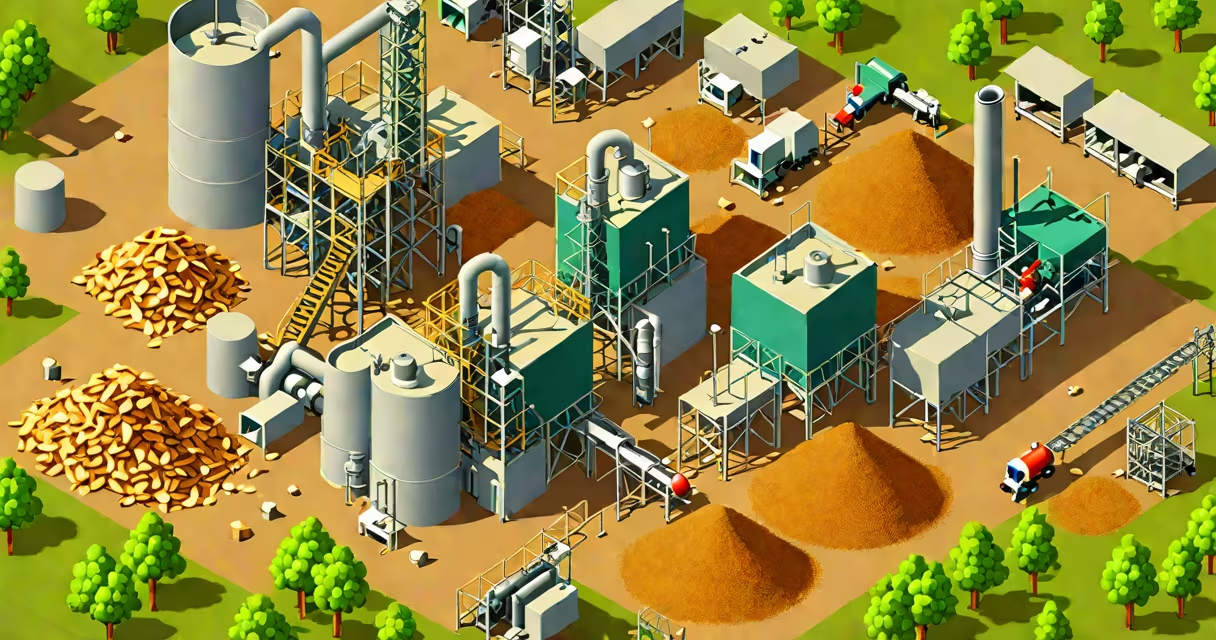
Biomass is organic material derived from living or recently living organisms, primarily plants and animal waste, used as a source of renewable energy. It includes wood, crop residues, food waste, and dedicated energy crops. When burned or converted through thermal or biochemical processes, biomass releases stored solar energy as heat, electricity, or fuel.
Biomass energy is carbon neutral when sustainably managed because the CO₂ released during combustion is offset by the CO₂ absorbed during the growth phase of the feedstock. This distinguishes it from fossil fuels, which release ancient carbon that increases atmospheric greenhouse gas levels.
The U.S. Department of Energy defines biomass as "any organic matter available on a renewable basis," including forestry residues, municipal solid waste, and algae. The International Energy Agency reports that biomass accounts for about 50% of global renewable energy supply, making it the largest single source of renewable power worldwide.
How Biomass Works
Biomass generates energy through direct combustion, gasification, anaerobic digestion, or pyrolysis. In direct combustion, materials like wood pellets or agricultural waste are burned in boilers to produce steam, which drives turbines to generate electricity. This method powers over 100 utility-scale biomass plants in the United States, such as the 50 MW biomass facility in McNeil, Vermont.
Gasification converts biomass into syngas-a mixture of hydrogen, carbon monoxide, and methane-by heating it under controlled oxygen conditions. Syngas can run internal combustion engines or be upgraded to synthetic natural gas. The process achieves higher efficiency than direct burning and reduces particulate emissions.
Anaerobic digestion uses bacteria to break down wet organic matter-like manure or food scraps-in sealed tanks without oxygen. The resulting biogas contains methane, which can be burned for heat or upgraded to biomethane for injection into natural gas grids. A dairy farm in California uses this method to convert cow manure into enough biogas to power 1,000 homes annually.
Types of Biomass Feedstocks
Biomass is categorized by origin and physical form. The main types include:
| Type | Source | Common Use | Energy Density (MJ/kg) |
|---|---|---|---|
| Wood-based | Forestry residues, sawdust, wood chips | Electricity generation, heating | 16-18 |
| Crop residues | Straw, bagasse, corn stover | Biogas, biofuels | 14-16 |
| Energy crops | Switchgrass, miscanthus, algae | Advanced biofuels, biogas | 15-19 |
| Waste streams | Food waste, sewage sludge, landfill gas | Heat, electricity, biomethane | 10-14 |
Each feedstock requires tailored processing. For example, lignocellulosic biomass like switchgrass contains complex cellulose and lignin structures that resist breakdown. Pretreatment methods such as acid hydrolysis or mechanical grinding are needed before fermentation into ethanol.
A common misconception is that all biomass is sustainable. In reality, harvesting forest residues at high rates can deplete soil nutrients and reduce biodiversity. The European Environment Agency warns that unsustainable biomass sourcing can lead to net carbon increases over time, especially when old-growth forests are cleared.
Why Biomass Matters
Biomass supports energy security by diversifying fuel sources away from fossil fuels. In Sweden, biomass provides over 20% of national energy consumption and powers district heating systems in cities like Stockholm. The country's policy mandates that all new buildings meet strict efficiency standards, allowing biomass to replace oil and gas in urban heating networks.
On a smaller scale, household biogas digesters in rural India convert cow dung into clean cooking fuel, replacing firewood and reducing indoor air pollution. According to the World Bank, over 15 million households in South Asia use biogas systems, avoiding an estimated 10 million tons of CO₂-equivalent emissions annually.
One non-obvious fact: biomass can be carbon negative when paired with carbon capture and storage (BECCS). When biomass is burned and the resulting CO₂ is captured and stored underground, the process removes more carbon from the atmosphere than it emits. The Drax Power Station in the UK is piloting BECCS technology, aiming to achieve net-negative emissions by 2030.
I once visited a small-scale biomass plant in northern Maine that runs entirely on locally sourced wood chips. The facility heats a community center and school using waste from nearby logging operations. The operator emphasized that local sourcing keeps transportation emissions low and keeps money circulating within the regional economy-a model that balances environmental and economic goals.
Common Misconceptions and Clarifications
Biomass is often confused with biofuels like ethanol or biodiesel. While both come from organic matter, biofuels are liquid transport fuels derived from specific feedstocks such as corn or soybeans. Biomass encompasses a broader category, including solid, gaseous, and liquid forms used for heat, power, and fuel.
Another misunderstanding is that biomass is always green. Burning biomass still produces air pollutants like nitrogen oxides and particulates. Modern facilities use scrubbers and filters to reduce emissions, but regulations vary widely. The Environmental Protection Agency sets limits on PM2.5 and NOx emissions from biomass boilers, requiring continuous monitoring and reporting.
Finally, biomass is not inherently renewable. If feedstocks are harvested faster than they regrow, or if land conversion leads to deforestation, the system becomes unsustainable. The Roundtable on Sustainable Biomaterials (RSB) certifies biomass producers based on criteria including land-use change, water use, and social impact. As of 2023, over 300 facilities globally hold RSB certification.