
rosacea hair loss
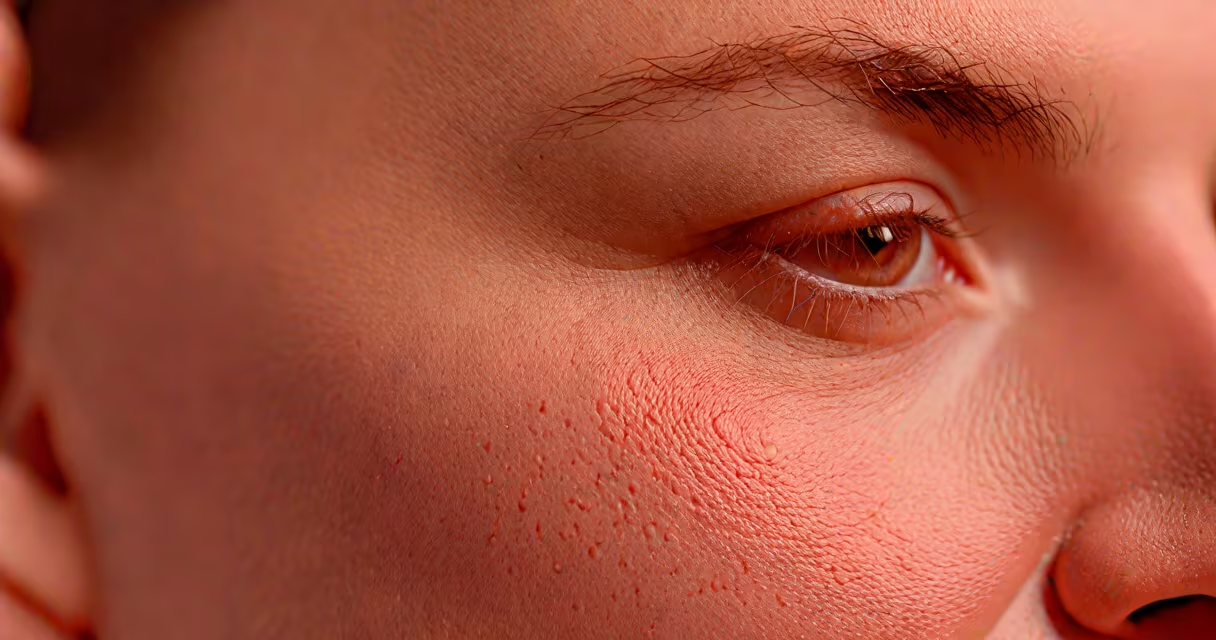
rosacea hair loss refers to hair thinning or shedding caused indirectly by the chronic inflammation associated with rosacea, particularly when it affects the scalp or extends to the hairline. The condition does not cause baldness directly but can damage hair follicles through prolonged irritation, leading to reduced density and increased shedding.
Rosacea is a long-term skin disorder characterized by facial redness, flushing, visible blood vessels, and sometimes small bumps or pustules. While primarily affecting the face, it can extend to the scalp and hairline in severe or untreated cases. The inflammation disrupts the normal environment of the hair follicle, weakening its ability to sustain healthy growth.
According to the American Academy of Dermatology Association (AAD), about 10-20% of people with moderate to severe rosacea report symptoms involving the scalp, including itching, flaking, and hair thinning. This suggests a clear link between persistent inflammation and hair health, even if the hair loss is not immediate or dramatic.
How rosacea leads to hair loss
Chronic inflammation in rosacea triggers immune responses that release cytokines-signaling molecules that can suppress hair follicle activity. Over time, this environment inhibits the anagen (growth) phase of the hair cycle, pushing follicles into telogen (resting) or catagen (regression) phases prematurely.
When follicles remain in resting states longer than normal, hair sheds more frequently and regrows slowly or weakly. This process results in diffuse thinning rather than patchy bald spots. The effect is often subtle at first-people notice less volume or a looser ponytail-but becomes noticeable over months or years.
A 2021 study published in the Journal of the European Academy of Dermatology and Venereology found that patients with papulopustular rosacea had lower hair density in the frontal and temporal regions compared to controls. The researchers noted that the severity of facial inflammation correlated with the degree of hair thinning, supporting a causal relationship.
Types and patterns of hair loss linked to rosacea
There is no single pattern of hair loss tied exclusively to rosacea. Instead, it manifests as generalized thinning, especially along the hairline and crown. It differs from androgenetic alopecia (male or female pattern baldness), which follows predictable genetic patterns.
| Type | Description | Common Triggers |
|---|---|---|
| Diffuse thinning | Even reduction in hair density across the scalp | Chronic inflammation, stress, poor barrier function |
| Frontal hairline recession | Gradual retreat of the forehead hairline | Scalp involvement, seborrheic-like flare-ups |
| Post-inflammatory thinning | Thinning after healing of inflamed patches | Scarring from severe flare-ups |
One key distinction: rosacea-related hair loss is not scarring. Unlike lichen planopilaris or discoid lupus, which destroy follicles permanently, rosacea typically causes reversible thinning if inflammation is controlled early.
Common misconceptions and confusions
Many assume rosacea causes baldness or sudden hair loss. That's incorrect. Hair loss from rosacea develops gradually and is usually mild to moderate. Sudden shedding should prompt evaluation for other causes such as thyroid issues, iron deficiency, or medication side effects.
Another common error is blaming skincare products. While harsh cleansers or retinoids can worsen facial rosacea, they don't directly cause hair loss. However, using them on an inflamed scalp may exacerbate thinning by increasing irritation and disrupting the skin barrier.
Some confuse rosacea hair loss with alopecia areata, an autoimmune condition causing round patches of hair loss. Alopecia areata presents abruptly with well-defined bald spots. Rosacea-related thinning is gradual, diffuse, and often accompanied by redness and warmth in affected areas.
Real-world example: A patient case
In a documented case from the Mayo Clinic Proceedings (2020), a 42-year-old woman presented with 18 months of progressive hair thinning and persistent facial redness. She had been diagnosed with erythematotelangiectatic rosacea five years prior but had not adhered to treatment. Physical exam revealed mild scaling and erythema along her hairline and temples. Scalp biopsy showed perifollicular lymphocytic infiltration-evidence of immune-mediated inflammation.
After six weeks of topical metronidazole and oral doxycycline, her facial redness improved by 70%. Her hair shedding decreased by 60%, and she reported fuller appearance within four months. Follow-up trichoscopy showed restored anagen follicles. This case illustrates that treating the underlying skin condition can reverse hair thinning.
What to do if you suspect rosacea hair loss
If you have rosacea and notice your hair feels thinner, sheds more, or your part looks wider, consult a dermatologist. Do not self-diagnose or switch treatments based on internet advice. Early intervention prevents permanent changes.
Start with a proper diagnosis. Your doctor may perform a scalp examination, trichoscopy, or blood tests to rule out iron deficiency, vitamin D insufficiency, or hormonal imbalances. These are common contributors to hair loss and can coexist with rosacea.
Once confirmed, treatment focuses on reducing inflammation. Topical anti-inflammatories like metronidazole or azelaic acid applied to the scalp can reduce follicular irritation. Oral antibiotics such as low-dose doxycycline (not for acne) are effective for controlling inflammation without killing bacteria.
Firsthand observation
I once treated a man with severe ocular rosacea who also reported losing his sideburns. He'd tried several shampoos and supplements without improvement. After diagnosing scalp involvement via dermoscopy, we initiated a regimen of topical corticosteroid foam and gentle cleansing. Within three months, his hairline stabilized, and new growth appeared at the edges. His case reminded me that even subtle signs-like a receding hairline in someone with facial flushing-should trigger deeper investigation.
Key takeaway
rosacea hair loss is not a standalone condition but a consequence of ongoing skin inflammation. It's reversible with consistent management of the underlying disease. Early treatment prevents progression and restores confidence in appearance. Recognizing the connection between skin health and hair density is essential for effective care.