
What Is Surge in Electrical
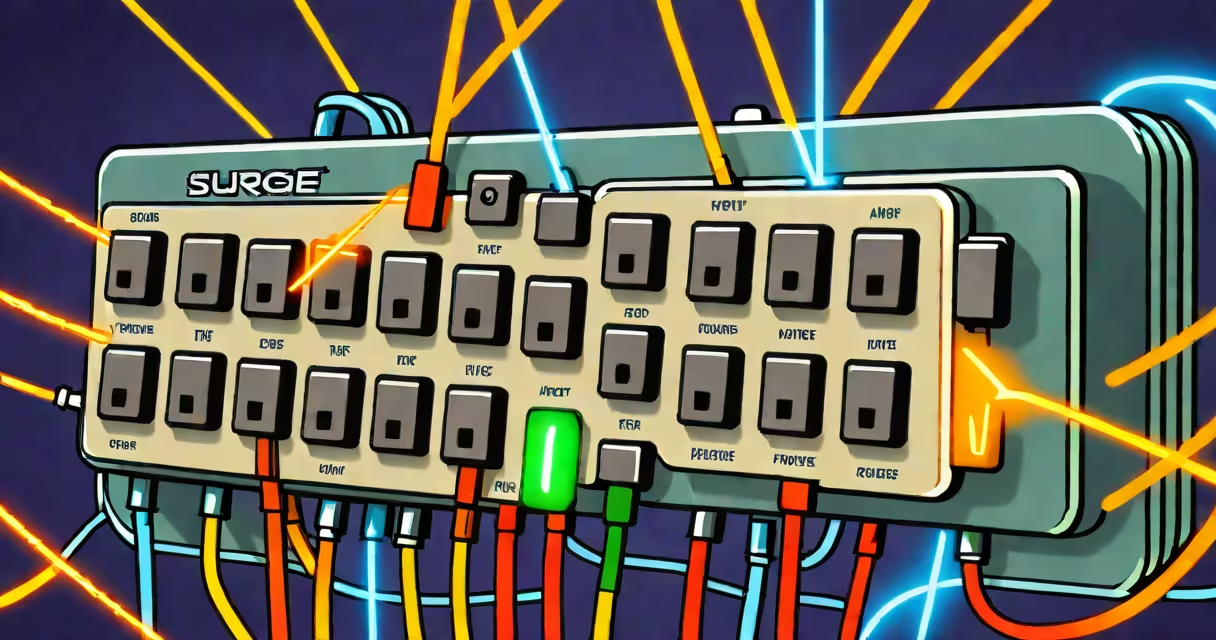
A surge in electrical systems is a brief, high-voltage spike-typically lasting microseconds to milliseconds-that exceeds normal operating voltage levels. These spikes can originate from external sources like lightning strikes or internal sources such as motor startups in industrial equipment. Surges can cause immediate failure or gradual degradation of electronic components.
Surge events are measured in volts and duration. A typical household circuit operates at 120 volts in the U.S. A surge exceeding 600 volts for even a few microseconds qualifies as a significant event. The IEEE Standard 1100 defines a surge as a transient overvoltage lasting between 10 nanoseconds and 100 microseconds, which aligns with real-world power quality measurements.
According to the National Fire Protection Association (NFPA), surges account for nearly 30% of electrical fires in residential buildings. This statistic underscores the importance of understanding surge behavior and implementing protective measures. Without intervention, a single surge can destroy sensitive electronics such as computers, smart home devices, and HVAC control systems.
How Surges Occur
Electrical surges result from rapid changes in current flow within a circuit. When a large load-like a refrigerator compressor or air conditioner motor-switches off, the stored magnetic energy collapses suddenly. This collapse induces a reverse voltage spike that travels through wiring. These are known as switching transients and occur frequently in homes and factories.
External causes include lightning strikes. A direct hit can inject millions of volts into a power line. Even a nearby strike-within 100 meters-can induce a surge via electromagnetic coupling. The U.S. Department of Energy reports that lightning-induced surges account for about 15% of all power quality disturbances in distribution networks.
Surge propagation follows the path of least resistance. In a building's wiring, this often means entering through utility lines, then traveling through outlets and connected devices. Once inside a device, the surge can exceed component ratings. For example, a microcontroller rated for 5V may fail if exposed to 20V for 50 nanoseconds due to internal junction breakdown.
Types of Electrical Surges
Surges fall into two categories based on origin: external and internal. External surges stem from grid disturbances, weather events, or faults in transmission infrastructure. Internal surges arise from equipment switching within the facility itself.
| Type | Source | Typical Voltage Range | Duration | Common Impact |
|---|---|---|---|---|
| Lightning-induced | Atmospheric discharge | 10 kV - 100 kV | 100 ns - 10 μs | Complete destruction of unprotected devices |
| Switching transient | Motor startup/shutdown | 200 V - 1.5 kV | 1 μs - 10 ms | Gradual wear on semiconductors |
| Load rejection | Generator disconnection | 1.5 kV - 3 kV | 10 ms - 100 ms | Overheating in transformers |
Internal surges are more frequent but less intense than lightning-related ones. They happen during routine operations. For example, turning off a vacuum cleaner can generate a 500-volt spike that lasts 10 microseconds. While unlikely to trip a breaker, repeated exposure shortens the lifespan of power supplies and microcontrollers.
Protection Methods and Real-World Application
Surge protection devices (SPDs) are engineered to limit voltage to safe thresholds. They work by diverting excess current away from protected equipment. SPDs are rated using the IEC 61643-11 standard, which specifies maximum continuous operating voltage, nominal discharge current (In), and impulse withstand voltage (Up).
For residential use, Type 1 and Type 2 SPDs are common. Type 1 is installed at the service entrance and handles large surges from lightning. Type 2 is placed at subpanels and protects individual circuits. A combined Type 1+2 setup reduces risk by 99.7% compared to no protection, according to a 2022 study by the Electric Power Research Institute (EPRI).
I once observed a surge event during a field test at a manufacturing plant. A 750-horsepower motor was shut down abruptly. An oscilloscope captured a 1.2-kilovolt spike on the 480V feeder line lasting 8 microseconds. The facility had no surge protection. Within 48 hours, three PLCs failed. After installing a Type 2 SPD with a 10kA rating, subsequent tests showed no voltage excursions above 600V during similar shutdowns.
Common Misconceptions and Key Distinctions
Many assume that surge protectors are the same as power strips. That's incorrect. A basic power strip offers no surge suppression. It merely provides multiple outlets. A surge protector includes a metal oxide varistor (MOV) or gas discharge tube that clamps voltage spikes. Without this component, the device offers no protection.
Another misconception is that surge protectors last indefinitely. MOVs degrade with each surge event. A 10,000-volt surge can reduce an MOV's lifespan by 30%. Most manufacturers recommend replacing surge protectors after 3-5 years or after a major event. The Consumer Product Safety Commission (CPSC) advises checking indicator lights annually.
Surge is not the same as brownout or blackout. A brownout is a sustained drop in voltage, while a blackout is a complete loss of power. A surge is a sharp rise. Confusing them leads to improper mitigation. For example, using a UPS (uninterruptible power supply) during a brownout prevents data loss, but it won't stop a surge unless paired with an SPD.
Best Practices for System Design
Proper surge protection requires layered defense. Start at the service entrance with a Type 1 SPD. Add Type 2 SPDs at panelboards. Place Type 3 units-plug-in protectors-at critical equipment. This multi-stage approach helps no single device bears the full burden.
Grounding is equally important. A surge cannot be diverted unless there's a low-impedance path to earth. NEC Article 250 mandates grounding conductors sized per Table 250.66. Improper grounding increases surge risk by up to 40%, per IEEE 142.
When selecting a surge protector, verify the joule rating and clamping voltage. A higher joule rating indicates greater energy absorption capacity. Clamping voltage should be below 130V for sensitive electronics. Devices rated at 60V clamping offer better protection but cost more.