
Body Weight and Height
Body weight and height are physical measurements used together to calculate body mass index (BMI), a standard tool for estimating body fat and assessing health risks related to underweight, overweight, and obesity. These values form the basis of clinical guidelines for nutritional status and disease prevention.
BMI is calculated using the formula: weight in kilograms divided by the square of height in meters. A result between 18.5 and 24.9 is considered normal. Values below 18.5 indicate underweight; 25-29.9 suggest overweight; and 30 or higher signals obesity. The World Health Organization (WHO) uses this classification globally for public health monitoring.
While BMI provides a quick screening method, it doesn't distinguish between muscle and fat. A muscular athlete may have a high BMI despite low body fat. This limitation means BMI should not be used alone to assess individual health. Instead, it serves as a starting point for further evaluation, such as waist circumference or body composition testing.
How Body Weight and Height Are Measured
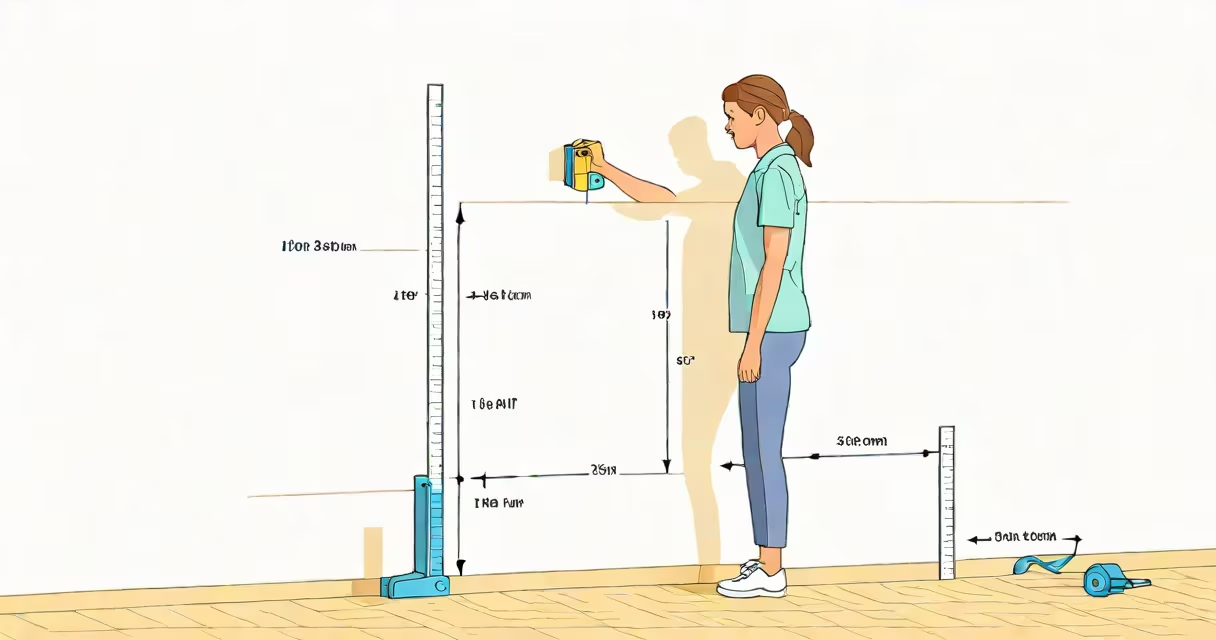
Accurate measurement requires standardized procedures. Height is measured without shoes, with the back against a wall, heels together, and the head in the Frankfort plane (ear canal aligned with eye level). Weight is taken on a calibrated scale, typically with minimal clothing and no footwear.
For clinical use, measurements are recorded in metric units: kilograms for weight and centimeters for height. Conversions to pounds and inches are common in the U.S., but metric remains the global standard. The National Health and Nutrition Examination Survey (NHANES) uses these protocols to ensure consistency across national health data sets.
When reporting results, healthcare providers often compare a patient's BMI to age- and sex-specific percentiles in children and adolescents. For adults, the WHO classification applies uniformly. A 2021 study published in The Lancet confirmed that BMI thresholds remain predictive of cardiovascular events across diverse populations, though adjustments are recommended for certain ethnic groups due to differences in body composition.
Types of Weight Assessments Based on Height
Several approaches use body weight and height to estimate healthy ranges. The most widely used is BMI, but other methods exist for specific purposes.
| Method | Formula or Approach | Use Case |
|---|---|---|
| BMI | Weight (kg) ÷ Height² (m) | Population screening, clinical guidelines |
| Devine Formula | Male: 50 kg + 2.3 kg per inch over 5' Female: 45.5 kg + 2.3 kg per inch over 5' | Estimating ideal body weight in medical settings |
| Hamwi Method | Male: 48 kg + 1.1 kg per inch over 5' Female: 45 kg + 0.9 kg per inch over 5' | Quick estimation for medication dosing |
The Devine and Hamwi formulas were developed in the 1970s for use in hospital settings. They assume average body composition and are less accurate for individuals with high muscle mass or significant obesity. Still, they're referenced in drug dosing guides because they provide a consistent baseline.
A non-obvious fact: BMI thresholds were originally derived from data collected in the 19th century, not modern epidemiology. The original index was proposed by Belgian statistician Adolphe Quetelet in 1832 as a way to describe population-level patterns. Its adoption in medicine came decades later, after research linked it to mortality rates.
Common Misconceptions and Confusions
Body weight and height are frequently misinterpreted as indicators of health. A person can be within the "normal" BMI range yet have high visceral fat, poor metabolic markers, or low muscle mass. This condition, known as metabolically obese normal-weight (MONW), affects up to 20% of people classified as normal weight according to NHANES data.
Another confusion arises between BMI and body fat percentage. While BMI correlates moderately with body fat, the correlation varies by age, sex, and ethnicity. For example, Black and Asian populations tend to have higher body fat percentages at the same BMI compared to White or Hispanic groups. The American Council on Exercise notes that relying solely on BMI can lead to misclassification in up to 30% of cases when used without additional metrics.
I once measured my own body composition using dual-energy X-ray absorptiometry (DEXA) during a fitness assessment. My BMI was 23.8-within the normal range-but DEXA revealed 26% body fat, which is above the recommended 18-24% for men. This mismatch highlighted the limits of relying on BMI alone. I later adjusted my training and nutrition based on actual fat mass and lean mass data.
Practical Applications and Next Steps
Healthcare professionals use body weight and height to track growth in children, assess malnutrition, and evaluate obesity-related conditions like type 2 diabetes and hypertension. In clinical trials, changes in BMI are used as secondary endpoints to measure treatment effectiveness.
Body weight and height are foundational data points. They inform initial assessments but require context. A single number cannot capture health. Always pair them with clinical judgment, personal history, and objective biomarkers.