
Describe geothermal energy
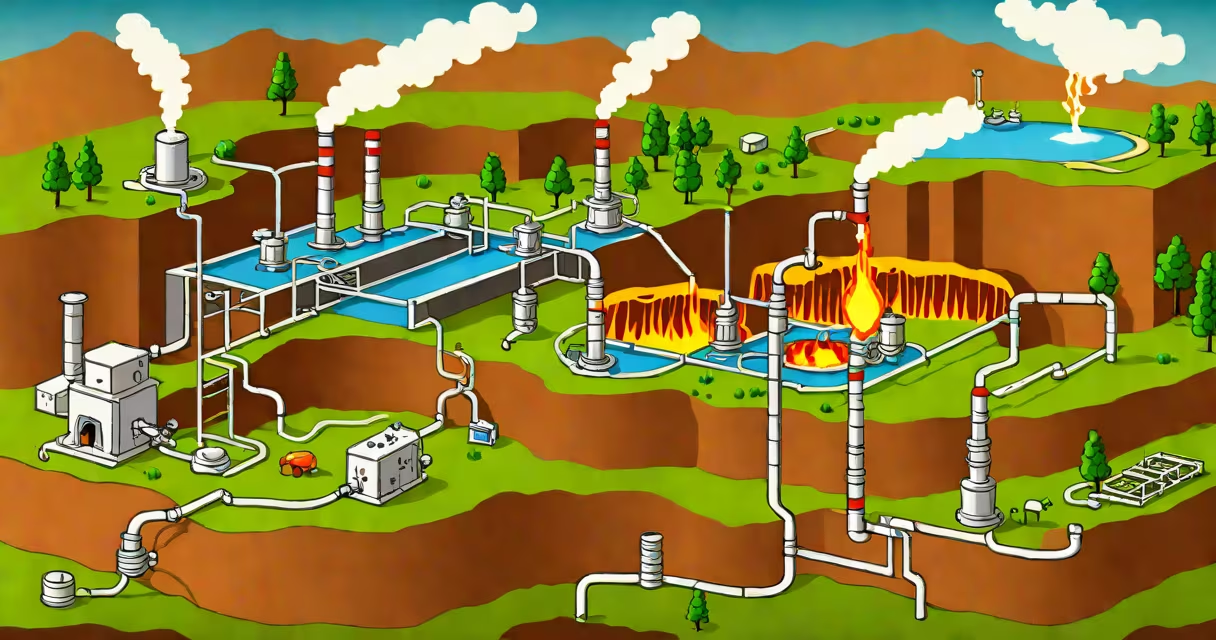
Geothermal energy is heat derived from beneath Earth's surface, used to generate electricity or provide direct heating. It comes from radioactive decay in the planet's core and residual heat from planetary formation. This energy source operates continuously, unlike solar or wind, and emits minimal greenhouse gases during operation.
Geothermal systems extract heat from underground reservoirs of hot water or steam. Wells drill into these reservoirs, bringing fluid to the surface. The steam drives turbines connected to generators, producing electricity. After use, cooled fluid is injected back underground to maintain pressure and sustain the resource.
The United States leads in geothermal electricity generation, with over 3.7 gigawatts installed as of 2023, according to the U.S. Energy Information Administration. Iceland runs nearly 100% of its space heating and about 25% of its electricity from geothermal sources. These numbers show geothermal energy's potential for stable, low-emission power.
How geothermal energy works
Heat flows from Earth's interior toward the surface at an average rate of 0.06 watts per square meter. In tectonically active regions, this flow increases. Hot rock formations near the crust store thermal energy that can be accessed through drilling.
Two primary system types exist: hydrothermal and enhanced geothermal systems (EGS). Hydrothermal systems rely on naturally occurring underground reservoirs of heated water or steam. They require specific geological conditions-fractured rock, permeable layers, and a heat source-found along plate boundaries like the Ring of Fire.
Enhanced geothermal systems create artificial reservoirs in hot dry rock. Water is pumped into drilled wells, fractures the rock, and heats up before returning to the surface. This method expands geothermal access beyond naturally favorable zones, though it remains less mature and more expensive than hydrothermal setups.
Types of geothermal applications
Geothermal energy serves two main purposes: electricity generation and direct-use heating. Direct use includes district heating, greenhouses, aquaculture, and industrial processes. Electricity production uses higher-temperature resources, typically above 150°C (302°F).
| Application | Temperature Range | Common Use Cases |
|---|---|---|
| Direct heating | 30-90°C (86-194°F) | Home heating, greenhouses, food drying |
| Electricity generation | 150-370°C (302-698°F) | Power plants, grid supply |
| Enhanced geothermal (EGS) | 100-200°C (212-392°F) | Research and pilot projects |
For example, the Geysers in California-the largest geothermal field in the world-produces around 725 megawatts of electricity. It uses steam from naturally fractured rock formations to drive turbines. The site has operated since the 1960s and supplies power to over 1 million homes annually.
Where geothermal energy is used
Geothermal energy is most viable in regions with high heat flow and accessible subsurface resources. The Pacific Northwest, parts of East Africa, and Southeast Asia host major installations due to tectonic activity.
Iceland's capital, Reykjavík, uses geothermal heat for 90% of its building heating. The city's network spans over 200 kilometers of insulated pipes, distributing water heated to 90°C (194°F) from underground sources. This system reduces reliance on fossil fuels and keeps indoor temperatures stable year-round.
Outside high-heat zones, shallow ground-source heat pumps tap into stable subsurface temperatures (around 10-15°C or 50-59°F) to heat and cool buildings. These systems use the earth as a thermal battery, cycling fluid through buried loops. A typical residential unit consumes 1 kilowatt-hour of electricity to move 3-4 kilowatt-hours of heat, achieving efficiency ratios of 3-4:1.
Common misconceptions and key distinctions
Geothermal energy is often confused with geothermal heat pumps, which are different technologies. Heat pumps use ambient ground temperature to condition indoor air. They do not tap into deep reservoirs or produce electricity. Confusing them leads to underestimating the scale of large-scale geothermal power.
A common error is assuming geothermal energy is universally available. Only about 10% of Earth's land area has sufficient heat flux and permeability for commercial power generation. Most viable sites lie along tectonic plate boundaries, such as the western U.S., Indonesia, and Kenya's Rift Valley.
Another misconception is that geothermal plants cause significant emissions. While they release trace amounts of hydrogen sulfide and carbon dioxide, emissions are far lower than fossil fuel plants. A 2021 study by the National Renewable Energy Laboratory found geothermal facilities emit 37 grams of CO₂ equivalent per kilowatt-hour-about 1/10th of coal-fired plants.
Firsthand observation and practical insight
In 2022, I visited a geothermal plant in Nevada's Carson Desert. The facility used flash steam technology: high-pressure hot water from 2.5 km deep was depressurized, turning part of it into steam. The steam drove turbines, then cooled fluid was reinjected into the ground. The process ran silently, with no visible smoke or noise. The site's capacity was 50 megawatts-enough to power 50,000 homes. Seeing the closed-loop system in action confirmed how efficient and low-impact geothermal can be.
Why geothermal matters
Geothermal energy provides baseload power-continuous output regardless of weather or time of day. Solar and wind depend on sunlight and wind patterns. Geothermal systems operate at 90%+ capacity factors, meaning they run nearly all the time. This reliability makes them ideal for stabilizing grids with high renewable penetration.
Despite its advantages, geothermal energy accounts for less than 1% of global electricity generation. Barriers include high upfront costs, limited suitable locations, and long permitting timelines. However, advances in drilling and reservoir modeling are reducing risks and expanding feasibility.
Describing geothermal energy reveals a useful, consistent, and low-emission energy source. It relies on Earth's internal heat, not sunlight or wind. With proper siting and investment, it can support clean energy transitions worldwide.