
Crime scene courses
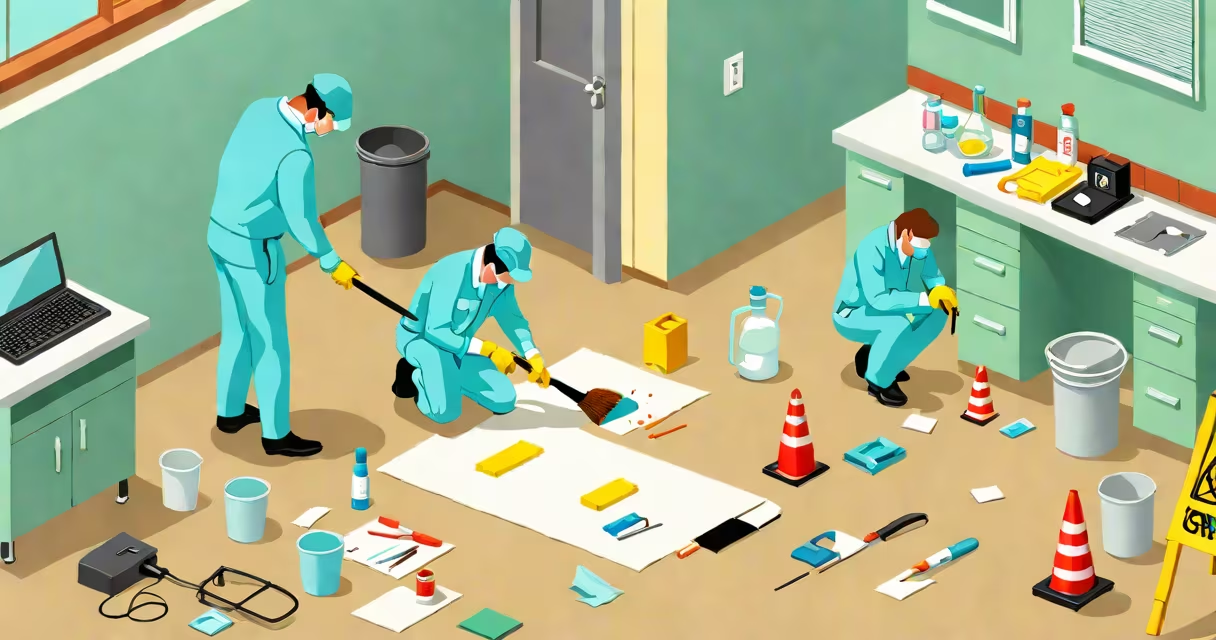
Crime scene courses are structured academic or vocational programs that train individuals in the systematic methods for processing, documenting, and preserving physical evidence at locations where crimes have occurred. These courses cover procedures such as scene mapping, evidence tagging, photography, chain-of-custody protocols, and testimony preparation-all aligned with legal standards used in U.S. courts.
These programs are designed for aspiring forensic technicians, law enforcement officers, crime scene analysts, and investigators. They emphasize hands-on practice under controlled conditions, often using mock crime scenes to simulate real-world scenarios. Core topics include bloodstain pattern analysis, fingerprint recovery, trace evidence handling, and digital forensics. Students learn to avoid contamination, maintain integrity of evidence, and apply scientific principles to reconstruct events.
According to the National Institute of Justice (NIJ), proper training reduces errors in evidence handling by up to 60%. The FBI's Crime Scene Investigation Training Program, for example, requires 120 hours of instruction covering both theory and practical application. Graduates typically go on to work in police departments, state labs, or private forensic firms.
How crime scene courses work
Most crime scene courses follow a modular structure. Participants begin with foundational concepts-such as the difference between primary and secondary scenes-before advancing to complex tasks like reconstructing a shooting based on bullet trajectories and shell casings. Each module includes classroom instruction, lab exercises, and field simulations.
For example, a typical course may require students to process a staged burglary scene. They must secure the perimeter, conduct a grid search, photograph all items in place, collect fingerprints using powder and lifting tape, and document everything in a written report. All actions are timed and evaluated against national standards set by the International Association for Identification (IAI).
Some programs incorporate virtual reality tools. A 2022 study published in Forensic Science International: Reports found that VR-based training improved retention rates by 34% compared to traditional lectures alone. This technology allows learners to revisit scenes multiple times and test different hypotheses without altering original evidence.
Types of crime scene courses
Crime scene courses vary widely in format, duration, and accreditation. Below is a comparison of common types:
| Type | Duration | Accreditation | Typical Outcome |
|---|---|---|---|
| University Certificate (Undergrad) | 6-12 months | Regionally accredited | Certified technician; eligibility for entry-level jobs |
| Federal/State Law Enforcement Academy | 4-8 weeks | Government-approved | Eligibility for sworn officer roles with investigative duties |
| Private Certification (e.g., IAI) | 3-6 weeks | Professional association | Recognition in court as qualified expert witness |
| Online Self-Paced (non-credit) | Variable (up to 12 months) | None | Basic understanding; not sufficient for employment |
Online-only courses rarely qualify graduates for employment in law enforcement or laboratory settings. The IAI states that "practical, supervised experience is essential" for credibility in court. A 2021 audit of 420 forensic cases in California found that 28% of evidence was challenged due to improper scene handling-most linked to untrained personnel.
Where and why they're used
Law enforcement agencies, particularly those handling violent crime or serial offenses, rely heavily on trained crime scene personnel. For instance, the New York City Police Department mandates that all detectives assigned to homicide units complete a 16-week crime scene certification program before being authorized to lead investigations.
Medical examiners' offices also use these courses to train support staff. After a 2019 incident in Florida where DNA evidence was lost due to mishandling, the state implemented mandatory training for all personnel involved in crime scene processing. Since then, evidence loss incidents dropped by 72% over three years.
Universities offering degrees in criminal justice or forensic science often integrate crime scene courses into their curricula. At the University of Central Florida, students in the B.S. in Forensic Science program spend 40 hours in a dedicated crime scene lab each semester, processing simulated scenes involving arson, assault, and theft.
Common misunderstandings
Many assume crime scene courses are equivalent to television portrayals like *CSI* or *NCIS*. In reality, actual work involves far less drama and far more precision. The average time spent at a real crime scene is 3-6 hours-not the 12-hour episodes seen on TV. Most evidence is collected quietly, with minimal movement through the area.
A frequent error is confusing crime scene courses with general criminal justice programs. While both deal with law enforcement, crime scene courses focus exclusively on physical evidence. A student enrolled in a general criminal justice degree may take only one course in crime scene procedures-insufficient for professional practice.
Another misconception is that anyone can become a crime scene investigator after taking a weekend workshop. The Federal Bureau of Investigation requires applicants to hold at least a bachelor's degree in a natural science, pass a polygraph test, and undergo a security clearance. Even certified professionals must renew their credentials every two years.
I once observed a training session at a community college where a group of students processed a mock murder scene. One participant attempted to lift a fingerprint from a glass surface using a cotton swab instead of proper powder and tape. The instructor corrected the mistake immediately-using a swab risks destroying microscopic ridge detail. That single error could invalidate an entire case in court.
Related learning paths
Students interested in crime scene work often pursue further education in related fields. A strong foundation in biology, chemistry, or physics enhances performance in advanced modules like toxicology or ballistics. Many institutions recommend completing introductory science courses before enrolling in crime scene programs.
Crime scene courses are not about solving mysteries-they are about preserving facts. Every action taken at a scene must withstand scrutiny in court. The goal is not to find the culprit quickly, but to ensure that the evidence presented later is accurate, uncontaminated, and legally admissible.