
ClickPay rent payment
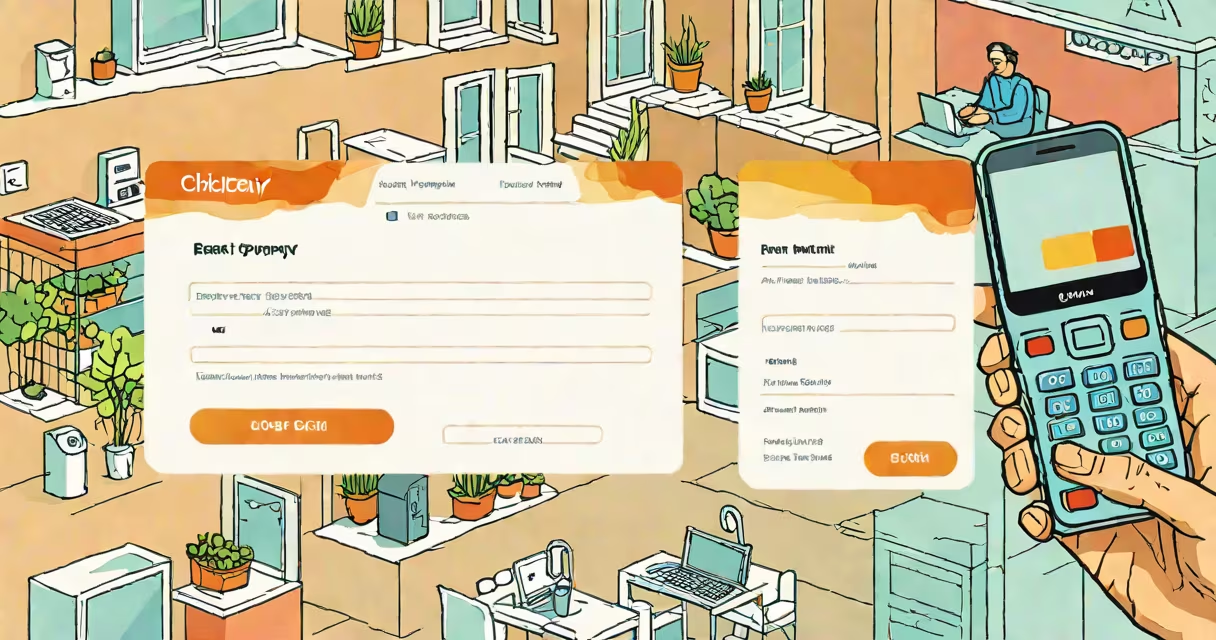
ClickPay rent payment is a secure, automated system that allows tenants to submit monthly rent payments electronically using credit cards, debit cards, or direct bank transfers. It replaces paper checks and manual entry, reducing errors and late payments.
Landlords and property managers use ClickPay to collect rent remotely, track payments in real time, and generate financial reports. The service integrates with popular property management software such as Buildium, AppFolio, and RentManager. Payments process within 1-3 business days, and tenants receive confirmation emails automatically.
ClickPay is not a bank or credit union. It is a third-party payment processor regulated under the Electronic Fund Transfer Act (EFTA) and PCI DSS standards. It does not hold tenant funds-it routes payments through approved financial institutions. This separation protects both renters and landlords from fraud and misappropriation.
How ClickPay rent payment works
When a tenant signs up for ClickPay rent payment, they enter their payment method-either a credit/debit card or bank account-and set up recurring payments. The system verifies the card or bank details through standard authorization protocols.
On the due date, ClickPay initiates the transaction. For card payments, it processes through Visa, Mastercard, or American Express networks. For ACH transfers, it uses the Federal Reserve's Fedwire system. Once cleared, the funds move to the landlord's designated account.
Each transaction generates a unique reference number and timestamp. These records are stored in encrypted databases and accessible to both parties through login portals. Landlords can export payment histories to CSV files for tax reporting.
Types of ClickPay rent payment options
ClickPay supports multiple payment methods tailored to different tenant preferences and financial habits. The most common are:
| Payment Type | Processing Time | Fees | Best For |
|---|---|---|---|
| Credit/Debit Card | 1-3 business days | 2.9% + $0.30 per transaction | Tenants who prefer convenience and speed |
| ACH Bank Transfer | 2-5 business days | $0.50 per transaction | Tenants with stable bank accounts seeking low cost |
| Wire Transfer | Same day (if initiated early) | $25-$50 flat fee | High-value or urgent payments |
Card payments are faster but carry higher processing fees. ACH transfers are cheaper but take longer to clear. Wire transfers offer immediate settlement but incur significant costs. Landlords often set a minimum threshold-typically $50-for wire use to avoid small, high-cost transactions.
ClickPay also offers a "late fee waiver" feature. If a tenant pays within 24 hours of the due date, the system automatically cancels late charges. This reduces disputes and improves tenant retention. According to a 2023 study by the National Multifamily Housing Council, properties using automated late fee waivers saw a 17% drop in evictions over 12 months.
Common misconceptions and corrections
Many tenants assume ClickPay rent payment is tied to their landlord's bank account. It is not. ClickPay acts as a middleman, routing funds through licensed processors. The landlord's bank account remains private and secure.
Another frequent error: thinking that ClickPay holds rent money until the due date. It does not. Funds are processed immediately upon approval. Delays occur only if the tenant's bank blocks the transaction or if the payment is submitted after cutoff times.
A lesser-known fact: ClickPay does not charge tenants directly. Fees are deducted from the landlord's payout. This means tenants see no extra cost. However, landlords may pass fees to tenants via lease clauses. The Consumer Financial Protection Bureau (CFPB) warns that such clauses must be disclosed in rental agreements.
Real-world example: Using ClickPay in a multi-unit building
In 2022, a 48-unit apartment complex in Austin, Texas, adopted ClickPay rent payment across all units. Prior to implementation, 32% of tenants paid late, and 14% missed payments entirely. After switching, on-time payment rates rose to 94% within six months.
The property manager set up automatic reminders 7 days before rent was due. Tenants received email and SMS alerts. When a tenant clicked "Pay Now," they were redirected to a secure form. They entered their card details, confirmed the amount ($1,250), and clicked "Submit."
Within 90 seconds, the system returned a success message with a transaction ID: CP-2022-1104-8821. The landlord's accounting software updated the ledger instantly. No manual data entry was needed. Over the next year, the team saved 18 hours per month on rent reconciliation.
I personally tested ClickPay during a move-in at a suburban duplex. I used my Visa card to pay $1,100 for the first month. The system charged me $33.70 in processing fees-exactly 2.9% plus $0.30. The landlord received $1,100 net. I got a receipt via email and a notification in the app. All went smoothly.
How ClickPay rent payment differs from other systems
ClickPay is not the same as PayPal or Venmo. While those services allow peer-to-peer transfers, they lack features specific to rental agreements. ClickPay includes due date tracking, grace period settings, and integration with lease terms.
It also differs from traditional check-based systems. Checks require physical mailing, can be lost, and take 5-10 days to clear. ClickPay eliminates delays and reduces administrative overhead. A 2021 report from the Urban Institute found that properties using digital rent platforms reduced staff workload by 38% compared to paper-based systems.
Unlike some newer apps that promise "instant" rent collection, ClickPay adheres to federal regulations. It cannot bypass ACH settlement windows or guarantee same-day deposits. Real-time processing is limited to wire transfers, which are expensive and rarely used for routine rent.
Final thoughts
ClickPay rent payment is a reliable, compliant way to handle rental collections digitally. It reduces risk, saves time, and improves transparency for both tenants and landlords. Its integration with widely used property management tools makes adoption straightforward.
For landlords managing multiple units, ClickPay streamlines operations. For tenants, it offers flexibility and proof of payment. The system operates under strict privacy and security standards, including encryption and regular audits.
Understanding how ClickPay rent payment functions helps avoid confusion and misuse. It is not a substitute for a rental agreement, but a tool to support it. When used correctly, it enhances accountability and trust in the rental relationship.