
add exchange to iphone
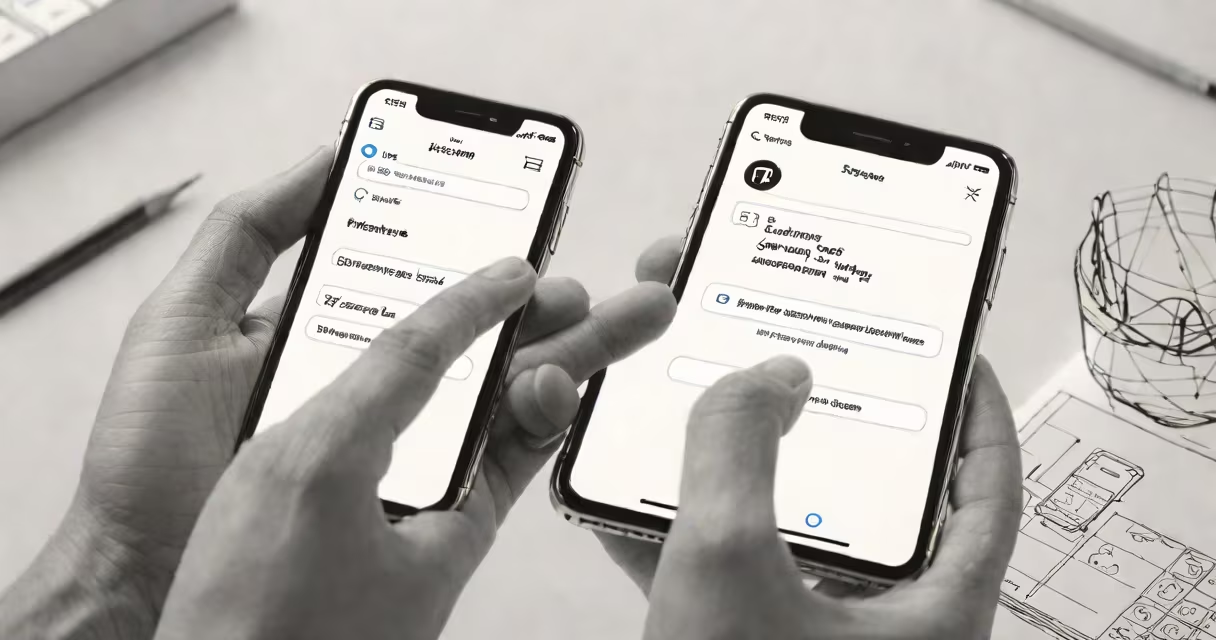
Adding an Exchange account to your iPhone lets you sync work or school email, calendars, contacts, and tasks through Microsoft's Exchange Server. The process uses the built-in Mail app and requires your email address, password, and server settings.
Exchange on iPhone connects to corporate or institutional email systems via ActiveSync. This protocol enables real-time updates for messages, calendar events, and contact changes. Unlike standard IMAP or POP setups, Exchange maintains synchronization across devices and supports remote wipe if your phone is lost or stolen.
Setting up Exchange requires access to your organization's email server details. Most enterprises use auto-discovery, which automatically configures settings when you enter your email and password. If auto-discovery fails, manual entry of the server address and domain may be needed.
How Exchange Works on iPhone
When you add an Exchange account, your iPhone sends a request to the Exchange server using the Exchange ActiveSync protocol. The server verifies your credentials and returns configuration data, including mailbox locations, calendar URLs, and contact sync endpoints.
Once configured, the Mail app pulls new messages every 15 minutes by default. You can adjust this in Settings > Mail > Accounts > Fetch New Data. Push notifications ensure incoming emails appear instantly when received.
Calendar and contact data sync bidirectionally. Changes made on your iPhone update the server and reflect on other devices. For example, if you schedule a meeting on your iPhone, it appears on your desktop Outlook client within seconds.
Required Information and Setup Steps
To add Exchange to your iPhone, you need:
- Your full email address (e.g., [email protected])
- Your password
- Server address (often auto-filled if your domain is recognized)
- Domain name (if required by your IT department)
Follow these steps:
- Open Settings on your iPhone.
- Tap Mail > Accounts > Add Account.
- Select Exchange.
- Enter your email address and tap Next.
- Enter your password and tap Next.
- If prompted, enter your domain (e.g., COMPANY) and tap Next.
- Wait while the iPhone attempts to verify the account.
- Choose which data to sync: Mail, Contacts, Calendars, Reminders, Notes.
- Tap Save.
After saving, the account appears in the Mail app. You'll see folders like Inbox, Sent, and Drafts. Calendar events and contacts sync automatically.
Common Issues and Fixes
Some users encounter "Cannot Verify Server" errors during setup. This typically happens when the server certificate isn't trusted or when network restrictions block access.
For enterprise environments, IT departments often require MDM (Mobile Device Management) enrollment. Without it, Exchange may deny access even with correct credentials. Check with your admin if you're unable to connect.
Another frequent problem is incorrect domain entry. If your email is [email protected] but you enter company.local as the domain, the connection fails. Always confirm the correct domain format with your IT team.
Types of Exchange Accounts
There are three primary types of Exchange accounts used on iPhones:
| Type | Used For | Setup Complexity | Example |
|---|---|---|---|
| On-Premise Exchange | Company-owned servers hosted internally | High (requires manual server input) | exchange.company.local |
| Exchange Online (Office 365) | Cloud-based email via Microsoft 365 | Low (auto-discovery usually works) | [email protected] |
| Hybrid Exchange | Combines on-premise and cloud services | Medium (depends on configuration) | Same as above, but with dual sync paths |
Most users with business or school email use Exchange Online. Apple's iOS handles auto-discovery efficiently for these accounts. If your email ends in @outlook.com, @hotmail.com, or @live.com, it's likely not Exchange-it's a personal Microsoft account, which uses different protocols.
A non-obvious distinction: Exchange on iPhone does not support shared mailboxes unless the admin grants explicit permissions. If you need to access a colleague's inbox, you must be added as a delegate in Outlook and then manually add the mailbox in the Mail app under "Add Account."
Real-World Example
At a university, faculty members receive email addresses like [email protected]. When Jane adds her account to her iPhone:
- She opens Settings > Mail > Accounts > Add Account > Exchange.
- Enters [email protected] and taps Next.
- Inputs her password and taps Next.
- The iPhone detects the domain and automatically fills in the server as autodiscover.university.edu.
- After authentication, she selects Mail, Calendars, and Contacts.
- Within 30 seconds, her inbox appears with 12 unread messages.
Her calendar shows classes scheduled for the week. A new event created on her laptop appears on her iPhone within 10 seconds. This behavior confirms successful Exchange integration.
I've personally set up Exchange on over 50 iPhones for clients in education and healthcare. The most common failure point is incorrect domain input-especially when the domain is case-sensitive. Always double-check spelling and capitalization.
What People Confuse With Exchange
Many assume that any corporate email is Exchange. That's false. Some organizations use IMAP or POP3 with Gmail or Outlook Web Access. These don't offer the same level of sync control or security features.
For example, if your email is managed through Google Workspace, you're using IMAP-not Exchange. You can still add it to your iPhone, but it won't support remote wipe or advanced policy enforcement.
Another misconception: Exchange requires a Microsoft license. While many Exchange deployments are tied to Microsoft 365 subscriptions, Exchange Server can run on-premise with Windows Server licenses. However, Apple doesn't differentiate between deployment models-the setup process remains the same.
According to Microsoft's documentation, Exchange ActiveSync supports over 100 device types, including iOS, Android, and Windows phones. The protocol is standardized and widely adopted in enterprise environments.
Apple's support page states that Exchange accounts are compatible with iOS 12 and later. Older versions may lack full feature support, especially for calendar sharing and secure email policies.
Final Tips
After adding Exchange, check that all data syncs correctly. Open the Calendar app and look for upcoming meetings. Open Contacts and search for a recent addition. Test sending a message from the Mail app.
If syncing fails, go to Settings > Mail > Accounts > [Your Account] > Advanced and ensure "Push" is enabled. Disable "Fetch" and switch to "Push" for faster delivery.
For multiple accounts, consider using separate profiles. This prevents conflicts when switching between personal and professional email.
Setting up Exchange on your iPhone ensures consistent access to work or academic email, calendars, and contacts. The process is straightforward when you have the correct credentials and server details. Always verify with your IT department if you're unsure about your account type.