
What Do Air Exchangers Do
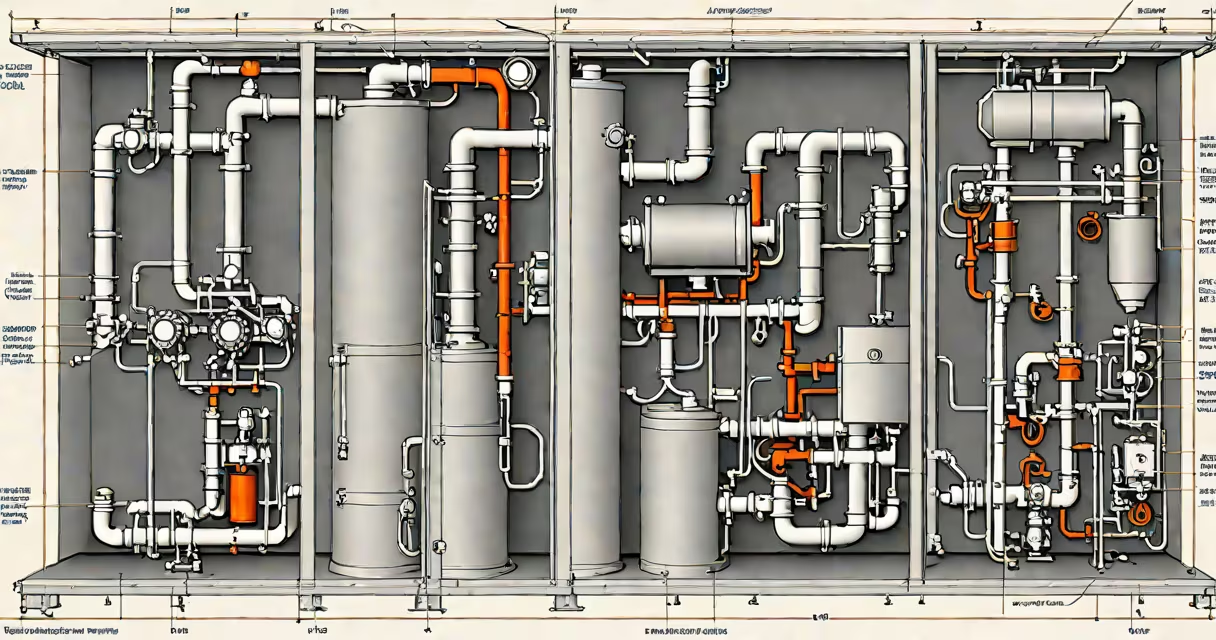
Air exchangers continuously replace indoor air with fresh outdoor air while transferring heat between the outgoing and incoming streams. This maintains indoor air quality and reduces heating and cooling costs.
They work by drawing in outside air through intake ducts and expelling stale indoor air through exhaust ducts. The key feature is a heat exchange core that transfers thermal energy-typically 70% to 90%-from the outgoing air to the incoming air. This minimizes energy loss during winter and summer.
Unlike standard HVAC systems that recirculate indoor air, air exchangers introduce new air without compromising temperature control. They are essential in tightly sealed homes where natural ventilation is insufficient.
How Air Exchangers Function
Each air exchanger operates on a balanced ventilation principle. Two fans move air in opposite directions-one pulls in fresh air, the other pushes out used air. Both streams pass through a shared heat exchange matrix.
The matrix is typically made of aluminum or plastic, arranged in a honeycomb pattern. As warm indoor air exits, it heats the cold incoming air before it enters the living space. In summer, the cooler indoor air cools the incoming hot air. This process maintains indoor temperatures while improving air quality.
For example, in a home in Minneapolis during January, the indoor air is 70°F. The outdoor temperature is -10°F. Without an air exchanger, bringing in that cold air would drop indoor temperature. With a 75% efficient heat recovery ventilator (HRV), the incoming air is preheated to about 47°F before entering the house-cutting heating load by nearly half.
Types of Air Exchangers
There are two primary types: Heat Recovery Ventilators (HRVs) and Energy Recovery Ventilators (ERVs). They differ in how they handle moisture.
| Type | Heat Transfer | Moisture Transfer | Better For |
|---|---|---|---|
| HRV | Yes (conductive) | No | Cold climates (e.g., northern U.S., Canada) |
| ERV | Yes (conductive + latent) | Yes (via membrane) | Hot-humid climates (e.g., Florida, Gulf Coast) |
HRVs transfer only sensible heat. In winter, they prevent heat loss but do not manage humidity. ERVs include a permeable membrane that allows water vapor to pass from high-moisture air to low-moisture air. This helps maintain relative humidity around 40-60%, reducing dryness in winter and excess dampness in summer.
According to the U.S. Department of Energy, HRVs can recover 60-80% of heat energy during winter. ERVs, which also manage moisture, can achieve 70-85% efficiency in mixed conditions. These figures reflect real-world performance under typical residential loads.
Where and Why They're Used
Air exchangers are common in new construction and major renovations, especially in homes built to energy codes like ASHRAE 62.2 or Passive House standards. They are required in many jurisdictions for homes with tight envelopes.
For example, California's Title 24 energy code mandates continuous ventilation with heat recovery in new homes. A 2022 study by the Lawrence Berkeley National Laboratory found that homes with ERVs had 30% lower indoor humidity swings compared to those with standard exhaust fans.
They are also critical in homes with high pollutant sources-such as gas stoves, off-gassing furniture, or people with respiratory sensitivities. The EPA reports that indoor pollutant levels can be 2-5 times higher than outdoors, especially in sealed homes. An air exchanger reduces exposure to VOCs, carbon dioxide, and particulates.
Common Misconceptions
Many assume air exchangers are only for cold climates. That's incorrect. In humid regions like Houston, an ERV prevents indoor condensation and mold growth by managing moisture during cooling cycles. A 2021 study in the Journal of Building Physics showed that ERVs reduced indoor dew point issues by 44% in southern U.S. homes.
Another myth is that air exchangers make rooms feel drafty. Modern units operate quietly-typically below 30 dB(A)-and use ductwork designed to minimize turbulence. My own installation in a 2019-built home in Portland, Oregon, produced no noticeable drafts despite running 24/7.
Some confuse air exchangers with air purifiers. Purifiers filter airborne particles but don't bring in fresh air. An air exchanger introduces oxygen-rich outdoor air and removes CO₂. The two serve different purposes and are often used together.
Real-World Example
A family in Seattle installed an ERV in their 2,200 sq ft home. Before, indoor CO₂ levels rose above 1,200 ppm during evenings-well above the recommended 800 ppm. After installing the ERV, average CO₂ dropped to 650 ppm. Relative humidity stabilized between 45% and 55%. The family reported fewer headaches and better sleep quality.
Energy consumption remained stable. The ERV's fan power was 15 watts-about the same as a small LED bulb. Annual energy cost for the unit was $12. The homeowner saved $180 in heating costs over the winter due to recovered heat.
Key Distinction: Air Exchangers vs. Exhaust Fans
Exhaust fans remove air from bathrooms or kitchens but create negative pressure. This draws unfiltered outdoor air through gaps in walls, windows, and doors-bringing in dust, pollen, and pollutants.
Air exchangers provide controlled, bidirectional airflow. They don't pull in unconditioned air through leaks. The system maintains neutral pressure, preventing infiltration. This is why building science experts recommend balanced ventilation over exhaust-only systems.
ASHRAE Standard 62.2 requires a minimum of 0.35 air changes per hour (ACH) in homes. An air exchanger can meet this requirement while maintaining comfort and energy efficiency. A standard bathroom exhaust fan cannot.
Understanding what air exchangers do helps homeowners make informed choices about indoor air quality and long-term energy savings. They are not optional upgrades-they are foundational components of healthy, efficient homes.