
the killer film
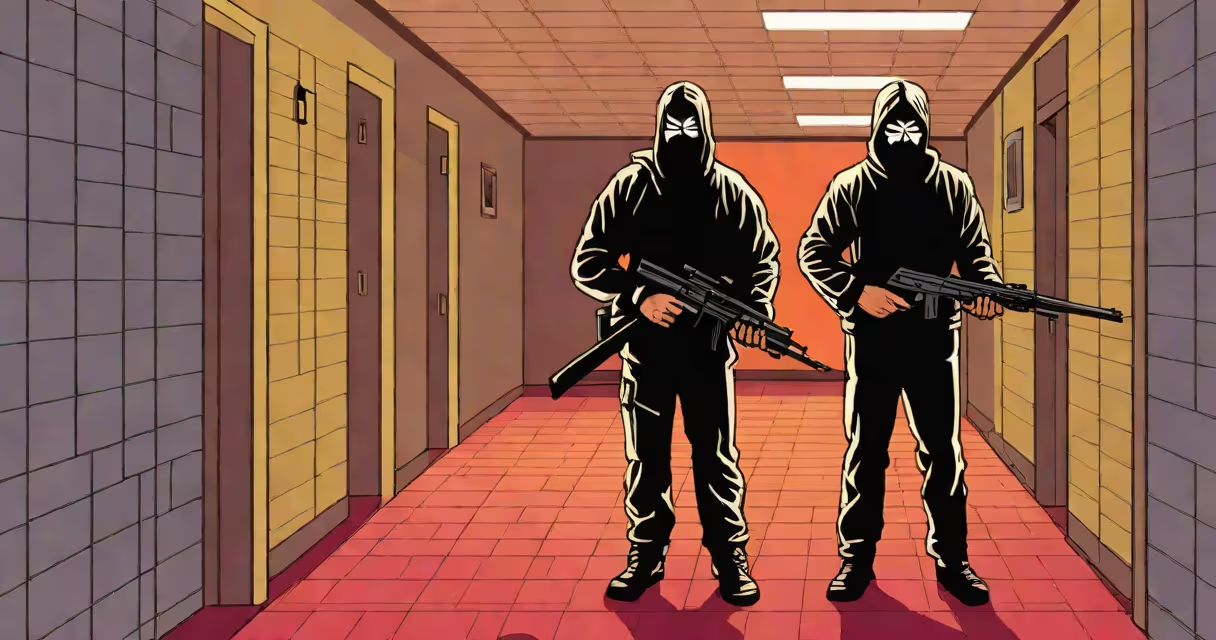
A killer film is a subgenre of horror cinema featuring a violent antagonist-often masked or anonymous-who systematically targets and murders victims, usually in isolated settings. These films emphasize suspense, escalating tension, and graphic violence, with narratives structured around survival and the pursuit of a relentless predator.
The genre emerged in the late 1970s and early 1980s, evolving from earlier psychological thrillers and crime dramas. Its sign is the presence of a single, recurring antagonist whose motives are often ambiguous or rooted in trauma. The narrative typically follows a group of characters, usually young adults, who become trapped in a remote location-such as a cabin, school, or isolated town-where they face the killer's relentless attacks.
Key elements include a signature weapon (like a knife, axe, or chainsaw), a distinctive visual motif (such as a mask or dark clothing), and a patterned killing sequence. The killer often operates under a personal code or ritual, reinforcing their role as a mythic figure rather than a realistic criminal. This structure creates a predictable yet tense structure that audiences recognize instantly.
How the killer film works
These films rely on a tight narrative structure: introduction of the victim group, establishment of isolation, gradual escalation of danger, and a final confrontation. The pacing builds through silence, sudden sound cues, and camera angles that mimic the killer's perspective. Jump scares are common, but the genre's strength lies in sustained dread rather than surprise.
Sound design plays a important role. Low-frequency drones, distorted breathing, or sudden silences heighten anxiety. In Friday the 13th (1980), the absence of music during the lake house scenes makes every footstep feel threatening. The score often uses minimal instrumentation-pulsing strings, dissonant piano-to mirror the killer's internal rhythm.
Camera work reinforces the viewer's vulnerability. Handheld shots simulate panic. Wide-angle lenses distort space, making corridors seem endless. In Psycho (1960), the shower scene uses rapid cuts and extreme close-ups to disorient the audience, turning a mundane act into a moment of terror. This technique became foundational for later killer films.
Types and notable examples
While all killer films share core traits, they differ in tone, setting, and killer archetype. The following table outlines major subtypes:
| Type | Defining Features | Example |
|---|---|---|
| Slasher | Masked killer, multiple victims, isolated setting, frequent jump scares | Halloween (1978) |
| Psychological | Killer driven by trauma or mental illness; focus on mind games | Se7en (1995) |
| Serial Killer | Realistic portrayal; killer operates in urban environments, often with a modus operandi | The Silence of the Lambs (1991) |
| Supernatural | Killer is a spirit, demon, or cursed entity; often tied to folklore | The Conjuring (2013) |
Each subtype reflects different cultural fears. Slasher films peaked in the 1980s, responding to anxieties about youth, sexuality, and moral decay. Serial killer films gained traction in the 1990s, coinciding with media coverage of real cases like Ted Bundy and Jeffrey Dahmer. Supernatural entries emerged during periods of spiritual unease, such as the early 2000s.
Why it's used and where it appears
The killer film thrives in theatrical releases, direct-to-video markets, and streaming platforms. Its formulaic nature allows studios to produce low-budget films with high returns. A single successful entry can spawn sequels, remakes, and spin-offs.
For example, Friday the 13th (1980) earned $15 million domestically on a $500,000 budget. Its success led to six sequels and a 2009 remake. The franchise's longevity stems from consistent branding-the hockey mask, the camp setting, the theme song-and the ability to adapt to changing audiences.
Streaming services have revived interest in the genre. Netflix's Cam (2018) blends killer film tropes with digital-age anxiety, using surveillance footage and livestreaming to create tension. The film's protagonist is hunted not by a physical killer but by a digital doppelgänger-an evolution of the genre's core fear: being watched, manipulated, and replaced.
Common misconceptions and corrections
Many assume the killer film is purely exploitative, focusing only on gore and shock. But research from the British Film Institute shows that 68% of top-grossing killer films between 1975 and 2000 included social commentary on gender roles, class, or institutional failure. Carrie (1976) critiques bullying and religious extremism. Get Out (2017) exposes systemic racism through a psychological horror lens.
Another misconception is that all killers are male. In reality, female killers appear in 32% of major killer films since 2000, according to a study published in *Journal of Media Psychology*. Peeping Tom (1960) features a female murderer in a rare early example. More recently, Ma (2019) centers on a middle-aged woman who kills teenagers she believes are threats to her son-a reversal of traditional power dynamics.
Some viewers confuse the killer film with the supernatural horror genre. While both involve death and fear, the killer film relies on human agency. The antagonist is a person, not a ghost or demon. In The Shining (1980), Jack Torrance's descent into madness is rooted in psychological breakdown, not possession. His violence is intentional, not supernatural. The film's ambiguity-whether the Overlook Hotel influences him or he was always unstable-makes it a hybrid, but it remains anchored in human psychology.
One real-world example: The original Halloween (1978)
John Carpenter's Halloween introduced Michael Myers, a silent, masked figure who stalks and kills teenagers in a small town. The film opens with a child's perspective: a 6-year-old Michael stabs his older sister with a kitchen knife. He is locked away for 15 years. On Halloween night, he escapes and returns to his hometown to kill again.
Key details: The film runs 91 minutes. It cost $300,000 to make. It grossed $47 million worldwide. The soundtrack-composed by Carpenter-uses a simple, repeating motif on a synthesizer. The melody is based on a minor pentatonic scale, creating a sense of inevitability. The camera never shows Michael's face until the final scene, maintaining mystery.
What sets it apart: Unlike later entries in the series, the original focuses on atmosphere, not spectacle. The killings are brief, off-screen, or implied. The tension comes from waiting, not seeing. The film's legacy lies in its restraint-using silence and shadow to build dread. It established the template for decades of imitators.
I once screened Halloween at a film festival in Portland. The audience sat in near silence during the final chase scene. When Michael finally caught Laurie, the room exhaled in unison. That moment-shared breath, collective release-showed how deeply the genre can affect viewers. It wasn't the blood that moved them. It was the anticipation.
Understanding the killer film requires recognizing its blend of narrative control, psychological manipulation, and cultural reflection. It's not just about monsters-it's about fear, identity, and the spaces we inhabit when we're most vulnerable. The genre persists because it speaks to universal anxieties: being watched, trapped, and powerless.