
metro wifi hotspot
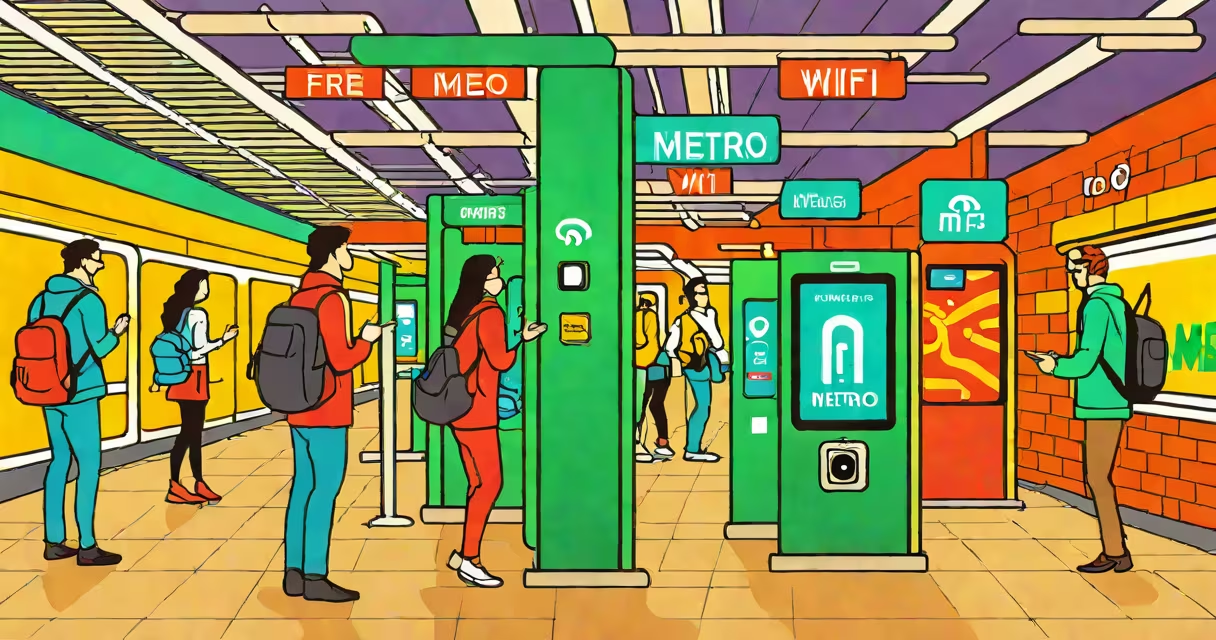
A metro wifi hotspot is a publicly accessible wireless network installed in urban transit systems-such as subways, buses, and train stations-to provide free internet access to riders. These networks are typically managed by city governments or transit authorities and operate on dedicated infrastructure.
Unlike personal Wi-Fi routers or mobile hotspots, metro wifi hotspots are designed for high-density usage across large geographic areas. They connect users to the internet via fiber-optic backbones or cellular uplinks, enabling streaming, browsing, and messaging even during peak travel times.
For example, New York City's MTA offers "LinkNYC" kiosks throughout the subway system. Each kiosk provides free, high-speed Wi-Fi, phone charging, and access to city services-all powered by a secure, monitored network. These are prime examples of metro wifi hotspots in action.
How It Works
Metro wifi hotspots rely on a combination of physical hardware and software protocols. Access points-small radio transmitters-are mounted in stations, tunnels, and on vehicles. These devices broadcast a Wi-Fi signal that connects to a central server managing authentication and bandwidth allocation.
When a rider selects the network (e.g., "MTA Free WiFi"), their device sends a request to the network's portal server. The server redirects them to a login page, which may require accepting terms of service or entering a one-time code sent via SMS. Once approved, the device receives an IP address and gains internet access.
Security is enforced through WPA2 or WPA3 encryption, though many public systems still use captive portals instead of full encryption. This means traffic can be intercepted if users visit unencrypted websites (HTTP instead of HTTPS).
Types and Deployment Models
There are three primary deployment models for metro wifi hotspots:
| Type | Infrastructure | Use Case | Example |
|---|---|---|---|
| City-Owned | Fiber or cellular backhaul; municipal servers | Public safety, emergency communication, city services | New York's LinkNYC, London's TfL Wi-Fi |
| Transit Authority Managed | Dedicated network; internal routing | Real-time updates, passenger info, fare integration | Washington D.C.'s Metro Wi-Fi, Chicago Transit Authority's Wi-Fi |
| Private Partner-Operated | Third-party hardware; ad-supported access | Revenue generation, customer engagement | Los Angeles Metro's partnership with Google Fiber |
Some systems, like San Francisco's Muni Wi-Fi, combine city oversight with private contractors for maintenance and expansion. Others, such as Toronto's TTC Wi-Fi, are entirely funded by the transit authority and do not display ads.
One non-obvious distinction: not all "free" metro Wi-Fi is truly free. Some networks throttle speeds after a certain data cap or require registration with a phone number. Always check the terms before connecting.
Common Misconceptions and Pitfalls
Many users assume that because a network is labeled "free," it's safe to send sensitive data. That's incorrect. Public Wi-Fi, including metro wifi hotspots, lacks end-to-end encryption unless the user is on a secure website (HTTPS).
Another misconception is that all metro wifi hotspots offer consistent coverage. In reality, signal strength varies widely. For example, underground subway lines often lose signal in tunnels due to interference from concrete and steel. Some systems use repeaters or mesh networks to maintain continuity, but gaps remain.
I've personally experienced this while traveling on the Paris Métro. The network name was "Métro Free WiFi," but inside tunnels, the connection dropped completely. Only when exiting at surface stops did the signal return. This highlights a key limitation: coverage is not guaranteed across entire routes.
Why It Matters and Where to Use It
Metro wifi hotspots serve critical functions beyond convenience. They support real-time transit tracking, emergency alerts, and accessibility features like audio announcements and screen-reader compatibility. In emergencies, they allow officials to push evacuation instructions directly to riders' devices.
For commuters, these networks enable remote work, navigation, and entertainment during long rides. A 2022 study by the Brookings Institution found that cities with widespread public transit Wi-Fi reported higher levels of digital equity among low-income residents.
However, not all systems are equally effective. In 2023, the National Geographic reported disparities in Wi-Fi availability between affluent and underserved neighborhoods, even within the same city. This reflects unequal investment rather than technical limits.
What to Do If You're Connected But Have No Internet
If your device shows "connected" to a metro wifi hotspot but won't load web pages, the issue is likely not with your device-but with the network's portal or backend. Try these steps:
- Open a browser and go through to any site (e.g., google.com).
- If no redirect occurs, manually go to the network's login page (often listed on signage).
- Clear your browser cache or try incognito mode.
- Restart your device's Wi-Fi settings.
A metro wifi hotspot is more than just free internet-it's a foundational part of modern urban infrastructure. When functioning properly, it enables mobility, inclusion, and real-time access to information for millions of daily travelers.